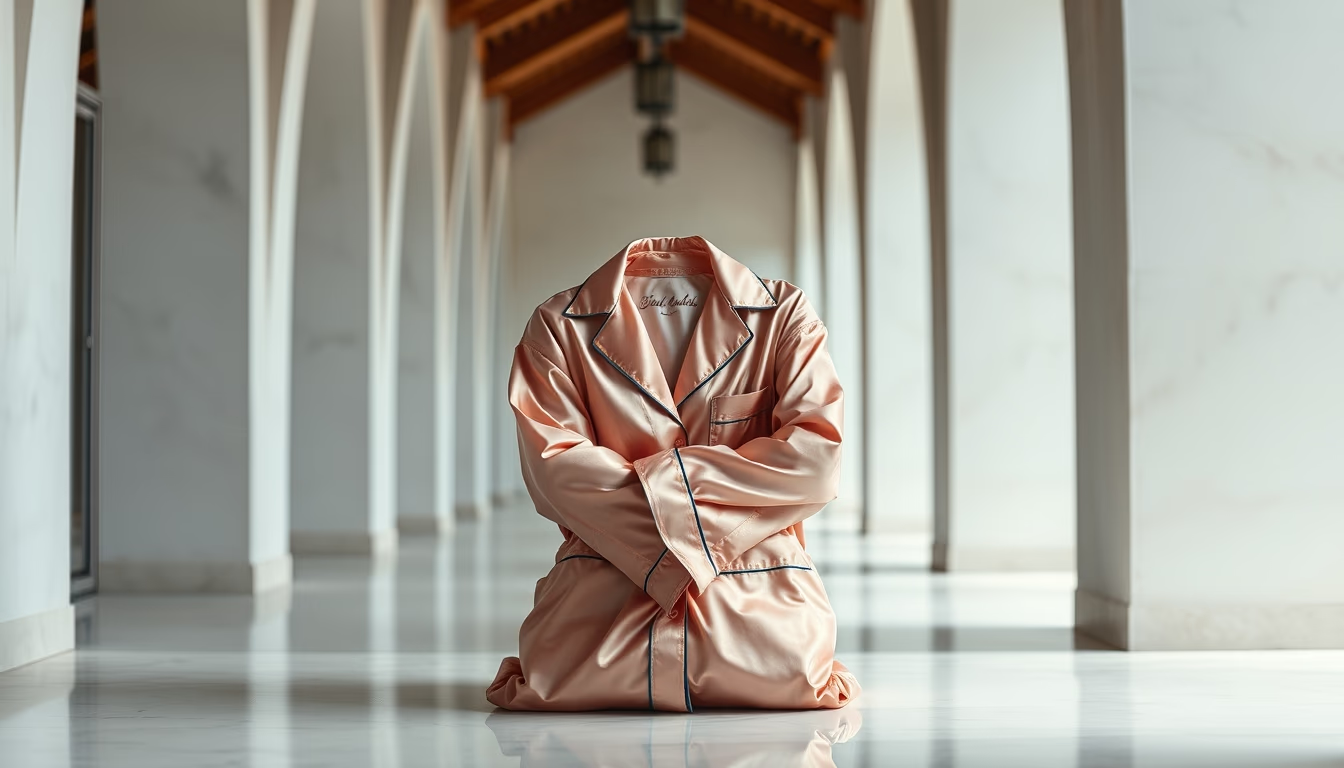
Memory foam pillow
1344×768 · AVIF · CC BY 4.0

Memory foam pillows provide personalized support and pressure relief, making them a popular choice for better sleep quality.
About this subject
Memory foam pillows, also known as viscoelastic foam pillows, were originally developed by NASA in the 1960s to cushion aircraft seats and protect astronauts from high G-forces. The technology was later commercialized in the 1990s by Tempur-Pedic, a Swedish company, which adapted the material for mattresses and pillows, revolutionizing the sleep industry worldwide.
The foam is made from polyurethane with additional chemicals that increase its viscosity and elasticity. It reacts to body heat, softening and molding to the shape of the head and neck. This viscoelastic property distributes weight evenly, relieving pressure points and reducing the need to toss and turn. Pillows come in various densities, typically ranging from 30 kg/m³ to 100 kg/m³. Higher density foams provide more support and last longer, with an average lifespan of 3 to 5 years.
One interesting characteristic is temperature sensitivity: in cold environments, the pillow may become stiffer, while warmth makes it softer. To address this, manufacturers often incorporate cooling gels, open-cell foam, or ventilation channels. The initial chemical smell, known as off-gassing, usually dissipates within a few days. In the United States and Europe, memory foam pillows gained massive popularity in the early 2000s, with options ranging from solid molded shapes to shredded versions that allow users to adjust the fill level for personalized loft and firmness.
Choosing a memory foam pillow depends on sleep position. Side sleepers need a higher loft to fill the gap between the shoulder and ear. Back sleepers require a medium loft to maintain the natural curve of the spine. Stomach sleepers should opt for a very low loft or a soft, thin pillow to avoid neck strain. Memory foam is naturally hypoallergenic, resisting dust mites and mold when kept clean and dry. However, it tends to retain heat, which is why many modern pillows feature breathable covers or gel-infused layers for temperature regulation.
Frequently Asked Questions
How long does a memory foam pillow last?
Typically 3 to 5 years, depending on density and care. Higher density foams (above 50 kg/m³) tend to last longer.
Is memory foam good for neck pain?
Yes, it conforms to the head and neck, relieving pressure points and maintaining spinal alignment. Choosing the correct loft for your sleeping position is important.
How do I get rid of the initial smell from a memory foam pillow?
Air the pillow in a well-ventilated room for 24 to 48 hours. This helps dissipate volatile organic compounds (VOCs) responsible for the odor.
Direct URL
https://pub-c7d6a6ea828543ac903a74a341ccb2e1.r2.dev/imagens/memory-foam-pillow-cinematic-wide-shot-fresh10.avifHow to credit
Include a visible link back to UtilizAí. Copy one of the snippets below:
<a href="https://xn--utiliza-eza.com/en/midia/imagens/memory-foam-pillow-cinematic-wide-shot-fresh10">Memory foam pillow</a> by <a href="https://xn--utiliza-eza.com">UtilizAí</a>, licensed under <a href="https://creativecommons.org/licenses/by/4.0/">CC BY 4.0</a>.
[Memory foam pillow](https://xn--utiliza-eza.com/en/midia/imagens/memory-foam-pillow-cinematic-wide-shot-fresh10) by [UtilizAí](https://xn--utiliza-eza.com), CC BY 4.0
License: CC-BY-4.0