Meeting room glass
1344×768 · AVIF · CC BY 4.0
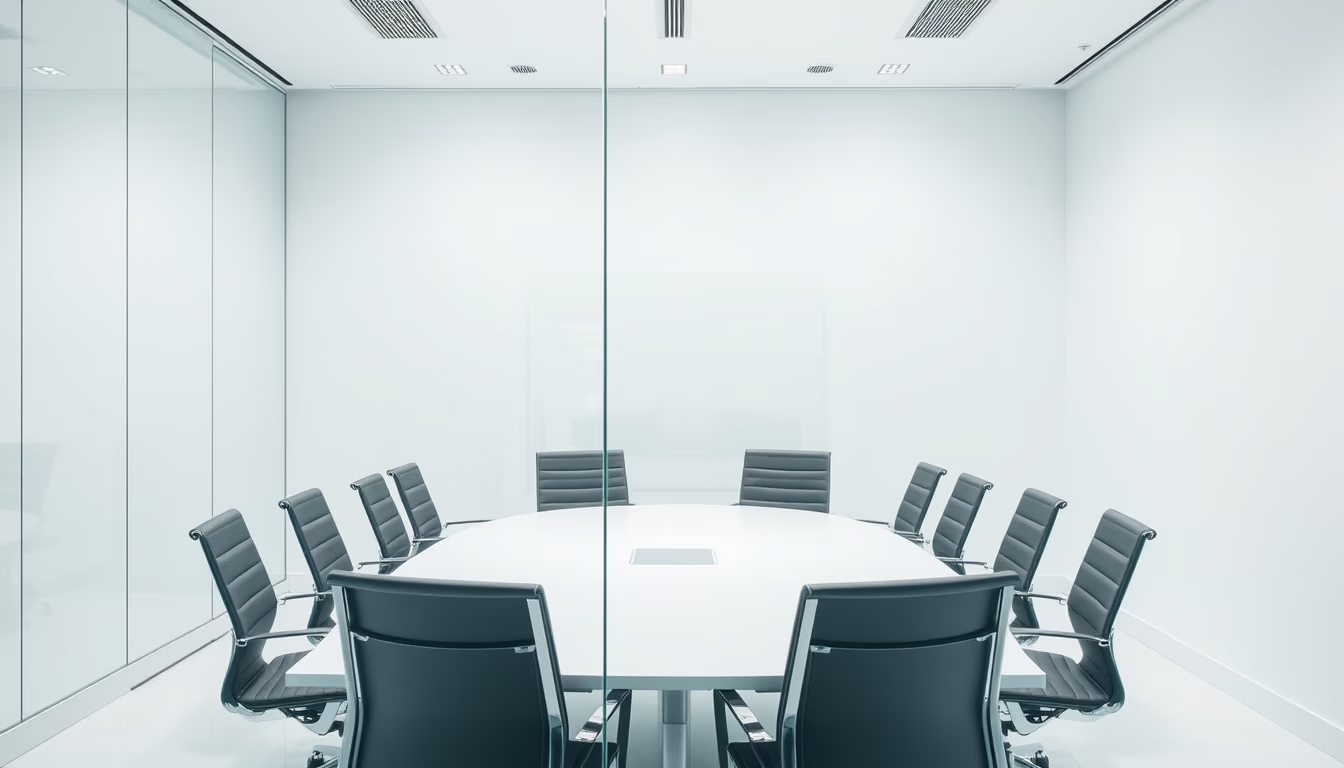
Glass partitions in meeting rooms combine transparency, acoustics, and modern design for corporate environments.
About this subject
Glass meeting rooms have become a standard in modern offices, especially after the adoption of open floor plans that require visual privacy without blocking natural light. This type of partition is made of tempered or laminated glass, with thicknesses ranging from 8 to 12 mm, and can receive acoustic treatment to reduce sound transmission between environments. In Brazil, companies like Vivix and Saint-Gobain offer solutions with double glazing and solar control films, complying with technical standards NBR 7199 (glass design) and NBR NM 293 (tempered glass).
The popularity of glass in meeting rooms is linked to the pursuit of more democratic and collaborative spaces. Productivity studies indicate that natural light, favored by glass walls, improves well-being and reduces eye strain. Additionally, frosted glass or adhesive films allow customization of privacy without losing brightness. In award-winning projects, such as Google's office in São Paulo, glass rooms are combined with automated curtain systems for adjustment as needed.
Interestingly, glass manufacturing for corporate use requires strict quality control: tempered glass is heated to about 650°C and rapidly cooled, becoming four times stronger than ordinary glass. For acoustic applications, laminated glass interleaves layers of PVB (polyvinyl butyral) that absorb sound waves. These materials also contribute to LEED certification, as recycled glass and low-emissivity films reduce energy consumption for HVAC.
Frequently Asked Questions
What is the ideal glass thickness for a meeting room?
Thickness varies by panel height and acoustic needs. For internal partitions, 8 to 10 mm glass is common. For sound isolation, double laminated glass totaling 12 mm or more is recommended.
Tempered vs. laminated glass: which for privacy?
Tempered glass is impact-resistant but offers no sound insulation. Laminated glass, with a PVB layer, blocks sound better and holds shards if broken. For visual privacy, add frosting or adhesive film.
How does glass contribute to LEED certification?
Low-emissivity (Low-E) glass reduces thermal load, lowering air conditioning use. Recycled glass and solar control films also earn points for energy and sustainable materials credits.
Direct URL
https://pub-c7d6a6ea828543ac903a74a341ccb2e1.r2.dev/imagens/meeting-room-glass-commercial-product-photography-p4.avifHow to credit
Include a visible link back to UtilizAí. Copy one of the snippets below:
<a href="https://xn--utiliza-eza.com/en/midia/imagens/meeting-room-glass-commercial-product-photography-p4">Meeting room glass</a> by <a href="https://xn--utiliza-eza.com">UtilizAí</a>, licensed under <a href="https://creativecommons.org/licenses/by/4.0/">CC BY 4.0</a>.
[Meeting room glass](https://xn--utiliza-eza.com/en/midia/imagens/meeting-room-glass-commercial-product-photography-p4) by [UtilizAí](https://xn--utiliza-eza.com), CC BY 4.0
License: CC-BY-4.0