Mediterranean olive plantation aerial
1344×768 · AVIF · CC BY 4.0
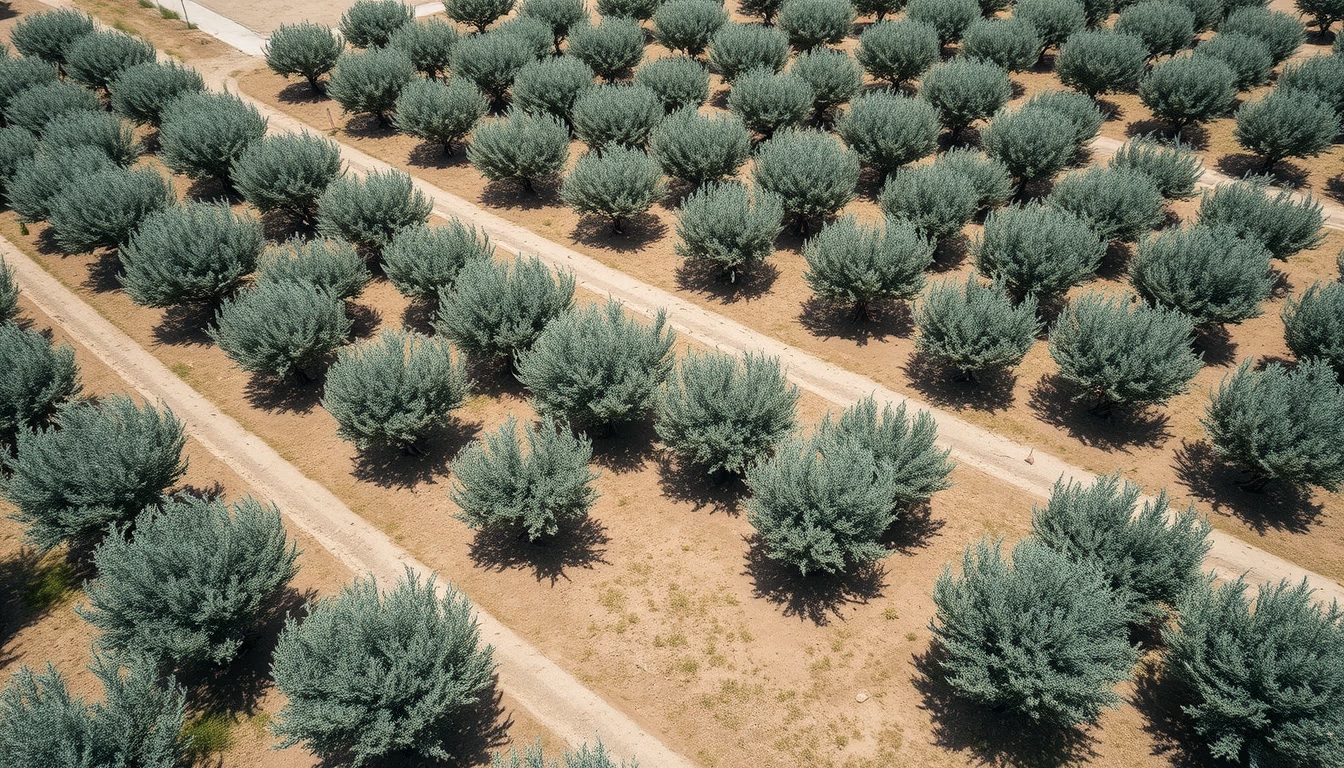
Aerial view of a Mediterranean olive plantation, highlighting the ancient olive oil culture and the characteristic rural landscape of the region.
About this subject
Olive trees (Olea europaea) have been cultivated in the Mediterranean basin for over 6,000 years, with archaeological records in Greece, Italy, and the Middle East. Olive farming is the basis for olive oil production, a cornerstone of the Mediterranean diet recognized by UNESCO as an Intangible Cultural Heritage of Humanity. Countries such as Spain, Italy, Greece, Portugal, and Tunisia account for more than 90% of the world's olive oil production, with Spain leading at around 40% of the total.
Olive plantations are often arranged in geometric patterns to optimize irrigation and mechanized harvesting, as seen in aerial views. Each tree can live for centuries, and some in the Mediterranean region are over 2,000 years old, such as the Olive Trees of Vouves in Crete. Harvesting occurs between October and February, and extra virgin olive oil is obtained through cold mechanical processes without chemical solvents.
Beyond economic value, the olive tree holds deep symbolic meaning in Mediterranean culture, representing peace, wisdom, and prosperity. In Greek mythology, Athena gifted the first olive tree to the city of Athens. Today, rural tourism in producing regions attracts visitors interested in olive oil tastings and picturesque olive grove landscapes.
Sustainability of olive farming faces challenges such as climate change, which affects flowering and yield. Traditional terrace cultivation and the use of native varieties help preserve biodiversity. The European Union funds conservation programs for centenary olive groves, recognizing their ecological and cultural significance.
Frequently Asked Questions
What is the origin of olive trees in the Mediterranean?
Olive trees are native to the Mediterranean basin, with cultivation starting around 6,000 years ago in the Middle East and ancient Greece. They spread throughout the region via trade routes and colonization.
How long can an olive tree live?
Olive trees can live for centuries, with some reaching over 2,000 years. Notable examples include the Olive Trees of Vouves in Crete, Greece, which still produce fruit.
What is the economic importance of olive farming in the Mediterranean?
Olive farming generates billions of dollars annually, employing millions of people in countries like Spain, Italy, Greece, and Portugal. Olive oil is one of the region's major exports, with high global demand.
Direct URL
https://pub-c7d6a6ea828543ac903a74a341ccb2e1.r2.dev/imagens/mediterranean-olive-plantation-aerial-minimalist-composition-p2.avifHow to credit
Include a visible link back to UtilizAí. Copy one of the snippets below:
<a href="https://xn--utiliza-eza.com/en/midia/imagens/mediterranean-olive-plantation-aerial-minimalist-composition-p2">Mediterranean olive plantation aerial</a> by <a href="https://xn--utiliza-eza.com">UtilizAí</a>, licensed under <a href="https://creativecommons.org/licenses/by/4.0/">CC BY 4.0</a>.
[Mediterranean olive plantation aerial](https://xn--utiliza-eza.com/en/midia/imagens/mediterranean-olive-plantation-aerial-minimalist-composition-p2) by [UtilizAí](https://xn--utiliza-eza.com), CC BY 4.0
License: CC-BY-4.0