Mediterranean olive plantation aerial
1344×768 · AVIF · CC BY 4.0
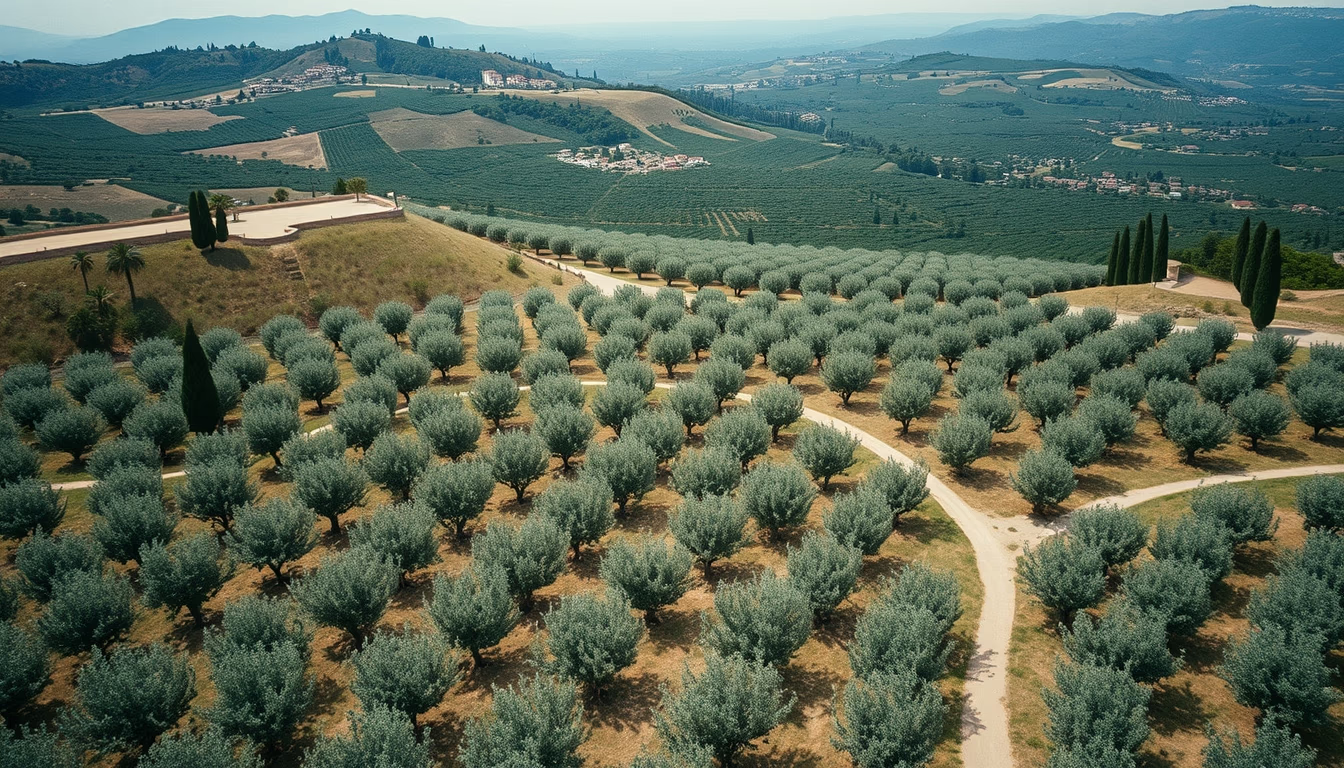
Olive trees terraced across the Mediterranean create a silver-green mosaic from above, revealing centuries of traditional farming.
About this subject
Olive cultivation in the Mediterranean dates back over 6,000 years, with archaeological evidence on the island of Crete and the Levant. The olive tree (Olea europaea) is an evergreen adapted to poor soils and dry climates, making it the backbone of agriculture in countries like Greece, Italy, Spain, Portugal, and Morocco. Aerial views often reveal geometric patterns of terraces, an ancient technique to prevent erosion and maximize water use on steep slopes.
Spain leads global olive oil production with about 45% of the total, followed by Italy and Greece. In Andalusia, olive trees cover more than 1.5 million hectares, often arranged in regular rows for mechanical harvesting. However, traditional practices persist in mountainous areas, where manual picking and donkey transport are still common. Extra virgin olive oil, produced by cold pressing, is a cornerstone of the Mediterranean diet, recognized by UNESCO as Intangible Cultural Heritage.
Beyond food, the olive tree holds deep religious and cultural symbolism. Olive branches appear in the Bible as symbols of peace, and olive wreaths were awarded to winners of the ancient Olympic Games in Greece. Trees can live for centuries, with specimens on Crete estimated at over 3,000 years. Harvest season, from October to January, drives local economies and generates rural employment.
Aerial views also reveal modern challenges: expansion of intensive monocultures, pesticide use, and water scarcity threaten sustainability. Organic farming initiatives and PDO (Protected Designation of Origin) certifications aim to preserve traditional methods and biodiversity. The Mediterranean olive grove is thus not just a picturesque landscape but a cultural and economic ecosystem in delicate balance.
Frequently Asked Questions
What is the origin of the olive tree in the Mediterranean?
The olive tree was domesticated about 6,000 years ago in the Near East, especially in the Levant and the island of Crete. Phoenicians and Greeks spread its cultivation across the Mediterranean.
Why are olive trees planted on terraces?
Terraces prevent soil erosion on steep slopes, retain rainwater, and allow cultivation in mountainous areas that would otherwise be unproductive.
How long can an olive tree live?
Olive trees can live for centuries or even millennia. Specimens on Crete are estimated to be over 3,000 years old and still produce fruit.
Direct URL
https://pub-c7d6a6ea828543ac903a74a341ccb2e1.r2.dev/imagens/mediterranean-olive-plantation-aerial-film-grain-authentic-p10.avifHow to credit
Include a visible link back to UtilizAí. Copy one of the snippets below:
<a href="https://xn--utiliza-eza.com/en/midia/imagens/mediterranean-olive-plantation-aerial-film-grain-authentic-p10">Mediterranean olive plantation aerial</a> by <a href="https://xn--utiliza-eza.com">UtilizAí</a>, licensed under <a href="https://creativecommons.org/licenses/by/4.0/">CC BY 4.0</a>.
[Mediterranean olive plantation aerial](https://xn--utiliza-eza.com/en/midia/imagens/mediterranean-olive-plantation-aerial-film-grain-authentic-p10) by [UtilizAí](https://xn--utiliza-eza.com), CC BY 4.0
License: CC-BY-4.0