Mediterranean olive plantation aerial
1344×768 · AVIF · CC BY 4.0
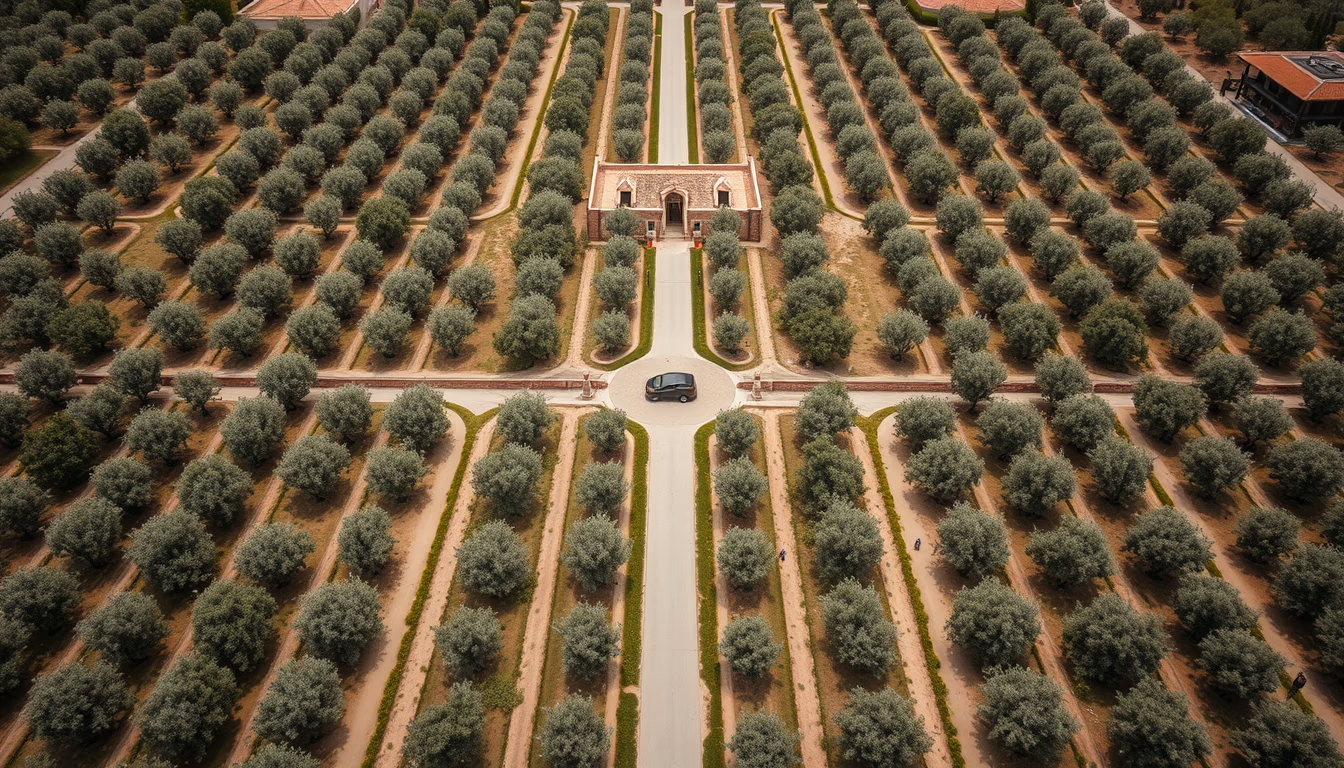
Centuries-old olive trees create silver-green mosaics on Mediterranean slopes, bearing witness to millennia of cultivation.
About this subject
Olive cultivation in the Mediterranean dates back over 6,000 years, with archaeological evidence found in Greece and Minoan Crete. The olive tree (Olea europaea) is one of the oldest domesticated fruit trees, adapted to the dry summers and calcareous soils of the region. Civilizations such as the Phoenicians, Greeks, and Romans spread its cultivation across the Mediterranean basin, associating olive oil with food, lighting, cosmetics, and religious rituals.
Today, the Mediterranean olive grove area exceeds 10 million hectares, with Spain leading world production (about 40% of olive oil), followed by Italy, Greece, Portugal, and Tunisia. In Spanish Andalusia, vast drip-irrigated plantations contrast with rain-fed terraced groves on Greek islands and Tuscan hillsides. Varieties like ‘Picual’, ‘Arbequina’, and ‘Koroneiki’ are selected for different flavor profiles and resilience.
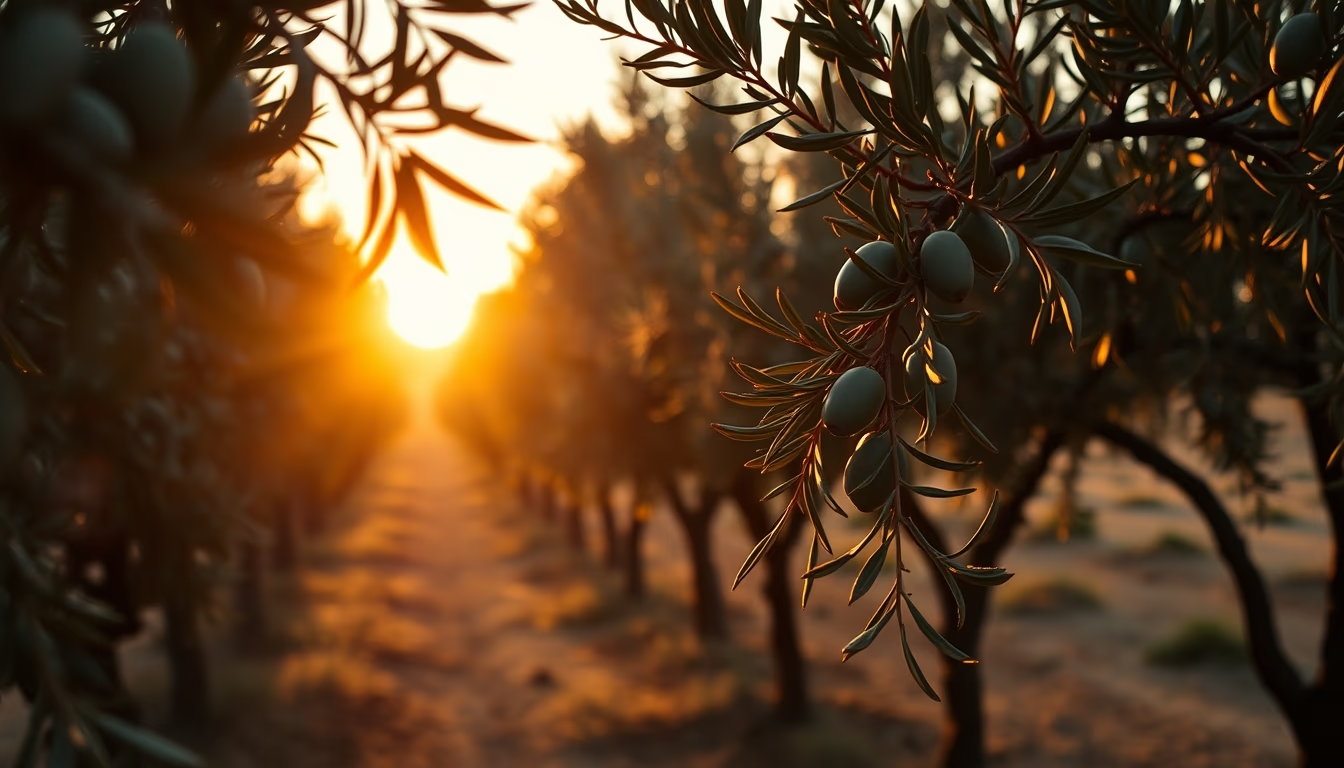
Olive trees are slow-growing but exceptionally long-lived: some on the Mount of Olives in Jerusalem and in Sardinia are over 2,000 years old. Their deep root systems help prevent erosion on steep slopes. Traditional hand harvesting with nets is increasingly replaced by mechanical trunk shakers, but olives for cold-pressed extra virgin olive oil still require care. The landscape impact is iconic: undulating fields of silver-green canopies, often accompanied by dry stone walls and gnarled ancient trunks.
However, the sector faces challenges: the Xylella fastidiosa bacterium has devastated olive groves in Italy’s Apulia region; climate change increases water stress and pest pressure; and the global market drives cost reduction. On the positive side, demand is rising for organic olive oil and protected designation of origin (PDO) labels that value local traditions. The Mediterranean olive grove is not just an agricultural system but a cultural and ecological heritage that shapes the region's identity.
Frequently Asked Questions
What is the oldest olive tree in the world?
The oldest still-producing olive tree is in Vouves, Crete, estimated at 3,000 to 4,000 years old. Other notable ancient olive trees include the Oliveira dos Santos in Portugal and those in the Garden of Gethsemane in Jerusalem.
Why are olive trees planted on terraces?
Terraces prevent soil erosion on steep slopes, retain rainwater, and facilitate management. This technique is common on Greek islands and in Tuscany, where the terrain requires adaptation for cultivation.
How does climate change affect Mediterranean olive groves?
Rising temperatures and reduced rainfall increase water stress, favor pests like the olive fruit fly, and promote diseases such as Xylella fastidiosa. Growers are adopting supplementary irrigation and more resistant varieties.
Direct URL
https://pub-c7d6a6ea828543ac903a74a341ccb2e1.r2.dev/imagens/mediterranean-olive-plantation-aerial-architectural-photography-p9.avifHow to credit
Include a visible link back to UtilizAí. Copy one of the snippets below:
<a href="https://xn--utiliza-eza.com/en/midia/imagens/mediterranean-olive-plantation-aerial-architectural-photography-p9">Mediterranean olive plantation aerial</a> by <a href="https://xn--utiliza-eza.com">UtilizAí</a>, licensed under <a href="https://creativecommons.org/licenses/by/4.0/">CC BY 4.0</a>.
[Mediterranean olive plantation aerial](https://xn--utiliza-eza.com/en/midia/imagens/mediterranean-olive-plantation-aerial-architectural-photography-p9) by [UtilizAí](https://xn--utiliza-eza.com), CC BY 4.0
License: CC-BY-4.0