Mediterranean olive plantation aerial
1344×768 · AVIF · CC BY 4.0
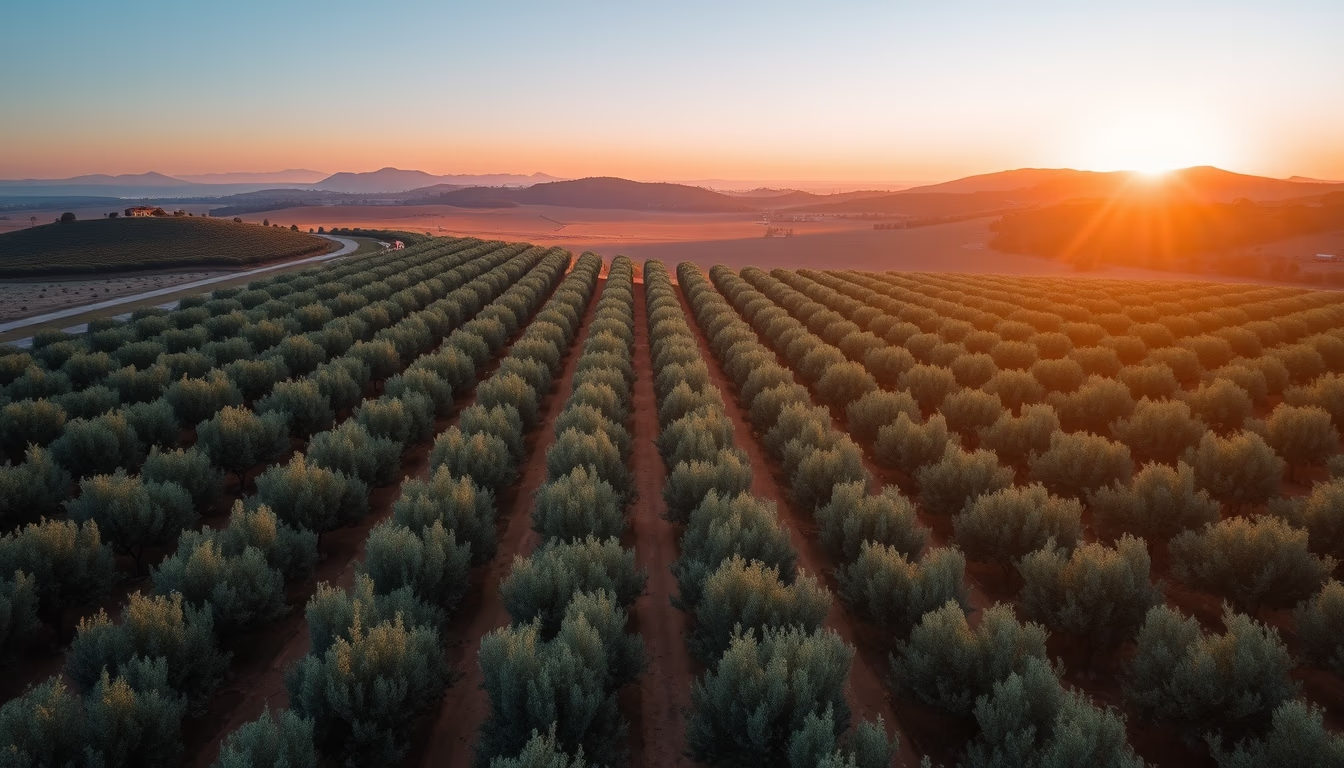
Aerial view of a traditional olive grove in the Mediterranean region, revealing the geometric pattern of ancient olive trees.
About this subject
Mediterranean olive cultivation is one of the oldest agricultural practices in the world, with records dating back over 6,000 years. In this aerial view, the characteristic arrangement of olive trees is visible, planted in regular rows to facilitate management, harvesting, and irrigation. These trees, many of which are centuries old, are primarily grown for olive oil production, a staple of the Mediterranean diet and global cuisine. The region, including countries like Spain, Italy, Greece, Portugal, and Turkey, accounts for over 90% of the world's olive oil production, with notable varieties such as Spain's 'Arbequina' and Greece's 'Koroneiki'.
The geometric pattern seen from above is not merely aesthetic. It reflects agricultural techniques developed over centuries to optimize sunlight exposure, air circulation, and access for mechanized harvesting. In traditional olive groves, spacing between trees can range from 6 to 10 meters, allowing deep roots to seek water in often arid soils. Additionally, ground cover with grass or straw helps retain moisture and prevent erosion, a common practice in sustainable farming systems.
Culturally, the olive tree symbolizes peace, wisdom, and longevity. In Greek mythology, Athena gifted the city of Athens with an olive tree, and olive branches remain Olympic symbols. Some Mediterranean olive trees are over 2,000 years old, such as those in the Vouves region of Crete, Greece. Olive oil production drives local economies and attracts tourists interested in gastronomic routes, such as those through Tuscany's olive groves or Portugal's Alentejo. The aerial view captures this ancient landscape, blending tradition, productivity, and natural beauty.
Frequently Asked Questions
Why are olive trees planted in geometric patterns seen from above?
Planting in regular rows facilitates mechanized harvesting, irrigation, and pruning. Uniform spacing also ensures each tree receives adequate sunlight and ventilation, reducing disease and boosting productivity.
What is the typical lifespan of an olive tree in the Mediterranean?
Olive trees can live for hundreds or even thousands of years. Many in the region are between 300 and 600 years old, but specimens over 2,000 years still bear fruit, such as the Vouves olive trees in Greece.
Which are the main olive oil producing countries in the Mediterranean?
Spain leads global production, followed by Italy, Greece, Portugal, and Turkey. Together, these countries account for over 90% of the world's olive oil, with Spain's Andalusia region being particularly prominent.
Direct URL
https://pub-c7d6a6ea828543ac903a74a341ccb2e1.r2.dev/imagens/mediterranean-olive-plantation-aerial-aerial-drone-shot-p0.avifHow to credit
Include a visible link back to UtilizAí. Copy one of the snippets below:
<a href="https://xn--utiliza-eza.com/en/midia/imagens/mediterranean-olive-plantation-aerial-aerial-drone-shot-p0">Mediterranean olive plantation aerial</a> by <a href="https://xn--utiliza-eza.com">UtilizAí</a>, licensed under <a href="https://creativecommons.org/licenses/by/4.0/">CC BY 4.0</a>.
[Mediterranean olive plantation aerial](https://xn--utiliza-eza.com/en/midia/imagens/mediterranean-olive-plantation-aerial-aerial-drone-shot-p0) by [UtilizAí](https://xn--utiliza-eza.com), CC BY 4.0
License: CC-BY-4.0