Medical syringe vials
1344×768 · AVIF · CC BY 4.0
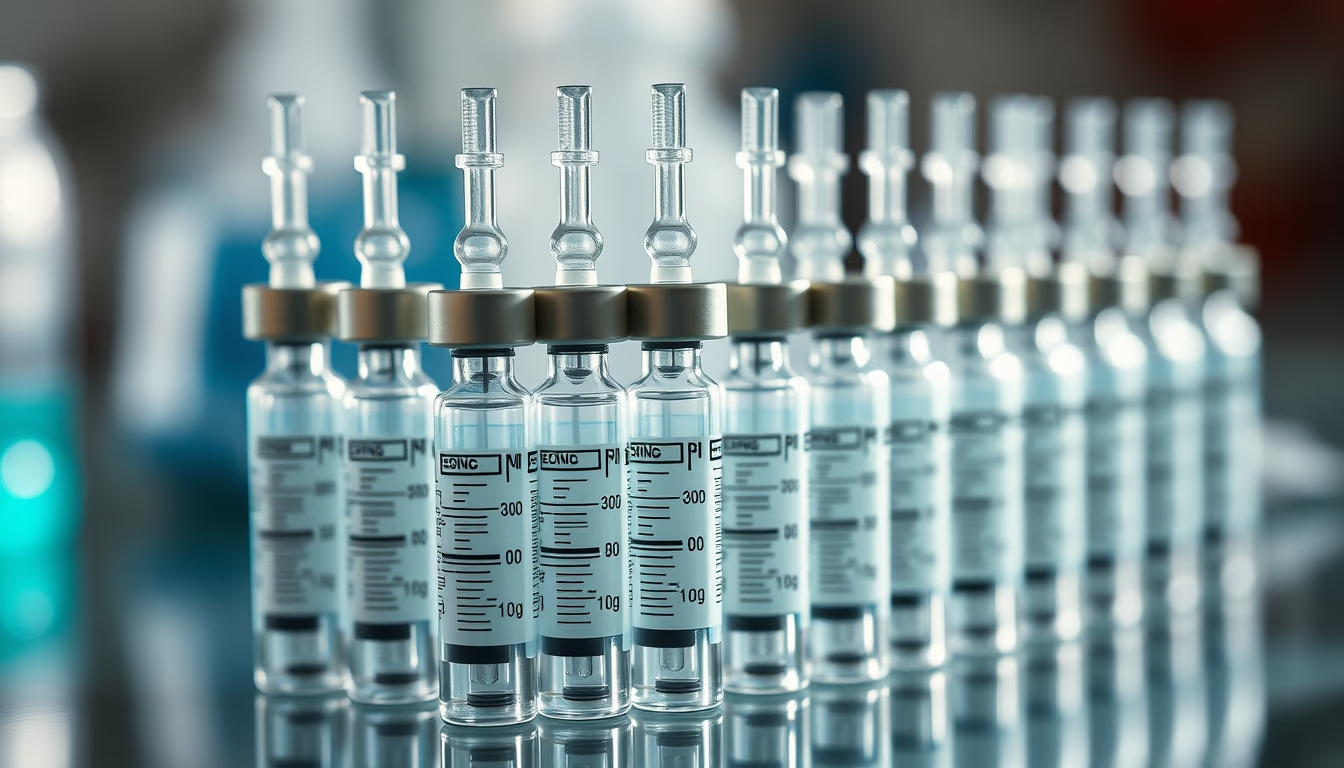
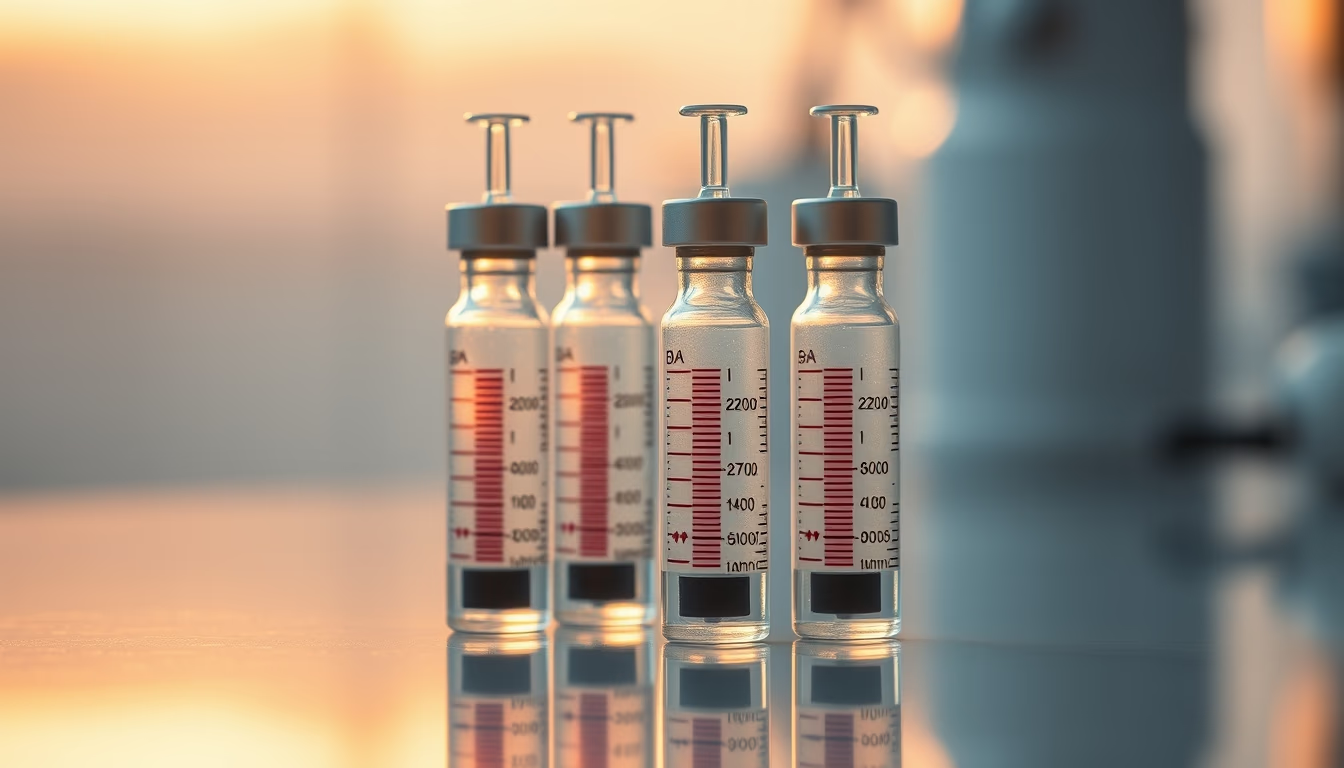
Medical vials and syringes are essential components for administering medications and vaccines, with strict technical specifications for safety.
About this subject
Medical vials and syringes form the basic system for administering injectable drugs worldwide. Vials, typically made of borosilicate glass type I or II, are designed to store sterile solutions, lyophilized powders, or reconstitution agents. Their sealing with butyl rubber septa ensures content integrity. Syringes can be disposable (polypropylene) or reusable (glass or metal), with volumes ranging from 0.5 mL to 60 mL. Standardized connectors like Luer Lock prevent accidents and cross-contamination.
In Brazil, syringe and vial production follows Anvisa's RDC 36/2015, establishing good manufacturing practices. The national industry supplies most of the SUS demand, especially for mass vaccination campaigns against influenza and COVID-19. During the pandemic, the need for special syringes for fractional doses (e.g., yellow fever) drove innovation. Multidose vials contain preservatives like phenol or thimerosal, allowing multiple withdrawals and reducing waste.
Historically, the hypodermic syringe was patented by Charles Pravaz in 1853, and the development of neutral glass in the 20th century enabled safe drug storage. Today, auto-disable syringes and vials with traceability codes enhance patient safety. Recycling glass vials is challenging due to contamination, but companies like Becton Dickinson invest in biodegradable plastics. The image of neatly arranged vials and syringes evokes both hope for healing and awareness of proper disposal.
Frequently Asked Questions
Why are medication vials made of borosilicate glass?
Borosilicate glass has low thermal expansion and high chemical resistance, preventing reactions with the drug and withstanding autoclave sterilization. It is classified as type I (most inert) or type II (surface-treated).
What is the difference between multidose and single-dose vials?
Multidose vials contain preservatives and allow multiple withdrawals with sterile syringes, while single-dose vials are for one-time use and discarded after opening, eliminating cross-contamination risk.
How should used syringes and vials be disposed of?
They must be placed in rigid sharps containers (e.g., puncture-proof bins) and sent to healthcare waste collection points. This disposal prevents injuries to waste pickers and environmental contamination.
Direct URL
https://pub-c7d6a6ea828543ac903a74a341ccb2e1.r2.dev/imagens/medical-syringe-vials-documentary-photography-p5.avifHow to credit
Include a visible link back to UtilizAí. Copy one of the snippets below:
<a href="https://xn--utiliza-eza.com/en/midia/imagens/medical-syringe-vials-documentary-photography-p5">Medical syringe vials</a> by <a href="https://xn--utiliza-eza.com">UtilizAí</a>, licensed under <a href="https://creativecommons.org/licenses/by/4.0/">CC BY 4.0</a>.
[Medical syringe vials](https://xn--utiliza-eza.com/en/midia/imagens/medical-syringe-vials-documentary-photography-p5) by [UtilizAí](https://xn--utiliza-eza.com), CC BY 4.0
License: CC-BY-4.0