Medical syringe vials
1344×768 · AVIF · CC BY 4.0
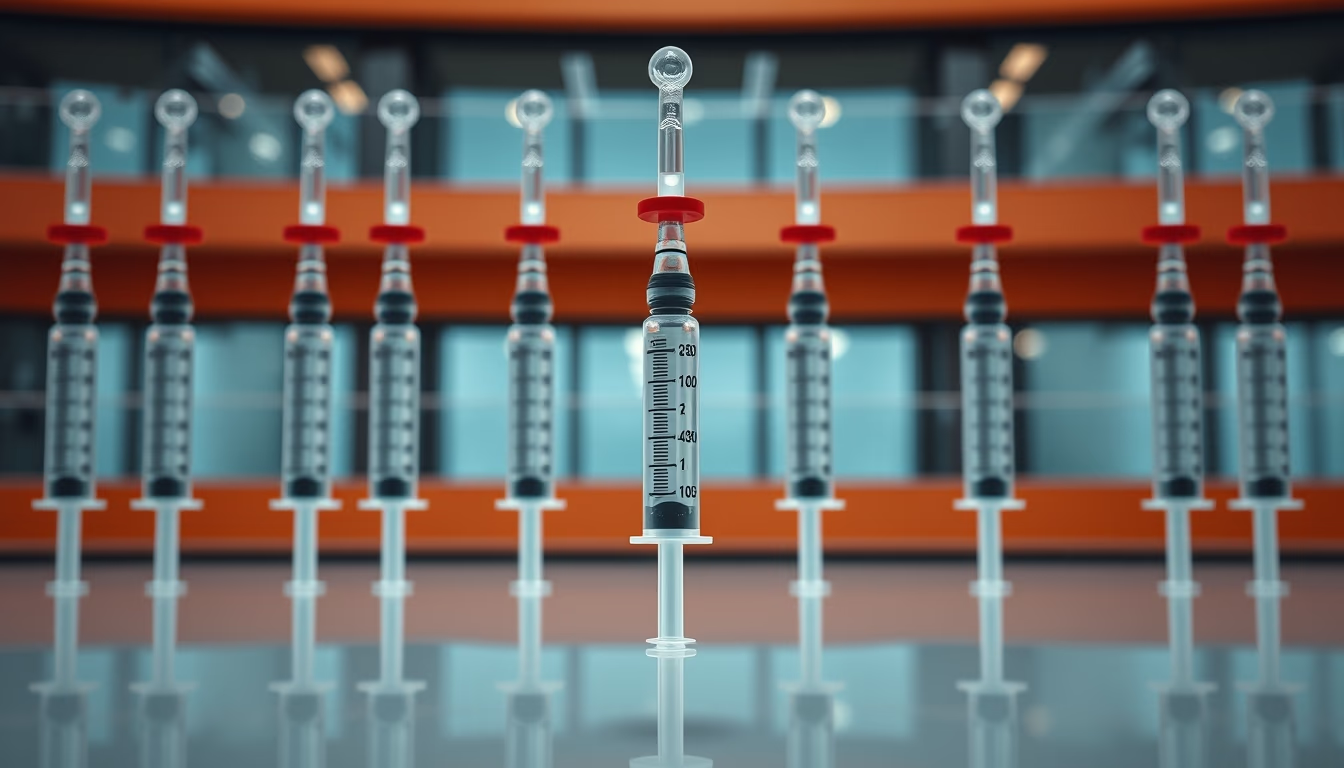
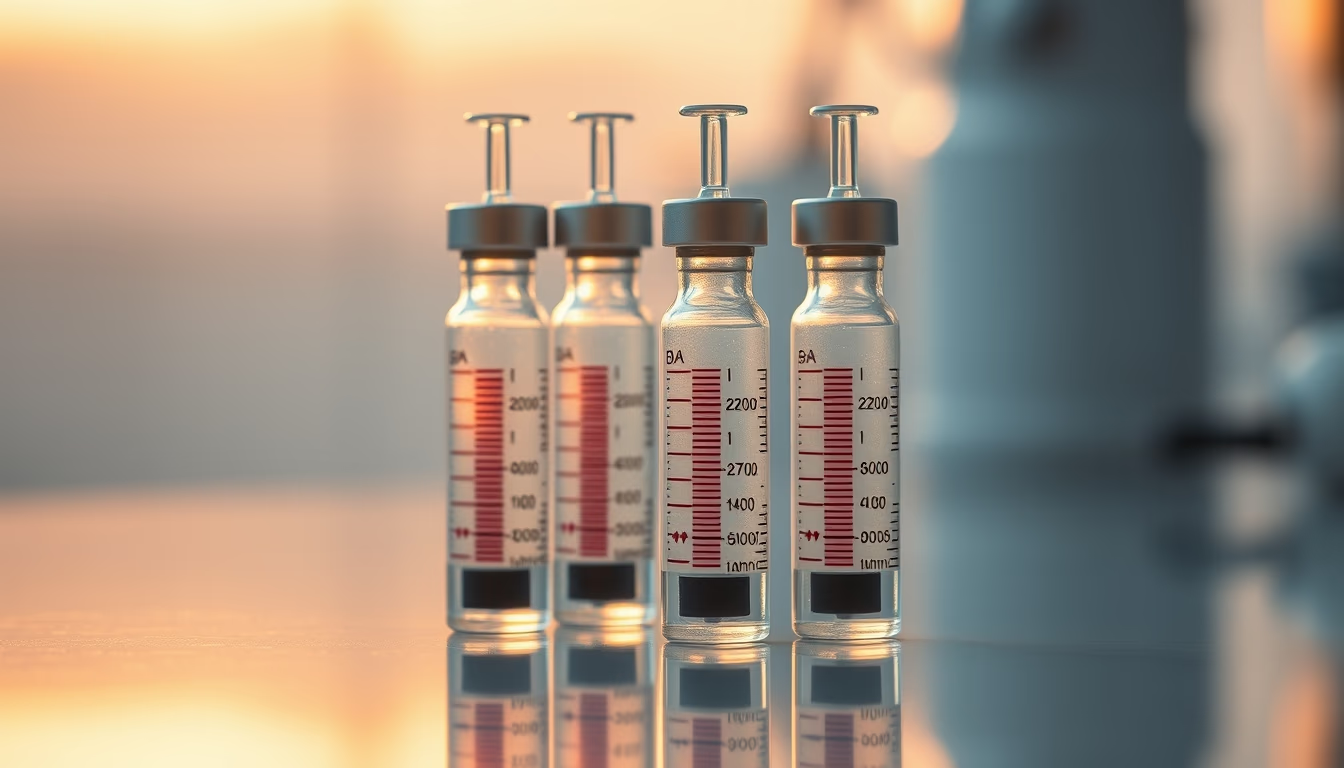
Medical syringe vials and ampoules are essential components in healthcare settings, used for storing and administering liquid medications.
About this subject
Medical syringe vials and ampoules are the primary packaging for injectable medications worldwide. These containers are designed to maintain sterility, stability, and safety from manufacture to administration. In countries like the United States and Brazil, billions of units are used each year, especially for vaccines, insulin, and anesthetics.
The most common materials are borosilicate glass and medical-grade plastics such as polypropylene and cyclic olefin polymer (COP). Glass provides an excellent barrier against gases and moisture, making it ideal for sensitive drugs. Plastics are lighter and more impact-resistant, and allow innovative designs like prefilled syringes. The choice depends on the drug's stability profile and transport conditions.
Closure systems with butyl rubber stoppers and aluminum seals ensure tamper evidence and airtight sealing. Sterilization is performed by autoclave or gamma radiation, following ANVISA and FDA standards. During the COVID-19 pandemic, demand for multi-dose vials for vaccines spurred innovations in capacity and compatibility with low dead-space syringes.
Interestingly, vial design has evolved to prevent contamination: smooth edges, color coding, and solvent-resistant labels. International standardization allows syringes from any manufacturer to fit vials, simplifying hospital logistics. Despite the rise of autoinjectors, traditional vials remain essential in resource-limited settings.
Frequently Asked Questions
What is the difference between an ampoule and a vial?
An ampoule is a glass container sealed by melting, used for single doses and broken open. A vial has a rubber stopper and aluminum seal, allowing multiple withdrawals with a needle.
Why are some vials made of glass and others of plastic?
Glass provides a superior barrier against oxygen and moisture, ideal for sensitive drugs. Plastic is lighter, more impact-resistant, and enables designs like prefilled syringes, but may interact with certain drugs.
How are these containers sterilized?
Sterilization by autoclave (steam) or gamma radiation is common. Ampoules are usually sterilized after filling; vials may be sterilized before or after, depending on the aseptic filling process.
Direct URL
https://pub-c7d6a6ea828543ac903a74a341ccb2e1.r2.dev/imagens/medical-syringe-vials-architectural-photography-p2.avifHow to credit
Include a visible link back to UtilizAí. Copy one of the snippets below:
<a href="https://xn--utiliza-eza.com/en/midia/imagens/medical-syringe-vials-architectural-photography-p2">Medical syringe vials</a> by <a href="https://xn--utiliza-eza.com">UtilizAí</a>, licensed under <a href="https://creativecommons.org/licenses/by/4.0/">CC BY 4.0</a>.
[Medical syringe vials](https://xn--utiliza-eza.com/en/midia/imagens/medical-syringe-vials-architectural-photography-p2) by [UtilizAí](https://xn--utiliza-eza.com), CC BY 4.0
License: CC-BY-4.0