Maya temple chichen
1344×768 · AVIF · CC BY 4.0

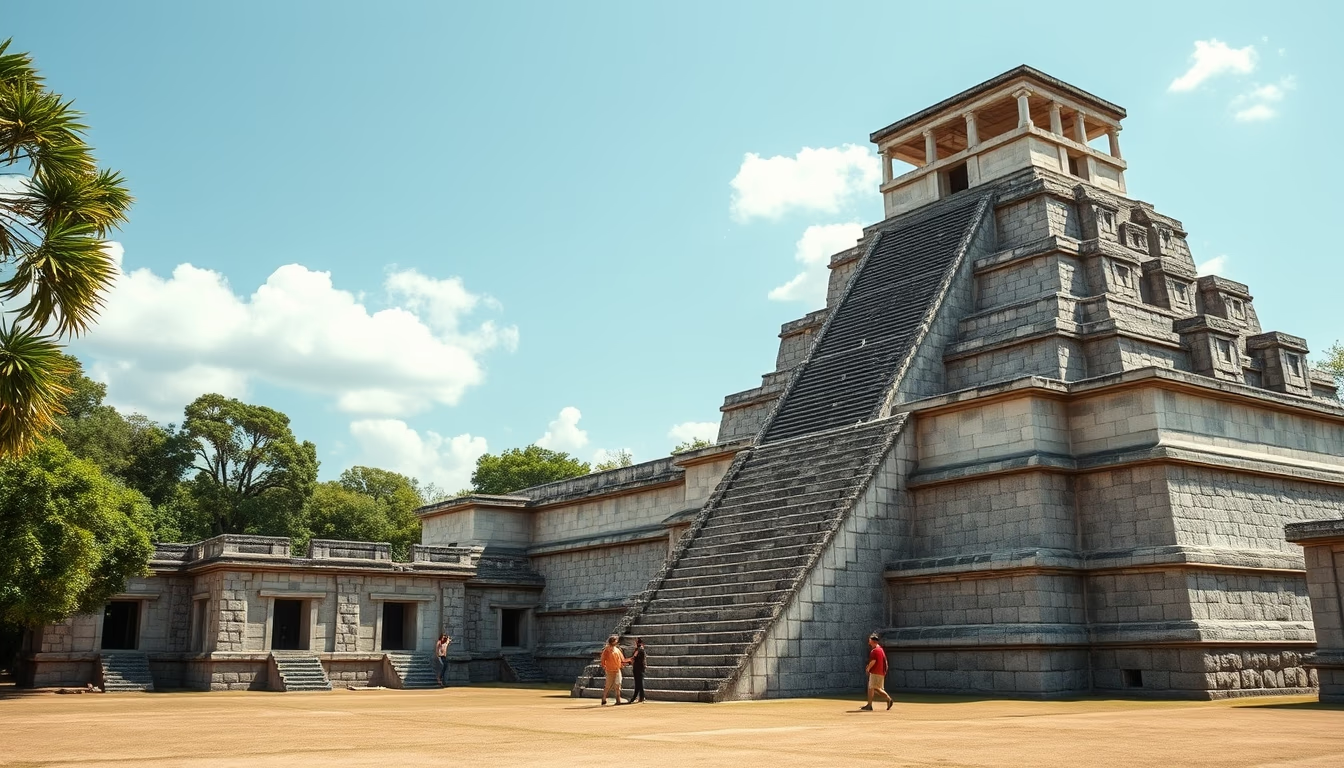
The Temple of Kukulkan at Chichen Itza, also known as El Castillo, is an iconic Mesoamerican pyramid showcasing advanced Mayan astronomical knowledge.
About this subject
The Pyramid of Kukulkan, known as El Castillo, dominates the archaeological site of Chichen Itza in Yucatan, Mexico. Built between the 9th and 12th centuries by the Maya civilization, the structure reaches 30 meters in height and has 365 steps, symbolizing the days of the solar year. Each face of the pyramid has 91 steps, totaling 364 with the top step leading to the temple, a clear reference to the Haab calendar. During the spring and autumn equinoxes, a play of light and shadow creates the illusion of a serpent descending the northern staircase, representing the descent of Kukulkan, the feathered serpent deity.
The construction is not only a religious temple but also a precise astronomical observatory. The Maya aligned the pyramid with the cardinal directions and the movements of the Sun, Venus, and other stars. The monument is part of a larger complex that includes the Great Ball Court, the Sacred Cenote, and the El Caracol observatory. In 1988, Chichen Itza was declared a UNESCO World Heritage Site, and in 2007 it was elected one of the New Seven Wonders of the World. The acoustics are remarkable: a handclap at the base of the staircase produces an echo that mimics the song of the quetzal, a sacred Maya bird.
The pyramid underwent multiple construction phases over earlier structures, revealing a common Maya practice of superimposing temples. Excavations have uncovered a smaller pyramid inside the current one, containing a chamber with a Chac Mool statue and a jaguar throne painted red with jade inlays. These discoveries demonstrate the ritual and political complexity of Chichen Itza, which was a pilgrimage center and regional power during the Maya Postclassic period.
Frequently Asked Questions
Why is the Pyramid of Kukulkan called El Castillo?
El Castillo means 'The Castle' in Spanish, a name given by Spanish conquistadors due to its grandeur and fortress-like appearance, although the Maya called it the Temple of Kukulkan.
What happens during the equinox at Chichen Itza?
During the spring and autumn equinoxes, the setting sun projects shadows that form seven triangles of light on the northern staircase, creating the illusion of a serpent descending, representing the god Kukulkan.
How many steps does the Pyramid of Kukulkan have and what is their significance?
The pyramid has 365 steps in total, corresponding to the days of the solar year. Each of the four sides has 91 steps, and the top step at the temple completes the sum.
Direct URL
https://pub-c7d6a6ea828543ac903a74a341ccb2e1.r2.dev/imagens/maya-temple-chichen-studio-editorial-portrait-p8.avifHow to credit
Include a visible link back to UtilizAí. Copy one of the snippets below:
<a href="https://xn--utiliza-eza.com/en/midia/imagens/maya-temple-chichen-studio-editorial-portrait-p8">Maya temple chichen</a> by <a href="https://xn--utiliza-eza.com">UtilizAí</a>, licensed under <a href="https://creativecommons.org/licenses/by/4.0/">CC BY 4.0</a>.
[Maya temple chichen](https://xn--utiliza-eza.com/en/midia/imagens/maya-temple-chichen-studio-editorial-portrait-p8) by [UtilizAí](https://xn--utiliza-eza.com), CC BY 4.0
License: CC-BY-4.0