Martini olive vodka
1344×768 · AVIF · CC BY 4.0
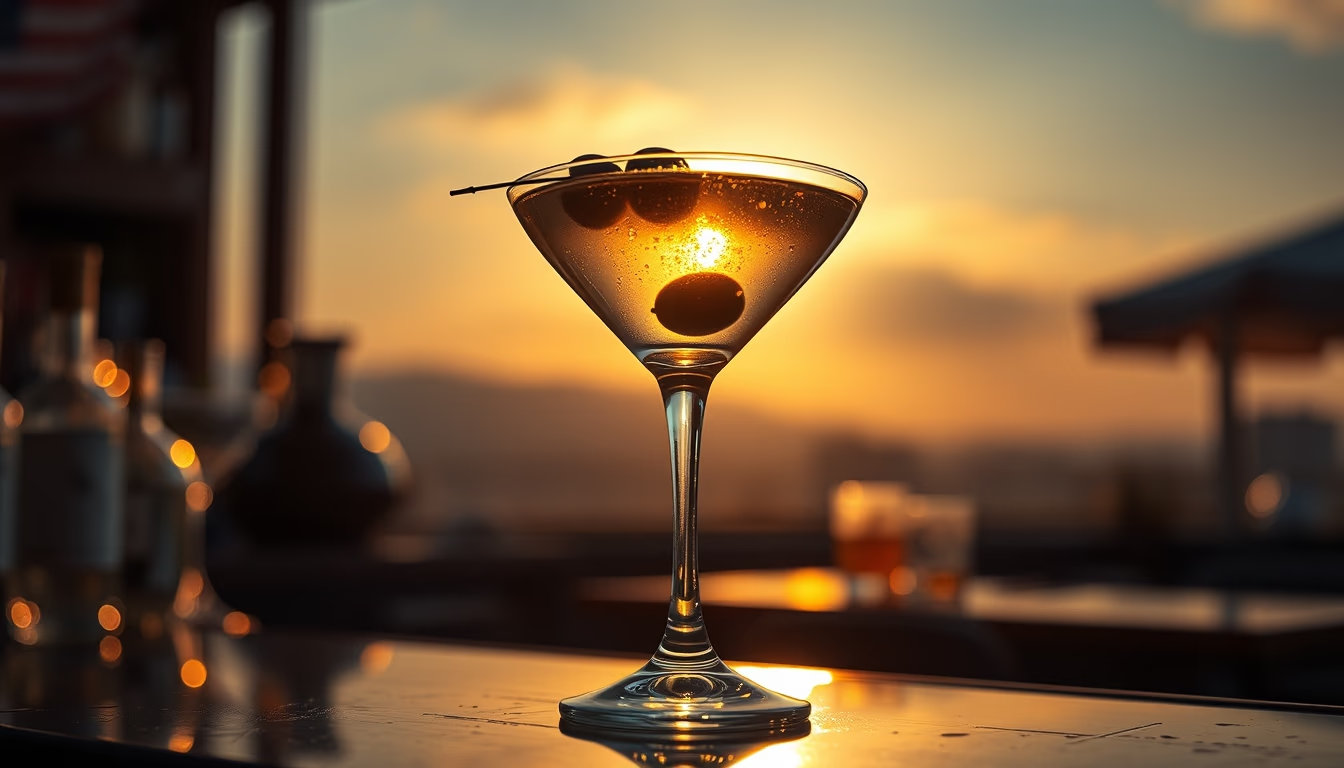
The Martini is a classic cocktail combining vodka or gin with dry vermouth, finished with a green olive. Its origins trace back to 19th-century United States.
About this subject
The origin of the Martini is disputed among bartenders and historians. One widely accepted version attributes its creation to Jerry Thomas in San Francisco around the 1860s, who prepared a cocktail with gin, sweet vermouth, maraschino liqueur, and bitters, garnished with an olive. Another story places the invention in Martinez, California, where a miner supposedly requested something special in 1870. The recipe evolved to use dry vermouth and substitution of gin for vodka, which gained popularity in the 20th century, especially after James Bond adopted the cocktail.
Preparation of the Martini demands precision. Traditionally, London dry gin and dry vermouth are used in a 3:1 or 4:1 ratio, stirred with ice to preserve texture and avoid excessive dilution. The vodka version replaces gin, resulting in a more neutral flavor. The green olive is the classic garnish, usually pitted, and may be stuffed with pimento or blue cheese. Ideal temperature is very cold, served in a pre-chilled Martini glass.
Culturally, the Martini symbolizes elegance and sophistication, immortalized in film by characters like James Bond, who ordered the cocktail "shaken, not stirred." This phrase sparked debate; purists argue stirring preserves flavor, while shaking aerates the drink. The Martini glass design, with its long stem and V-shaped bowl, facilitates handling and maintains temperature. In literature, Ernest Hemingway and F. Scott Fitzgerald were enthusiasts of the drink.
Modern variations include the Dirty Martini, which adds olive brine; the Gibson, substituting the olive with a pickled pearl onion; and the Vesper Martini, created by Ian Fleming, combining gin, vodka, and Lillet wine. The craft cocktail revival brought recipes with artisanal ingredients and bold ratios, such as the 50/50 Martini with equal parts gin and vermouth. The cocktail remains one of the most ordered in bars worldwide, maintaining its status as a mixology icon.
Frequently Asked Questions
What is the difference between a dry Martini and a dirty Martini?
A dry Martini contains very little vermouth and is usually made with gin or vodka. A dirty Martini adds a splash of olive brine, which gives it a salty flavor and cloudy appearance.
Should a Martini be shaken or stirred?
Purists insist that a Martini should be stirred with ice to avoid excessive dilution and preserve its silky texture. Shaking is associated with James Bond but can aerate the cocktail and create small ice crystals.
Why is an olive used in a Martini?
A green olive is the traditional garnish for a Martini. It complements the dry flavor of the cocktail with its salty and oily touch, while also providing visual contrast. It can be served pitted, stuffed, or skewered on a toothpick.
Direct URL
https://pub-c7d6a6ea828543ac903a74a341ccb2e1.r2.dev/imagens/martini-olive-vodka-cinematic-wide-shot-fresh3.avifHow to credit
Include a visible link back to UtilizAí. Copy one of the snippets below:
<a href="https://xn--utiliza-eza.com/en/midia/imagens/martini-olive-vodka-cinematic-wide-shot-fresh3">Martini olive vodka</a> by <a href="https://xn--utiliza-eza.com">UtilizAí</a>, licensed under <a href="https://creativecommons.org/licenses/by/4.0/">CC BY 4.0</a>.
[Martini olive vodka](https://xn--utiliza-eza.com/en/midia/imagens/martini-olive-vodka-cinematic-wide-shot-fresh3) by [UtilizAí](https://xn--utiliza-eza.com), CC BY 4.0
License: CC-BY-4.0