Mars surface red dust
1344×768 · AVIF · CC BY 4.0
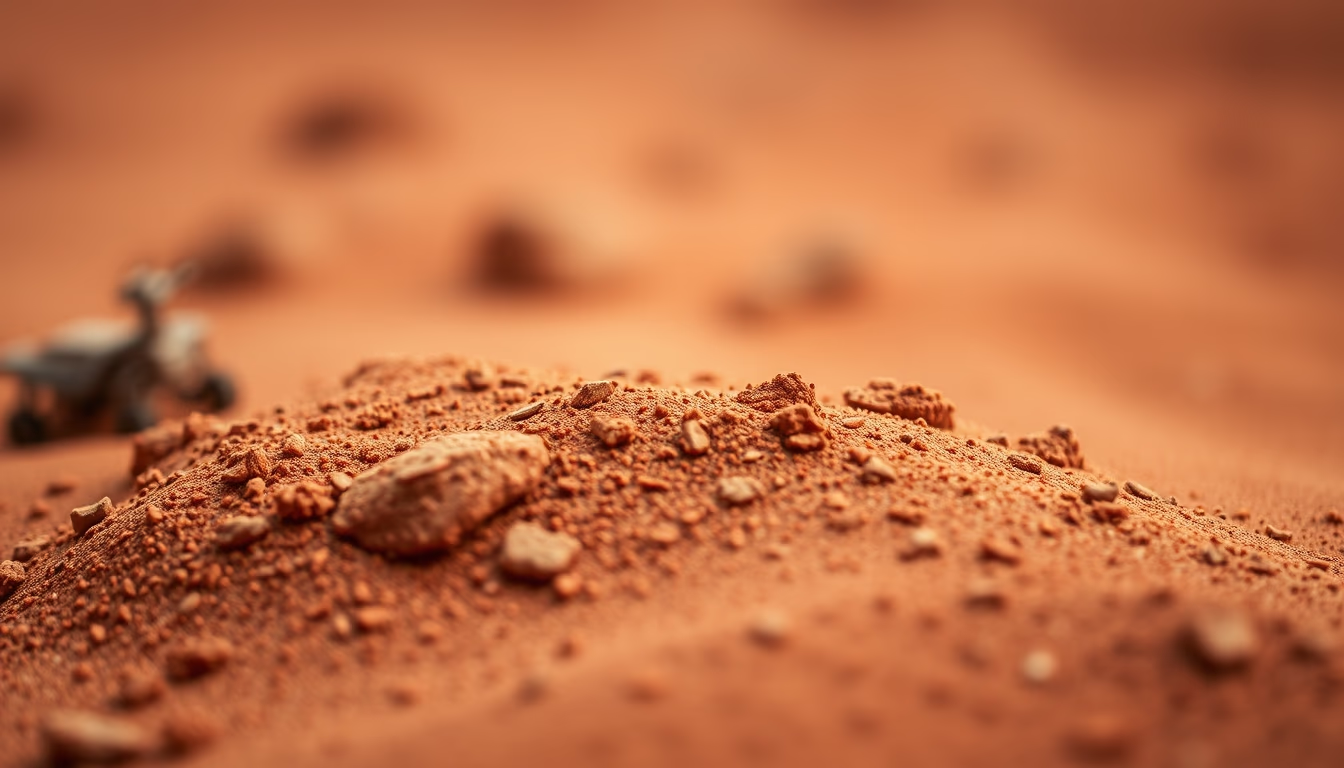
The Martian surface is covered by a thin layer of red dust composed mainly of iron oxide, giving the planet its characteristic reddish hue.
About this subject
The surface of Mars is dominated by vast plains, impact craters, and volcanic mountains, all covered by a layer of fine reddish dust. This dust, ranging from a few centimeters to meters thick in some areas, is the result of billions of years of chemical and physical weathering of basaltic rocks. Its red color comes from iron oxide, or rust, which makes up about 20% of Martian dust. The material is not uniform: it includes minerals such as hematite, goethite, and magnetite, along with silicates and sulfates.
Martian dust is constantly lifted by winds that can reach speeds of up to 100 km/h, generating global dust storms that last for weeks and obscure the sky. These storms are most frequent during the southern hemisphere summer when the planet is closest to the Sun. The dust also forms whirlwinds, called dust devils, which leave dark trails on the surface by removing the upper layer of bright dust and exposing darker rocks.
For robotic missions on Mars, dust poses both a challenge and a source of knowledge. It settles on solar panels, reducing power generation, as happened with the Spirit and Opportunity rovers. In contrast, studying dust reveals clues about Mars' water history, as some iron oxides form in the presence of liquid water. Additionally, the dust is magnetic due to the presence of magnetite, confirmed by experiments on the Viking landers and the Curiosity rover.
Interestingly, Martian dust particles are very small, with an average diameter of only 3 to 5 micrometers, making them electrostatically charged and capable of strongly adhering to surfaces. This characteristic also contributes to the formation of dust clouds that can reach up to 60 km in altitude. The planet's reddish color, visible to the naked eye from Earth, is one of Mars' most iconic features, but the exact composition of the dust varies regionally, such as in the volcanic Tharsis region and the northern plains, where darker deposits are found.
Frequently Asked Questions
Why is Mars red?
Mars is red because its surface is covered by dust rich in iron oxide, which reflects reddish light. This oxide formed over billions of years through the oxidation of ferrous minerals in basaltic rocks, a process similar to rust formation on Earth.
What is Martian dust made of?
Martian dust is primarily composed of iron oxides such as hematite and magnetite, along with silicates, sulfates, and other minerals. The particles are very fine, averaging 3 to 5 micrometers in diameter, and have magnetic properties due to the presence of magnetite.
How does dust affect Mars missions?
Martian dust settles on the solar panels of rovers and landers, reducing energy efficiency. It can also cause mechanical wear and interfere with scientific instruments. Conversely, studying dust provides insights into the planet's geology and climate history.
Direct URL
https://pub-c7d6a6ea828543ac903a74a341ccb2e1.r2.dev/imagens/mars-surface-red-dust-tilt-shift-miniature-p2.avifHow to credit
Include a visible link back to UtilizAí. Copy one of the snippets below:
<a href="https://xn--utiliza-eza.com/en/midia/imagens/mars-surface-red-dust-tilt-shift-miniature-p2">Mars surface red dust</a> by <a href="https://xn--utiliza-eza.com">UtilizAí</a>, licensed under <a href="https://creativecommons.org/licenses/by/4.0/">CC BY 4.0</a>.
[Mars surface red dust](https://xn--utiliza-eza.com/en/midia/imagens/mars-surface-red-dust-tilt-shift-miniature-p2) by [UtilizAí](https://xn--utiliza-eza.com), CC BY 4.0
License: CC-BY-4.0