Mars surface red dust
1344×768 · AVIF · CC BY 4.0
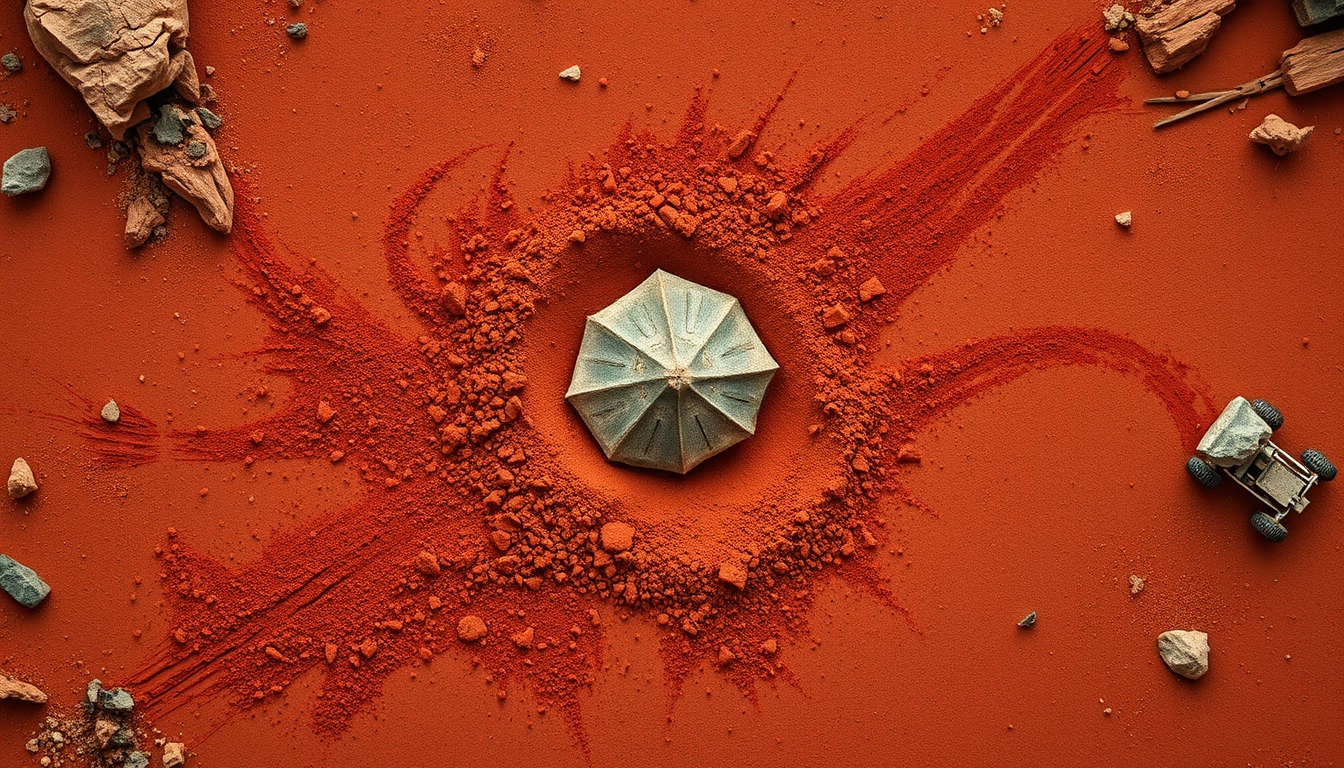
The surface of Mars is covered by an iron oxide-rich regolith, giving the planet its characteristic reddish hue.
About this subject
Mars is often called the Red Planet due to the abundance of iron oxide on its surface. This material, essentially rust in powdered form, covers almost the entire Martian soil. The fine dust is mainly composed of minerals such as olivine, pyroxene, and feldspar, which have been weathered over billions of years by wind and solar radiation. The presence of magnetite also contributes to the magnetic properties detected in some particles.
Dust storms on Mars are common phenomena and can envelop the entire planet for weeks. During these storms, the red dust partially blocks sunlight, reducing surface temperatures. These particles are so fine that they remain suspended in the atmosphere for long periods, altering the Martian sky color from blue to pink or reddish. Robotic rovers like Opportunity and Curiosity have analyzed samples of this regolith, revealing the presence of perchlorates, which could be toxic to potential life forms.
The red color varies in shade depending on the region. In areas such as Valles Marineris or Tharsis, the soil may be lighter or darker due to differences in mineral composition. The dust is also responsible for the dusty appearance of exposed rocks, which often show a red patina. Understanding the distribution of this dust is essential for future missions, as it can obscure solar panels, infiltrate equipment, and pose health risks to astronauts.
Frequently Asked Questions
Why is the soil on Mars red?
The Martian soil is rich in iron oxide, which forms when iron in rocks reacts with oxygen, similar to rusting on Earth. This fine dust covers the entire surface, giving the characteristic reddish color.
Is Martian dust dangerous for future crewed missions?
Yes, Martian dust contains perchlorates, which are toxic to humans in large amounts. Also, very fine particles can penetrate equipment and cause respiratory issues if inhaled.
How do dust storms affect the Martian surface?
Dust storms can engulf the entire planet for weeks, reducing sunlight and altering surface temperatures. They also move large amounts of dust, redistributing the regolith and changing the terrain's appearance.
Direct URL
https://pub-c7d6a6ea828543ac903a74a341ccb2e1.r2.dev/imagens/mars-surface-red-dust-isometric-flat-lay-p0.avifHow to credit
Include a visible link back to UtilizAí. Copy one of the snippets below:
<a href="https://xn--utiliza-eza.com/en/midia/imagens/mars-surface-red-dust-isometric-flat-lay-p0">Mars surface red dust</a> by <a href="https://xn--utiliza-eza.com">UtilizAí</a>, licensed under <a href="https://creativecommons.org/licenses/by/4.0/">CC BY 4.0</a>.
[Mars surface red dust](https://xn--utiliza-eza.com/en/midia/imagens/mars-surface-red-dust-isometric-flat-lay-p0) by [UtilizAí](https://xn--utiliza-eza.com), CC BY 4.0
License: CC-BY-4.0