Mars surface red dust
1344×768 · AVIF · CC BY 4.0
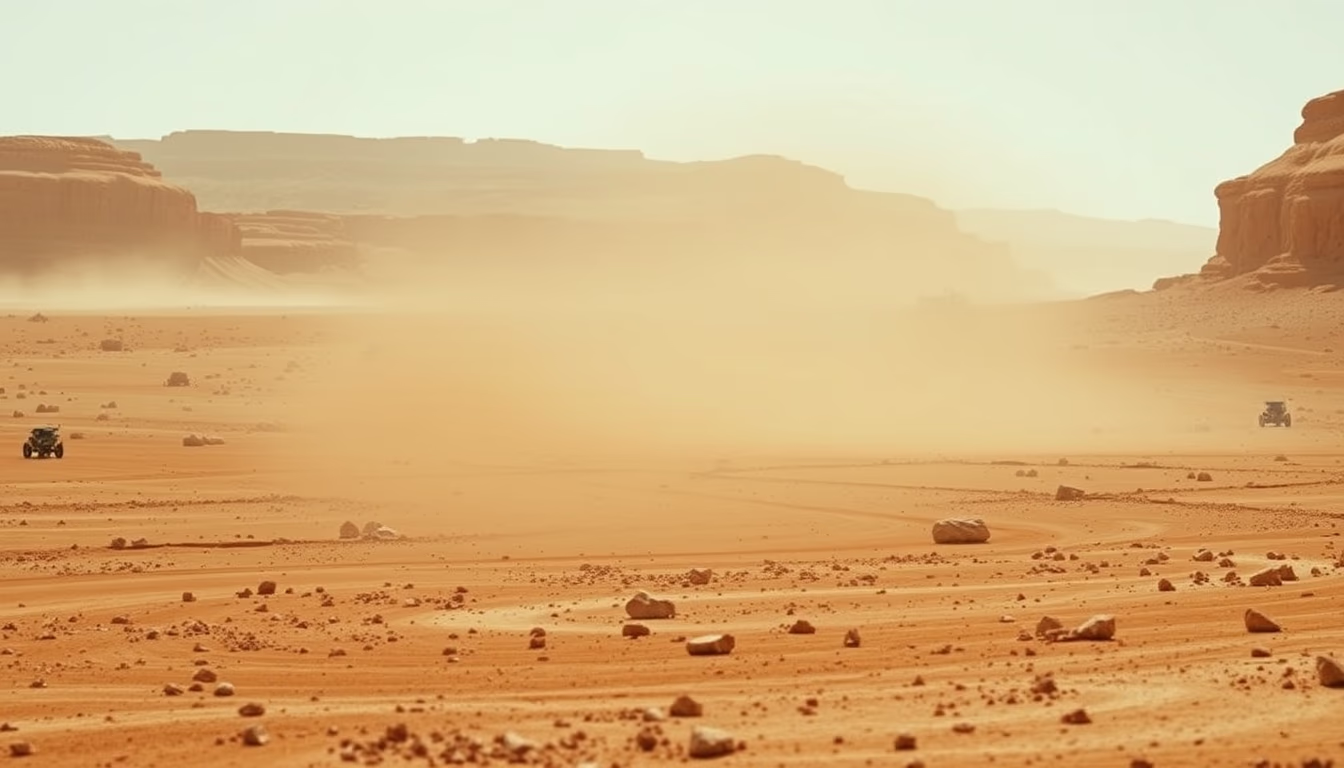
The surface of Mars is covered by dust rich in iron oxide, giving it the reddish hue that characterizes the Red Planet.
About this subject
The red dust covering Mars' surface consists mainly of iron oxides, particularly hematite and magnetite, formed over billions of years from the oxidation of iron-rich minerals in volcanic rocks. This process was driven by past interactions with liquid water and later by ultraviolet radiation and solar winds. Analyses by rovers like Spirit, Opportunity, and Curiosity reveal that the dust also contains silica, aluminum, and traces of sulfur and chlorine. The red color is so striking that Mars is visible to the naked eye from Earth as a reddish point.
The dust layer thickness ranges from millimeters to meters depending on the region. In areas like Tharsis and Elysium, wind keeps the dust thin, while plains such as Utopia Planitia show thicker deposits accumulated over geological timescales. Global dust storms, occurring every few Martian years, can engulf the entire planet, lifting fine particles and temporarily altering atmospheric conditions and surface temperatures. These events have been monitored by orbiters like the Mars Reconnaissance Orbiter and the Mariner 9 probe.
Martian dust is not merely a scenic feature; it poses technical challenges for missions. Electrostatic and fine-grained, it adheres to solar panels and instruments, reducing efficiency. Rovers like Opportunity and Perseverance use cleaning mechanisms or angled panels to mitigate this. Additionally, studies indicate the dust contains perchlorates, salts potentially toxic to astronauts, requiring rigorous filtration in habitats. Despite these challenges, the dust holds key clues to Mars' climatic history: its isotopic and mineralogical composition helps scientists reconstruct the presence of water and the planet's atmospheric evolution.
Frequently Asked Questions
Why is Mars dust red?
Martian dust is red due to high content of iron oxides, mainly hematite (Fe₂O₃), formed when iron-rich minerals react with oxygen in the presence of water or radiation. This process, similar to terrestrial rusting, occurred over Mars' geological history.
Is Martian dust dangerous for astronauts?
Yes, the fine dust containing perchlorates can be toxic if inhaled or ingested. Electrostatic particles also adhere to equipment and suits, potentially causing mechanical and chemical damage. Future missions will require rigorous decontamination and filtration protocols.
How does dust affect robotic missions on Mars?
Dust reduces solar panel efficiency (as seen with rovers Spirit and Opportunity) and can clog optical and mechanical instruments. Recent rovers like Perseverance use angled design and cleaning mechanisms to minimize accumulation. Dust storms can also block sunlight, forcing low-power operations.
Direct URL
https://pub-c7d6a6ea828543ac903a74a341ccb2e1.r2.dev/imagens/mars-surface-red-dust-documentary-photography-p3.avifHow to credit
Include a visible link back to UtilizAí. Copy one of the snippets below:
<a href="https://xn--utiliza-eza.com/en/midia/imagens/mars-surface-red-dust-documentary-photography-p3">Mars surface red dust</a> by <a href="https://xn--utiliza-eza.com">UtilizAí</a>, licensed under <a href="https://creativecommons.org/licenses/by/4.0/">CC BY 4.0</a>.
[Mars surface red dust](https://xn--utiliza-eza.com/en/midia/imagens/mars-surface-red-dust-documentary-photography-p3) by [UtilizAí](https://xn--utiliza-eza.com), CC BY 4.0
License: CC-BY-4.0