Mars rover surface red
1344×768 · AVIF · CC BY 4.0
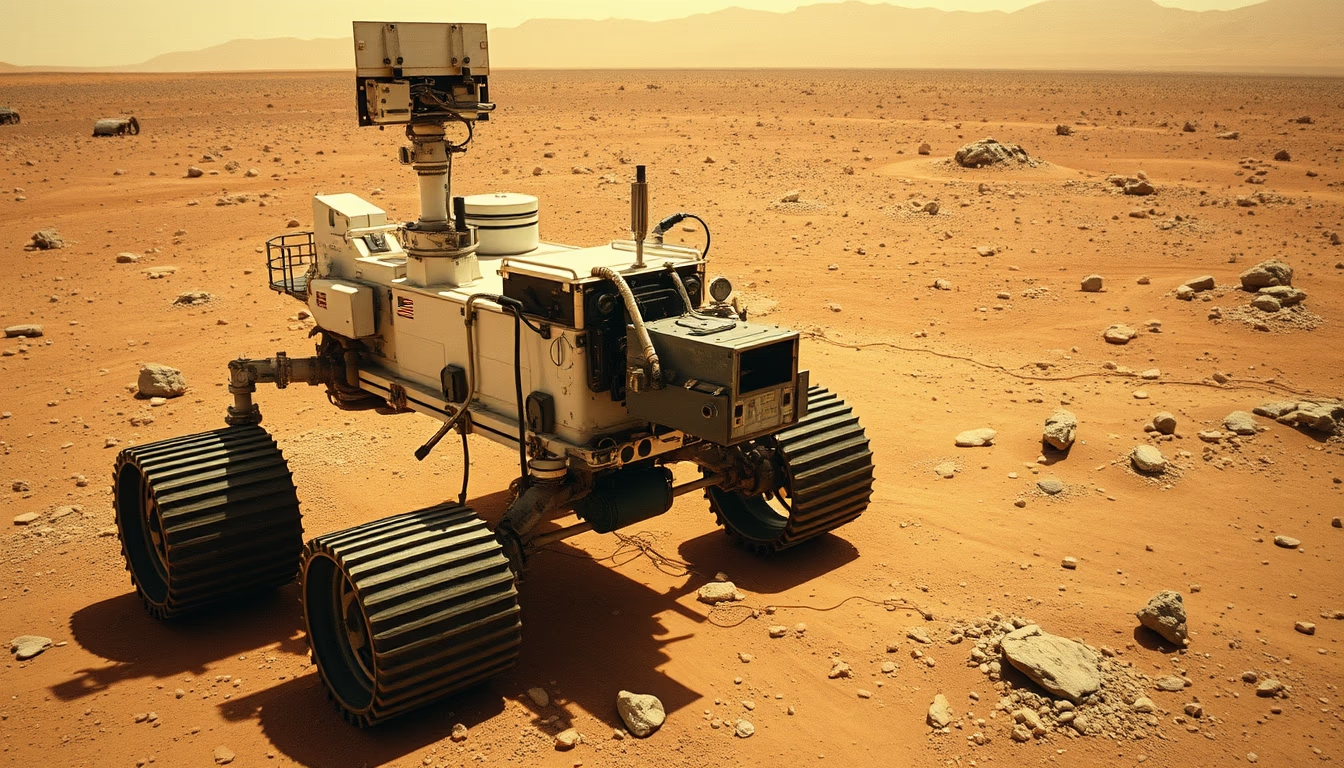
Mars rovers have been exploring the Martian surface since 1997, sending crucial scientific data about geology and past habitability.
About this subject
Mars rovers are robotic vehicles designed to traverse the Martian surface, collecting samples, taking photographs, and conducting experiments. The first successful rover was Sojourner, part of the Mars Pathfinder mission in 1997. It weighed only 10.5 kg and operated for 83 days, far beyond its planned 7-day lifespan. Since then, NASA has sent larger rovers, such as the twin Spirit and Opportunity (2004), which exceeded all expectations: Opportunity traveled over 45 km over 14 years. Curiosity, launched in 2011, is a car-sized mobile laboratory equipped with instruments to analyze rocks and soil for organic compounds. Perseverance, which landed in 2021, collects samples for future return to Earth and tests oxygen production from the Martian atmosphere.
The Martian surface is covered with fine dust rich in iron oxide, giving it the characteristic red color. Rovers must overcome extreme challenges, such as temperatures dropping to -90°C at night, dust storms that can last weeks, and intense radiation due to the lack of a magnetic field. Solar panels powered the early rovers, but Curiosity and Perseverance use radioisotope thermoelectric generators, allowing operation day and night.
Landing sites are chosen strategically: craters like Gale (Curiosity) and Jezero (Perseverance) once hosted lakes, increasing the chance of finding traces of microbial life. Images sent by the rovers reveal dunes, sedimentary mountains, and dry riverbeds, helping to reconstruct the planet's geological and climatic history. To date, no rover has found conclusive evidence of life, but analyses continue.
Frequently Asked Questions
How many rovers have successfully landed on Mars?
As of 2025, six NASA rovers have landed successfully: Sojourner (1997), Spirit (2004), Opportunity (2004), Curiosity (2012), Perseverance (2021), and the Chinese Zhurong (2021). The Soviet Union's Mars 2 and Mars 3 also attempted but failed.
What is the main difference between Curiosity and Perseverance?
Curiosity is a geochemical laboratory that analyzes rocks and soil in place. Perseverance focuses on astrobiology, collecting samples for return to Earth, and carries instruments like MOXIE, which produces oxygen from Martian CO2.
Can the rovers detect life on Mars?
Current rovers search for signs of past life, such as organic compounds and habitable environments. They do not have instruments to detect active life, but future missions may bring samples back for analysis in terrestrial laboratories.
Direct URL
https://pub-c7d6a6ea828543ac903a74a341ccb2e1.r2.dev/imagens/mars-rover-surface-red-lo-fi-disposable-camera-p3.avifHow to credit
Include a visible link back to UtilizAí. Copy one of the snippets below:
<a href="https://xn--utiliza-eza.com/en/midia/imagens/mars-rover-surface-red-lo-fi-disposable-camera-p3">Mars rover surface red</a> by <a href="https://xn--utiliza-eza.com">UtilizAí</a>, licensed under <a href="https://creativecommons.org/licenses/by/4.0/">CC BY 4.0</a>.
[Mars rover surface red](https://xn--utiliza-eza.com/en/midia/imagens/mars-rover-surface-red-lo-fi-disposable-camera-p3) by [UtilizAí](https://xn--utiliza-eza.com), CC BY 4.0
License: CC-BY-4.0