Mars rover detailed
1344×768 · AVIF · CC BY 4.0
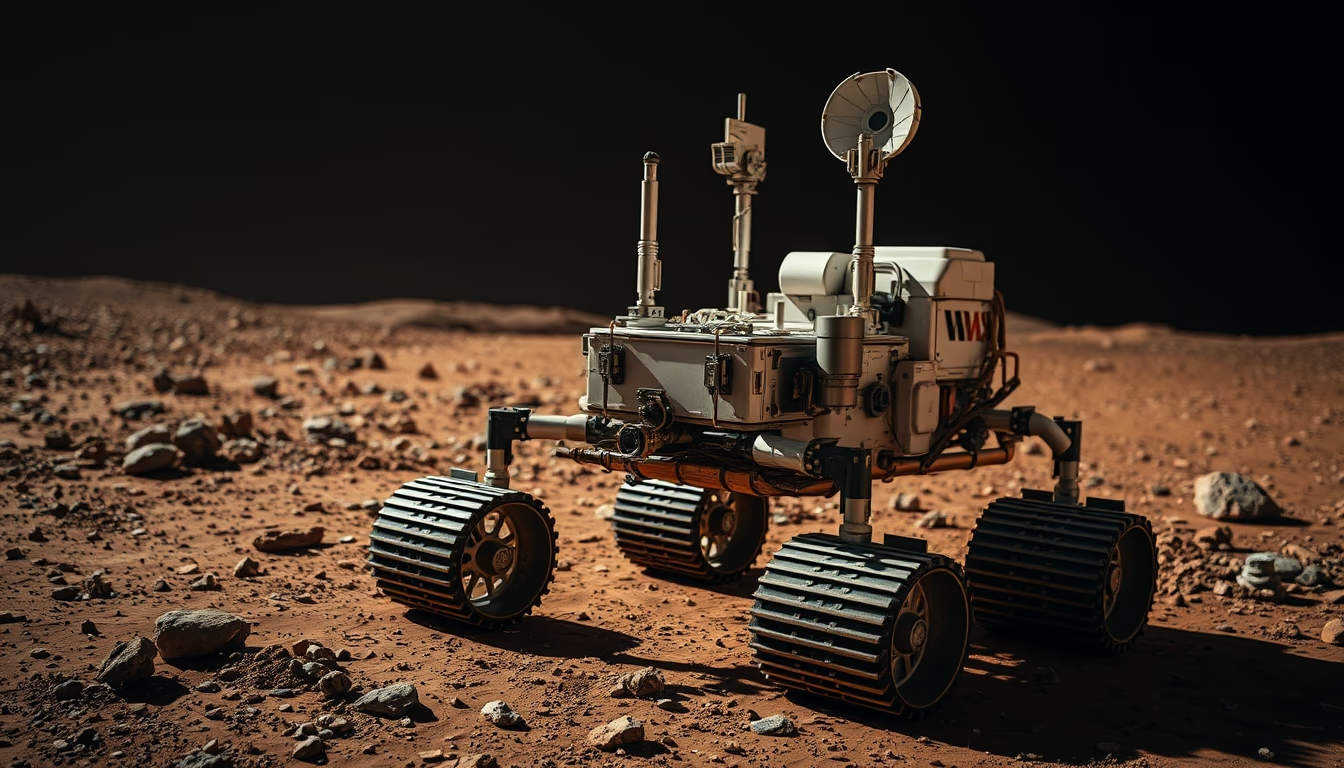
Mars rovers: precision engineering to explore the surface and atmosphere of Mars, unveiling secrets of the red planet.
About this subject
Mars rovers represent the pinnacle of space robotics engineering, designed to withstand extreme conditions: temperatures ranging from -140°C to 20°C, global dust storms, and intense radiation. Each rover is equipped with a suite of scientific instruments, such as high-resolution cameras, spectrometers, and drills for sample collection. The first successful rover, Sojourner, landed in 1997 as part of the Mars Pathfinder mission. Since then, NASA has sent Spirit, Opportunity, Curiosity, and Perseverance, the latter landing in 2021 at Jezero Crater, an ancient river delta. The Perseverance mission includes the Ingenuity helicopter, which flew controlled flights on another planet for the first time. Rovers not only study geology and search for signs of past life but also test technologies for future crewed missions, such as producing oxygen from atmospheric CO2 using the MOXIE instrument. Curiosity, for instance, discovered that Mars once had lakes and rivers with liquid water for billions of years, indicating that the planet was potentially habitable. Each rover operates far longer than expected: Opportunity worked for 14 years, traveling 45 km. The engineering behind these machines involves autonomous navigation systems, solar panels or radioisotope thermoelectric generators (RTGs) for power, and wheels specially designed for rocky terrain. The detailed design, visible in high-resolution images, shows the complexity of robotic arms, antennas, and sensors that make rovers true mobile laboratories.
Frequently Asked Questions
How many successful rovers has NASA sent to Mars?
As of 2024, NASA has sent five successful rovers: Sojourner (1997), Spirit and Opportunity (2004), Curiosity (2012), and Perseverance (2021).
What is the main difference between the Curiosity and Perseverance rovers?
Perseverance focuses on searching for signs of ancient life and collecting samples for a future return mission, while Curiosity studies past martian habitability.
How do rovers communicate with Earth?
They use high-gain or UHF antennas to transmit data to orbiters around Mars, which then relay it to Earth.
Direct URL
https://pub-c7d6a6ea828543ac903a74a341ccb2e1.r2.dev/imagens/mars-rover-detailed-fine-art-photography-p9.avifHow to credit
Include a visible link back to UtilizAí. Copy one of the snippets below:
<a href="https://xn--utiliza-eza.com/en/midia/imagens/mars-rover-detailed-fine-art-photography-p9">Mars rover detailed</a> by <a href="https://xn--utiliza-eza.com">UtilizAí</a>, licensed under <a href="https://creativecommons.org/licenses/by/4.0/">CC BY 4.0</a>.
[Mars rover detailed](https://xn--utiliza-eza.com/en/midia/imagens/mars-rover-detailed-fine-art-photography-p9) by [UtilizAí](https://xn--utiliza-eza.com), CC BY 4.0
License: CC-BY-4.0