Maritime signal flags
1344×768 · AVIF · CC BY 4.0
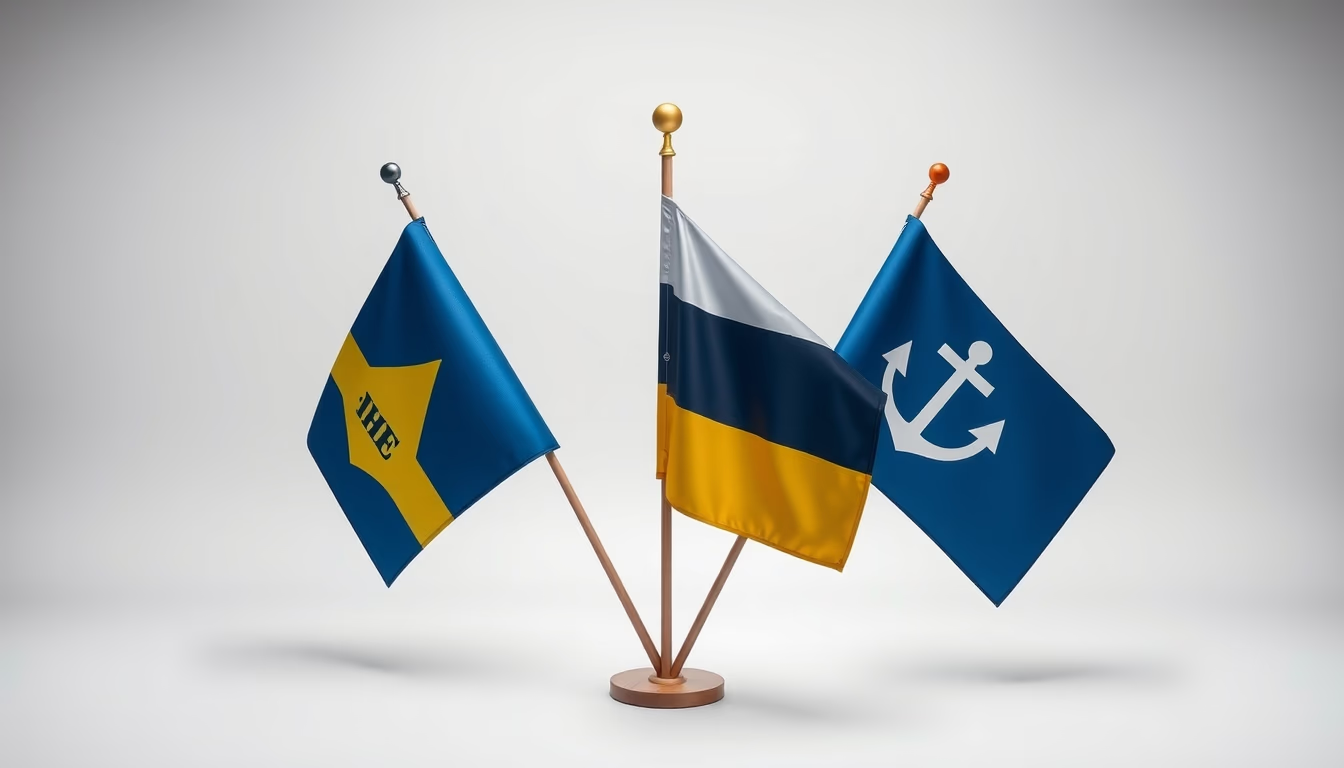
Maritime signal flags are an international system of colored flags used by ships to convey messages at sea.
About this subject
Maritime signal flags, also known as the International Code of Signals (ICS) flags, are a standardized set of 40 flags that represent letters, numbers, and specific messages. Each flag has a unique shape, color, and design: 26 flags indicate letters of the alphabet, 10 represent numbers, and 4 are substitute or repeater flags. The system was developed in the 19th century to overcome language barriers and allow visual communication between vessels at sea, even from a distance.
The modern version of the ICS was officially adopted by the International Maritime Organization (IMO) in 1965, with periodic revisions. Flags are hoisted on masts or halyards and can be read individually or in combinations. For example, the 'A' flag (Alfa), white and blue, means 'I am conducting diving tests, keep clear.' The 'O' flag (Oscar), divided in red and yellow, means 'man overboard.' There are also courtesy flags, such as the 'H' flag (Hotel), which in a port indicates that the vessel requires a pilot.
Beyond communication, flags have ceremonial and decorative importance. In regattas and nautical events, sets of small flags are used to adorn vessels. The system also influenced the creation of semaphore flags and other visual codes. One curiosity: the 'M' flag (Mike), featuring a blue cross on a white background, is often used to signal that the ship is stopped or anchored. Despite advances in radio and satellite technology, flags remain a reliable and mandatory tool in emergencies, according to international regulations for preventing collisions at sea (COLREGS).
Frequently Asked Questions
How many flags are there in the International Code of Signals?
There are 40 flags: 26 represent letters of the alphabet, 10 represent numbers (0 to 9), and 4 are substitute (or repeater) flags used to avoid repetition within a single message.
What does the 'B' (Bravo) flag mean in maritime signaling?
The 'B' (Bravo) flag, red and swallow-tailed, means 'I am taking in, discharging, or carrying dangerous cargo.' It is commonly flown by oil tankers or chemical carriers.
Are signal flags still used today?
Yes, they are still used, especially in emergencies or when radio equipment fails. They are also mandatory in certain situations, such as on navy vessels or during visual communication drills.
Direct URL
https://pub-c7d6a6ea828543ac903a74a341ccb2e1.r2.dev/imagens/maritime-signal-flags-studio-still-life-fresh10.avifHow to credit
Include a visible link back to UtilizAí. Copy one of the snippets below:
<a href="https://xn--utiliza-eza.com/en/midia/imagens/maritime-signal-flags-studio-still-life-fresh10">Maritime signal flags</a> by <a href="https://xn--utiliza-eza.com">UtilizAí</a>, licensed under <a href="https://creativecommons.org/licenses/by/4.0/">CC BY 4.0</a>.
[Maritime signal flags](https://xn--utiliza-eza.com/en/midia/imagens/maritime-signal-flags-studio-still-life-fresh10) by [UtilizAí](https://xn--utiliza-eza.com), CC BY 4.0
License: CC-BY-4.0