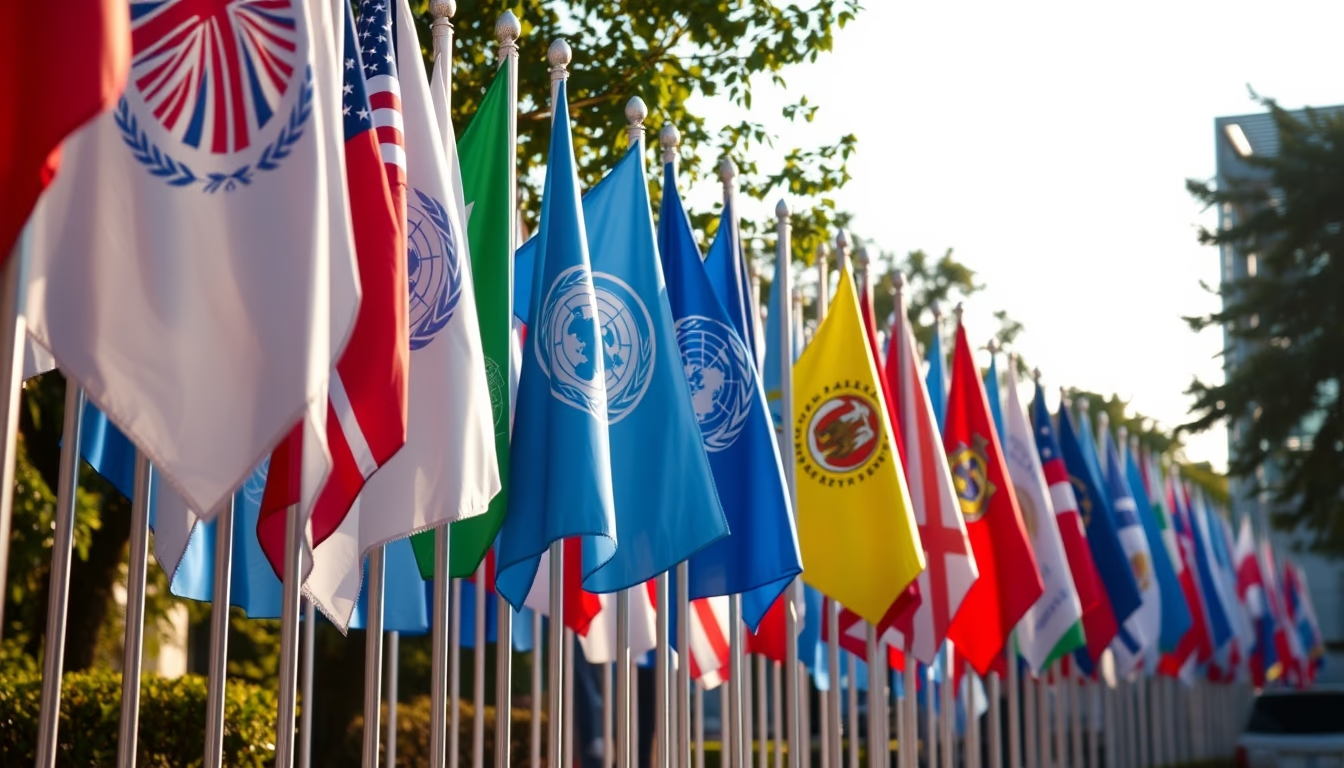
Maritime signal flags
1344×768 · AVIF · CC BY 4.0
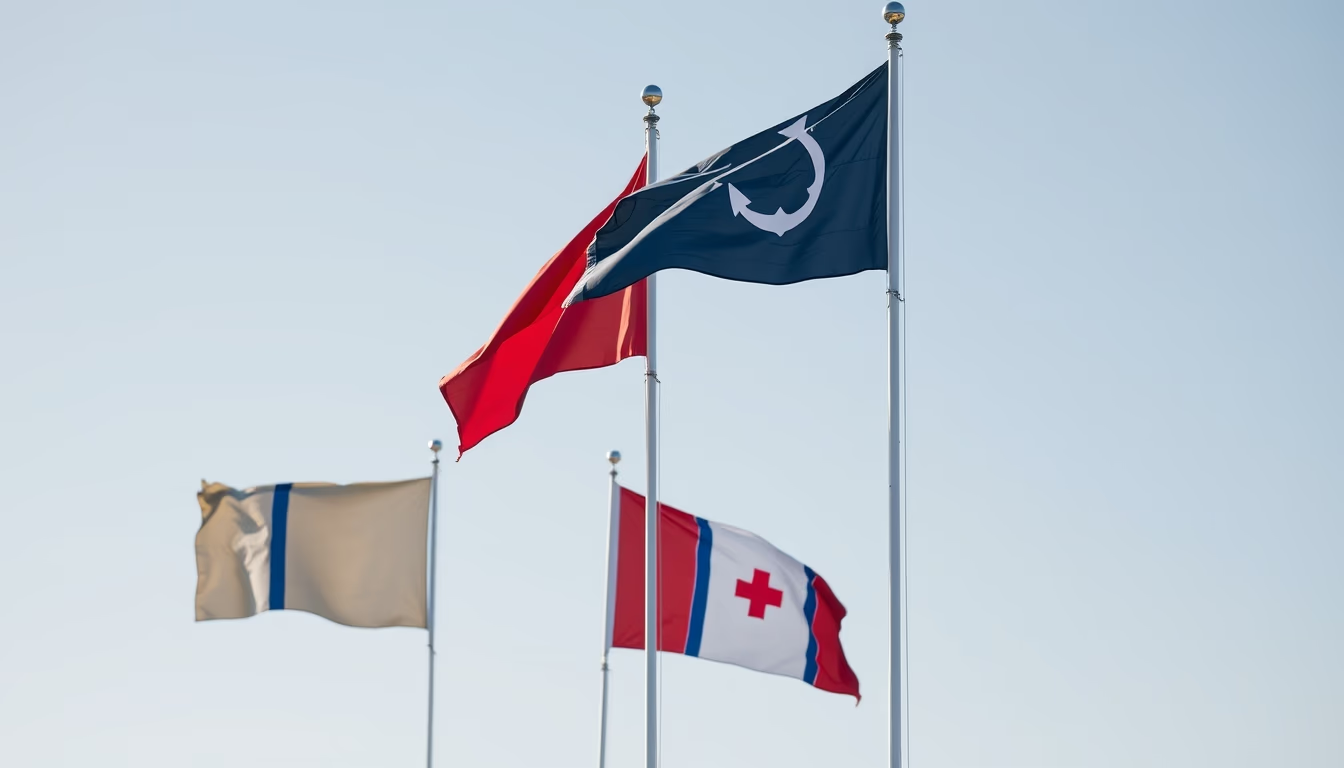
Maritime signal flags are a coded visual communication system used on ships, ports, and naval operations worldwide.
About this subject
Maritime signal flags, also known as the International Code of Signals (ICS) flags, constitute a set of 40 flags representing letters, numbers, and specific symbols. Each flag has a standardized name and meaning, enabling vessels from different nationalities to communicate visually without a common language. The system was established internationally to ensure safety and efficiency at sea, adopted by organizations such as the International Maritime Organization (IMO).
The origin of these flags dates back to the 19th century, when the need for ship-to-ship communication grew with the expansion of maritime trade. The first code of signals was created in 1855 by the British Board of Trade, evolving into the modern ICS, which took effect in 1934 and has undergone periodic revisions. Each flag has a square or triangular shape, with vivid colors like red, yellow, blue, black, and white, chosen to maximize contrast and readability at a distance. For example, flag "A" (Alfa) has a triangular shape divided diagonally into white and blue, meaning "I have a diver down; keep well clear."
In nautical contexts, flags are used to transmit specific messages, such as requests for assistance (flag V, Victor: "I require assistance") or warnings about hazards. Beyond ship-to-ship communication, they are hoisted at ports and on yachts to indicate nationality (courtesy flag) or quarantine status (flag Q, Quebec: "My vessel is healthy and I request free pratique"). The arrangement of flags on a halyard follows a logical sequence to form coded messages. While radio and satellite equipment have reduced their everyday use, flags remain an essential backup method and are mandatory in sailing competitions and naval ceremonies.
Interestingly, these flags have inspired communication systems in other contexts, such as railway signaling and even semaphore. Additionally, the design of some flags has influenced the creation of other national or institutional flags. For those who sail, knowing the meaning of the main flags is a fundamental skill, and sailor courses often include practical training in this ancient visual signaling system.
Frequently Asked Questions
How many flags make up the International Code of Signals?
The complete set consists of 40 flags: 26 letter flags, 10 numeral pennants, 3 substitute flags, and 1 answering pennant.
Are maritime signal flags still used today?
Yes, although radio and satellite are primary means, flags remain a mandatory backup method in many situations, especially in sailing competitions, naval ceremonies, and when electronic communication fails.
What is the meaning of the flag with vertical red and white stripes (flag 'A' in ICS)?
Flag 'A' (Alfa) has a triangular design split vertically into white and blue. It means "I have a diver down; keep well clear and reduce speed."
Direct URL
https://pub-c7d6a6ea828543ac903a74a341ccb2e1.r2.dev/imagens/maritime-signal-flags-minimalist-composition-fresh1.avifHow to credit
Include a visible link back to UtilizAí. Copy one of the snippets below:
<a href="https://xn--utiliza-eza.com/en/midia/imagens/maritime-signal-flags-minimalist-composition-fresh1">Maritime signal flags</a> by <a href="https://xn--utiliza-eza.com">UtilizAí</a>, licensed under <a href="https://creativecommons.org/licenses/by/4.0/">CC BY 4.0</a>.
[Maritime signal flags](https://xn--utiliza-eza.com/en/midia/imagens/maritime-signal-flags-minimalist-composition-fresh1) by [UtilizAí](https://xn--utiliza-eza.com), CC BY 4.0
License: CC-BY-4.0