Maritime signal flags
1344×768 · AVIF · CC BY 4.0
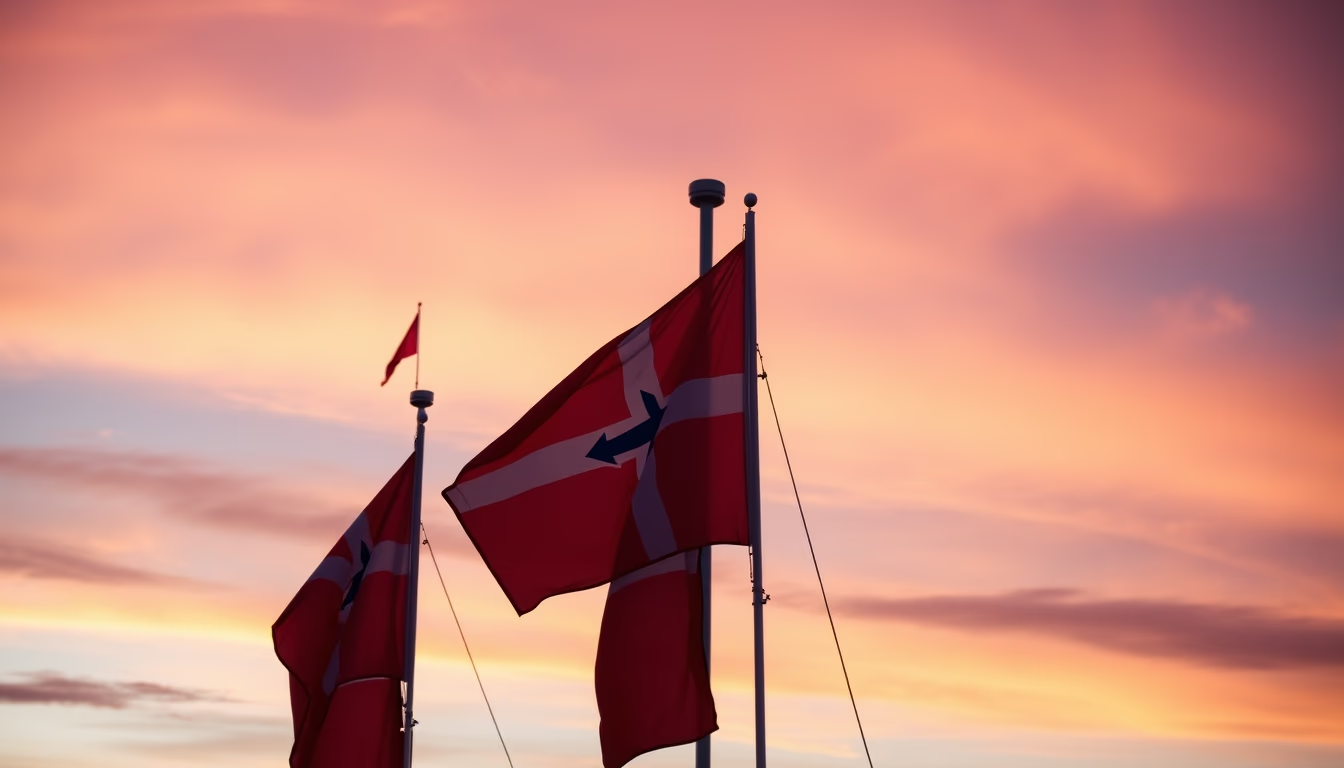
Maritime signal flags are a system of communication between ships and shore, standardized by the International Code of Signals for safe navigation.
About this subject
Maritime signal flags are part of the International Code of Signals, a visual communication system used by vessels and coastal stations. Each flag represents a letter, numeral, or specific message such as 'danger' or 'request for assistance'. The current code was developed from 1855, with major revisions in 1931 and 1969, to ensure global uniformity.
The system includes 26 alphabetical flags, 10 numeral pendants, 3 substitute flags, and one answering pennant. Each flag has distinct shapes and colors, usually rectangular or triangular, with combinations of red, yellow, blue, white, and black. For example, the 'U' flag (blue and yellow) means 'you are running into danger', while the 'W' flag (blue, red, and white) indicates 'I require medical assistance'.
Historically, flags evolved from signals used since ancient times, but the modern system was consolidated by the British Royal Navy and adopted internationally. Beyond emergency communication, flags are used in yacht racing to indicate starts, course changes, and penalties. In ceremonial settings, decorative flags can spell out messages like 'Welcome' or 'Congratulations'.
Despite advances in radio and satellite technology, maritime flags remain a reliable and simple method, especially during equipment failure or in remote areas. Knowledge of basic flag meanings is mandatory for merchant marine officers and recommended for amateur sailors.
Frequently Asked Questions
How many flags are in the International Code of Signals?
The code has 26 alphabetical flags, 10 numeral pendants, 3 substitute flags, and one answering pennant, totaling 40 flags.
How are maritime signal flags used in yacht racing?
In racing, flags indicate starting procedures, course changes, penalties, and messages to competitors, such as the 'P' flag for preparatory signal.
Which flag means 'danger'?
The 'U' flag (blue and yellow) means 'you are running into danger'. The 'V' flag (blue and white) also indicates 'I require assistance'.
Direct URL
https://pub-c7d6a6ea828543ac903a74a341ccb2e1.r2.dev/imagens/maritime-signal-flags-long-exposure-fresh11.avifHow to credit
Include a visible link back to UtilizAí. Copy one of the snippets below:
<a href="https://xn--utiliza-eza.com/en/midia/imagens/maritime-signal-flags-long-exposure-fresh11">Maritime signal flags</a> by <a href="https://xn--utiliza-eza.com">UtilizAí</a>, licensed under <a href="https://creativecommons.org/licenses/by/4.0/">CC BY 4.0</a>.
[Maritime signal flags](https://xn--utiliza-eza.com/en/midia/imagens/maritime-signal-flags-long-exposure-fresh11) by [UtilizAí](https://xn--utiliza-eza.com), CC BY 4.0
License: CC-BY-4.0