Maritime signal flags
1344×768 · AVIF · CC BY 4.0

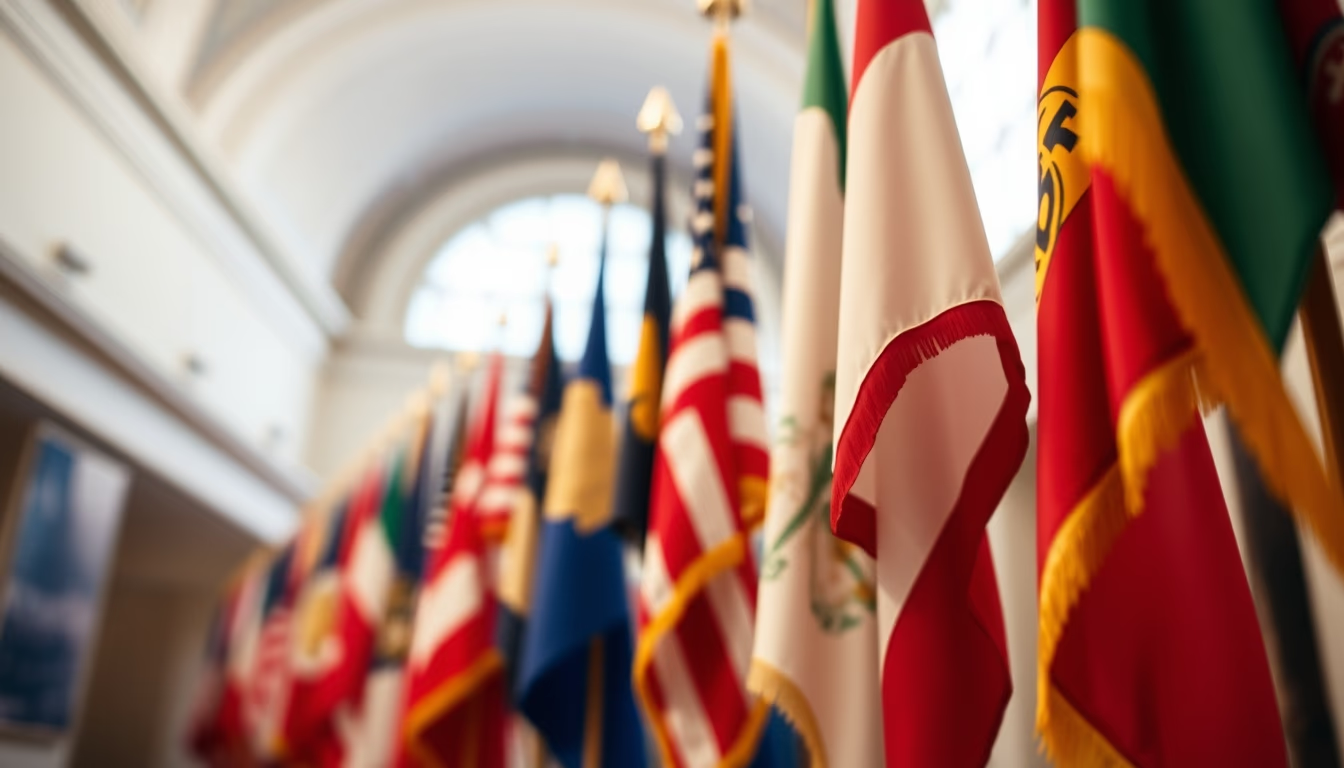
Maritime signal flags, part of the International Code of Signals, are used for ship-to-ship communication and hold significant cultural importance.
About this subject
Maritime signal flags are part of the International Code of Signals (ICS), a globally standardized visual communication system used between vessels. Each flag represents a letter of the alphabet or a numeral, and carries specific meanings when flown alone or in combination. For instance, the 'A' flag (Alpha) means 'I have a diver down; keep well clear', while 'Z' flag (Zulu) indicates 'I require a tug'. Originally developed in the 19th century and revised by the International Maritime Organization (IMO), the code enables message exchange without radio, making it crucial for nautical safety.
Beyond their practical function, maritime signal flags have a strong cultural presence. They are frequently used in nautical-themed decor, such as coastal bars and restaurants, and at events like regattas and festivals. In fashion, prints inspired by these flags appear on clothing and accessories, evoking a classic nautical style. The visual versatility of the flags, with their vibrant colors and geometric shapes, makes them appealing for graphic design and editorial work, such as high-fashion photoshoots exploring maritime themes.
Interestingly, the use of flags for naval communication dates back centuries before the international code. The Romans used colored pennants on ships, and in the 17th century, the British Royal Navy developed a flag signaling system. The modern code was established in 1855 by British initiative and expanded to 26 alphabetic flags, 10 numeral pendants, and 3 repeaters. Despite advances in radio and satellite communications, signal flags remain a reliable and mandatory method in emergencies and naval ceremonies.
In Brazil, the Brazilian Navy uses the ICS in operations and training, and knowledge of flags is part of sailor education. The popularity of these flags also reflects in national symbols, such as the flag of Rio de Janeiro state, which incorporates nautical elements. In editorial shoots, combining signal flags with high-fashion clothing creates a contrast between naval technical rigidity and creative freedom, resulting in striking images that celebrate global maritime heritage.
Frequently Asked Questions
How many flags are in the International Code of Signals?
The code includes 26 alphabetic flags, 10 numeral pendants, 3 repeaters, and 1 code/answering flag, totaling 40 flags.
Are maritime signal flags still used today?
Yes, despite radio and satellite, they are mandatory in emergencies and used in naval ceremonies, and are also popular in decoration and fashion.
What is the difference between a signal flag and a national flag?
Signal flags represent letters/numbers and have specific meanings, while national flags identify a vessel's nationality. Both can be flown together.
Direct URL
https://pub-c7d6a6ea828543ac903a74a341ccb2e1.r2.dev/imagens/maritime-signal-flags-high-fashion-editorial-fresh6.avifHow to credit
Include a visible link back to UtilizAí. Copy one of the snippets below:
<a href="https://xn--utiliza-eza.com/en/midia/imagens/maritime-signal-flags-high-fashion-editorial-fresh6">Maritime signal flags</a> by <a href="https://xn--utiliza-eza.com">UtilizAí</a>, licensed under <a href="https://creativecommons.org/licenses/by/4.0/">CC BY 4.0</a>.
[Maritime signal flags](https://xn--utiliza-eza.com/en/midia/imagens/maritime-signal-flags-high-fashion-editorial-fresh6) by [UtilizAí](https://xn--utiliza-eza.com), CC BY 4.0
License: CC-BY-4.0