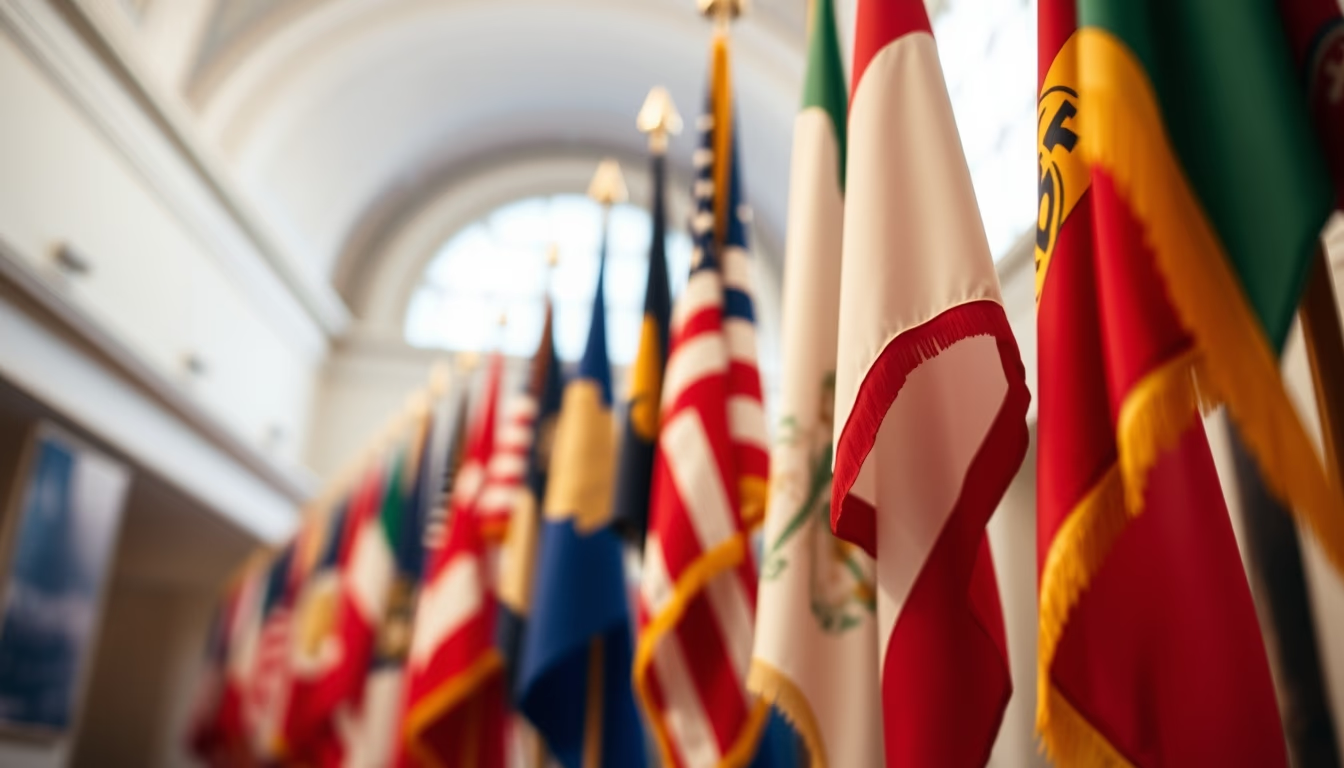
Maritime signal flags
1344×768 · AVIF · CC BY 4.0
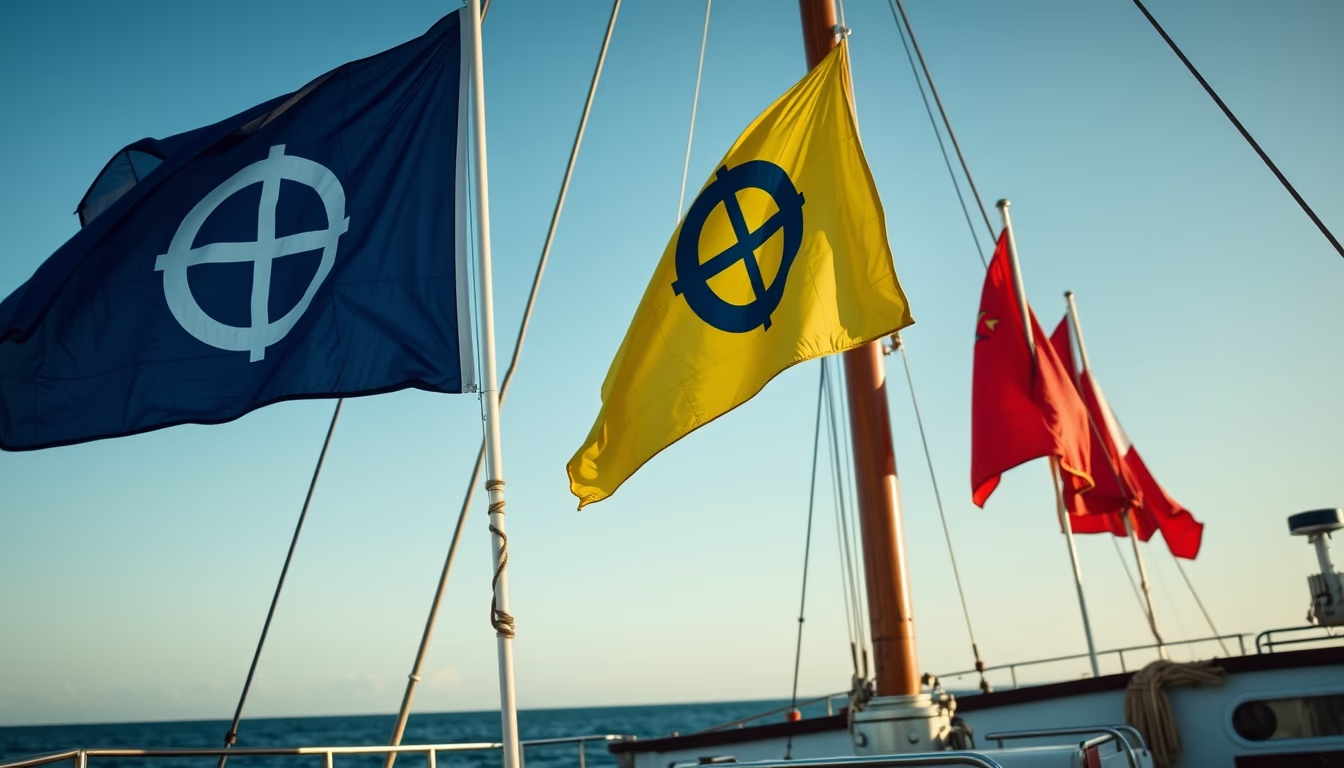
Maritime signal flags are a coded visual communication system used by ships and ports to convey standardized messages.
About this subject
Maritime signal flags form an international code of visual communication between ships and coastal stations. Each flag represents a letter of the alphabet or a specific meaning, and they can be combined to form complex messages. The most widespread system is the International Code of Signals (ICS), established in 1931 and periodically revised by the International Maritime Organization (IMO).
Each of the 26 alphabetic flags, 10 numeral pennants, and 3 substitutes has a distinct shape and color scheme to ensure readability over long distances or in adverse weather. For example, the A (Alfa) flag is swallow-tailed with vertical white and blue stripes, meaning 'I have a diver down; keep well clear at slow speed'. The Z (Zulu) flag is a yellow and black quartered diamond, indicating 'I require a tug'. The system also includes answer flags like H (Hotel) for 'I have a pilot on board'.
Historically, the use of flags for naval communication dates back to the 16th century, but the modern ICS was adopted internationally in 1931 after efforts by the British government. Before that, different navies used their own codes, causing confusion. In 1855, the British Royal Navy published its 'Signal Book for Ships of War', a precursor to the current code. The modern set comprises 40 flags, including answering and code flags, allowing messages like 'Dangerous maneuver ahead' or 'I require medical assistance'.
Despite advances in electronic systems such as radio and AIS, signal flags remain a mandatory and backup communication method on merchant and military vessels. They are particularly useful in situations of power failure or electromagnetic interference. Additionally, their ceremonial use in regattas and naval parades keeps the tradition alive, and many individual flags are recognizable to the public, such as the all-yellow Q (Quebec) flag used to indicate quarantine.
Frequently Asked Questions
How many flags make up the International Code of Signals?
The current ICS has 40 flags: 26 alphabetic, 10 numeral pennants, and 4 substitutes (repeaters used to repeat letters).
Are signal flags still used on modern ships?
Yes, they are mandatory on merchant vessels as a backup communication method, even with electronic systems. They are also used in ceremonies and regattas.
What is the origin of maritime signal flags?
The use of flags for naval communication dates back to the 16th century, but the international code was standardized in 1931 by the International Conference on Safety of Life at Sea.
Direct URL
https://pub-c7d6a6ea828543ac903a74a341ccb2e1.r2.dev/imagens/maritime-signal-flags-documentary-photography-fresh16.avifHow to credit
Include a visible link back to UtilizAí. Copy one of the snippets below:
<a href="https://xn--utiliza-eza.com/en/midia/imagens/maritime-signal-flags-documentary-photography-fresh16">Maritime signal flags</a> by <a href="https://xn--utiliza-eza.com">UtilizAí</a>, licensed under <a href="https://creativecommons.org/licenses/by/4.0/">CC BY 4.0</a>.
[Maritime signal flags](https://xn--utiliza-eza.com/en/midia/imagens/maritime-signal-flags-documentary-photography-fresh16) by [UtilizAí](https://xn--utiliza-eza.com), CC BY 4.0
License: CC-BY-4.0