Manta ray swimming
1344×768 · AVIF · CC BY 4.0
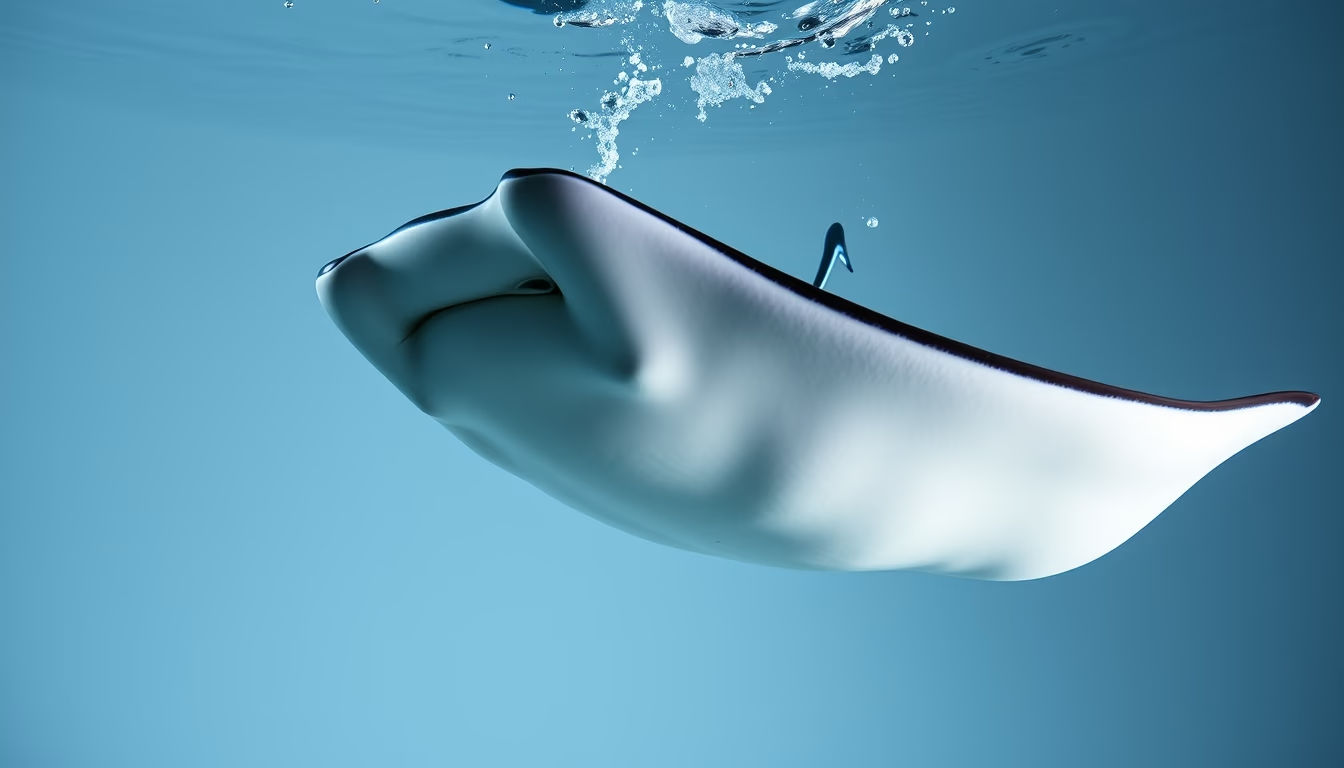
The manta ray (Manta birostris) is one of the largest cartilaginous fish species, known for its wingspan that can exceed 7 meters and its filter-feeding behavior.
About this subject
Manta rays, belonging to the genus Manta, are cartilaginous fish found in tropical and subtropical seas worldwide. They are among the largest rays, with the oceanic manta (Manta birostris) reaching up to 9 meters in wingspan and weighing over 1,350 kg. They feed primarily on plankton and small crustaceans, filtering them from the water as they swim slowly.
These animals are known for their intelligence and curious behavior, often interacting with divers. They have two cephalic lobes on the front that help direct water into their mouths. Unlike many ray species, manta rays do not have a caudal stinger, making them harmless to humans.
Culturally, manta rays are revered in various regions, especially in Southeast Asia and the Fernando de Noronha Archipelago in Brazil, where they are a draw for ecotourism. Unfortunately, they are threatened by overfishing, mainly for their gill plates used in traditional Chinese medicine, and habitat degradation.
Fun fact: they frequently leap out of the water, a behavior not yet fully understood by science. They are estimated to live up to 50 years, with gestation lasting about a year, producing a single pup per reproductive cycle.
Frequently Asked Questions
What is the difference between a manta ray and a spotted eagle ray?
The manta ray (Manta birostris) is larger, with a wingspan up to 9 meters, and usually black or dark blue. The spotted eagle ray (Aetobatus narinari) is smaller, has white spots on its back, and possesses a venomous tail stinger.
Are manta rays dangerous to humans?
No, manta rays are harmless. They lack a stinger and are gentle, curious creatures that often swim near divers.
Where can I see manta rays in Brazil?
The main spots are the Fernando de Noronha Archipelago (PE) and Trindade Island (ES), as well as regions like Abrolhos (BA) and the coast of Rio de Janeiro.
Direct URL
https://pub-c7d6a6ea828543ac903a74a341ccb2e1.r2.dev/imagens/manta-ray-swimming-studio-editorial-portrait-p1.avifHow to credit
Include a visible link back to UtilizAí. Copy one of the snippets below:
<a href="https://xn--utiliza-eza.com/en/midia/imagens/manta-ray-swimming-studio-editorial-portrait-p1">Manta ray swimming</a> by <a href="https://xn--utiliza-eza.com">UtilizAí</a>, licensed under <a href="https://creativecommons.org/licenses/by/4.0/">CC BY 4.0</a>.
[Manta ray swimming](https://xn--utiliza-eza.com/en/midia/imagens/manta-ray-swimming-studio-editorial-portrait-p1) by [UtilizAí](https://xn--utiliza-eza.com), CC BY 4.0
License: CC-BY-4.0