Manta ray swimming
1344×768 · AVIF · CC BY 4.0
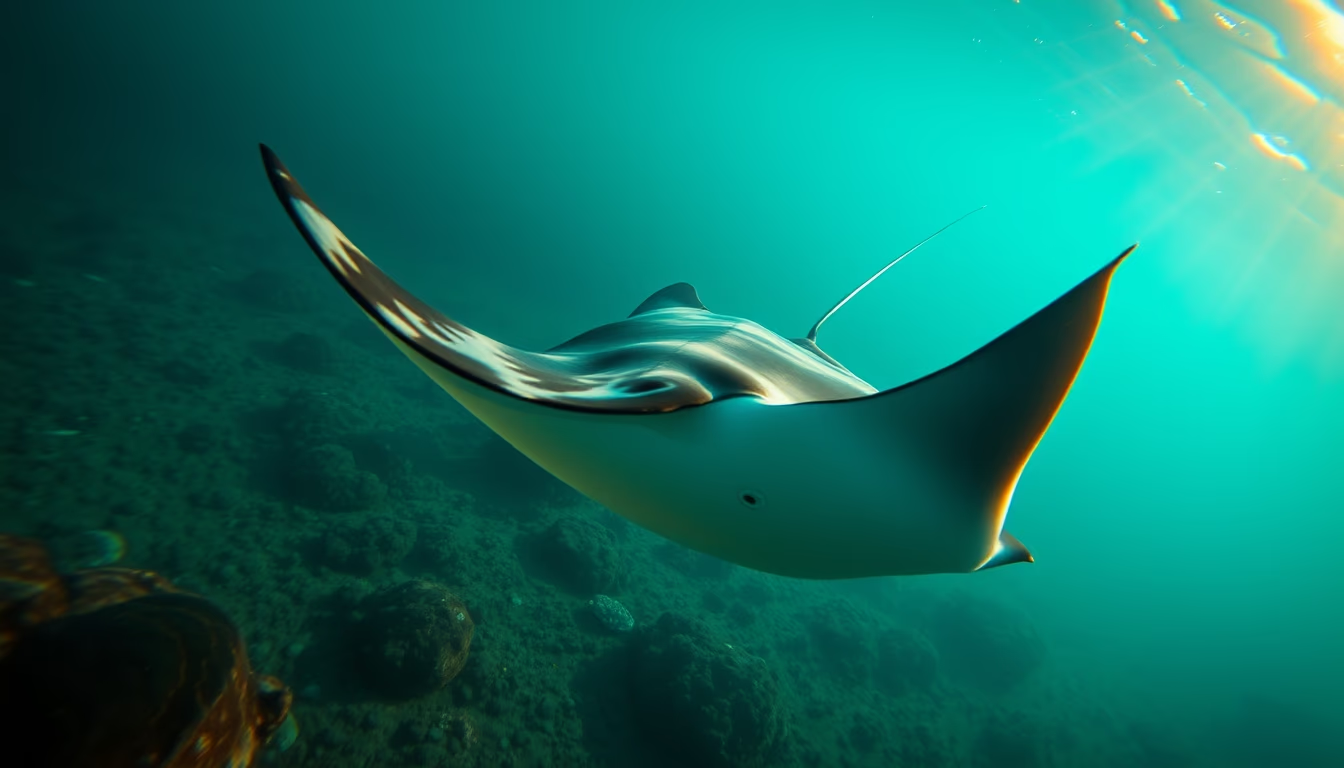
Manta rays are the largest rays in the world, reaching up to 7 meters in wingspan and weighing over a ton.
About this subject
Manta rays (genus Manta or Mobula) are large pelagic rays known for their graceful swimming and remarkable intelligence. Unlike other rays, they lack a stinger and are filter feeders: they feed on plankton and small aquatic organisms, captured through their gills while swimming with their mouths open. They inhabit tropical and subtropical seas worldwide, with notable populations near the St. Peter and St. Paul Archipelago (Brazil), Ningaloo Reef (Australia), and Yap Islands (Micronesia).
These animals are migratory, traveling hundreds of kilometers following plankton-rich currents. A curious behavior is the “somersault”: they perform backflips at the surface to dislodge parasites and optimize feeding. Manta rays also frequent “cleaning stations,” where smaller fish remove dead tissue and parasites from their skin, a classic example of mutualism.
Despite their size, mantas are vulnerable to bycatch and demand for their gill plates in traditional Asian medicine. Since 2013, they have been listed as Vulnerable by the IUCN. Responsible ecotourism, such as snorkeling and diving, has proven a sustainable economic alternative for their conservation in countries like Indonesia and the Maldives.
A striking fact: manta rays have one of the highest brain-to-body mass ratios among fish and can recognize themselves in mirrors, a sign of self-awareness. Their dark dorsal and white ventral coloration (countershading) camouflages them from both aerial and deep-water predators.
Frequently Asked Questions
What is the difference between a manta ray and a stingray?
Manta rays are filter feeders without a stinger, while stingrays have a venomous barb. Mantas also have cephalic fins (horns) and are generally much larger.
Where can I see manta rays in the wild?
Famous spots include the Maldives, Yap (Micronesia), Ningaloo Reef (Australia), and the Revillagigedo Islands (Mexico). In Brazil, the St. Peter and St. Paul Archipelago is a well-known site.
Are manta rays endangered?
Yes, both species of manta rays (reef manta and giant oceanic manta) are listed as Vulnerable by the IUCN, primarily due to overfishing and bycatch.
Direct URL
https://pub-c7d6a6ea828543ac903a74a341ccb2e1.r2.dev/imagens/manta-ray-swimming-cinematic-wide-shot-p0.avifHow to credit
Include a visible link back to UtilizAí. Copy one of the snippets below:
<a href="https://xn--utiliza-eza.com/en/midia/imagens/manta-ray-swimming-cinematic-wide-shot-p0">Manta ray swimming</a> by <a href="https://xn--utiliza-eza.com">UtilizAí</a>, licensed under <a href="https://creativecommons.org/licenses/by/4.0/">CC BY 4.0</a>.
[Manta ray swimming](https://xn--utiliza-eza.com/en/midia/imagens/manta-ray-swimming-cinematic-wide-shot-p0) by [UtilizAí](https://xn--utiliza-eza.com), CC BY 4.0
License: CC-BY-4.0