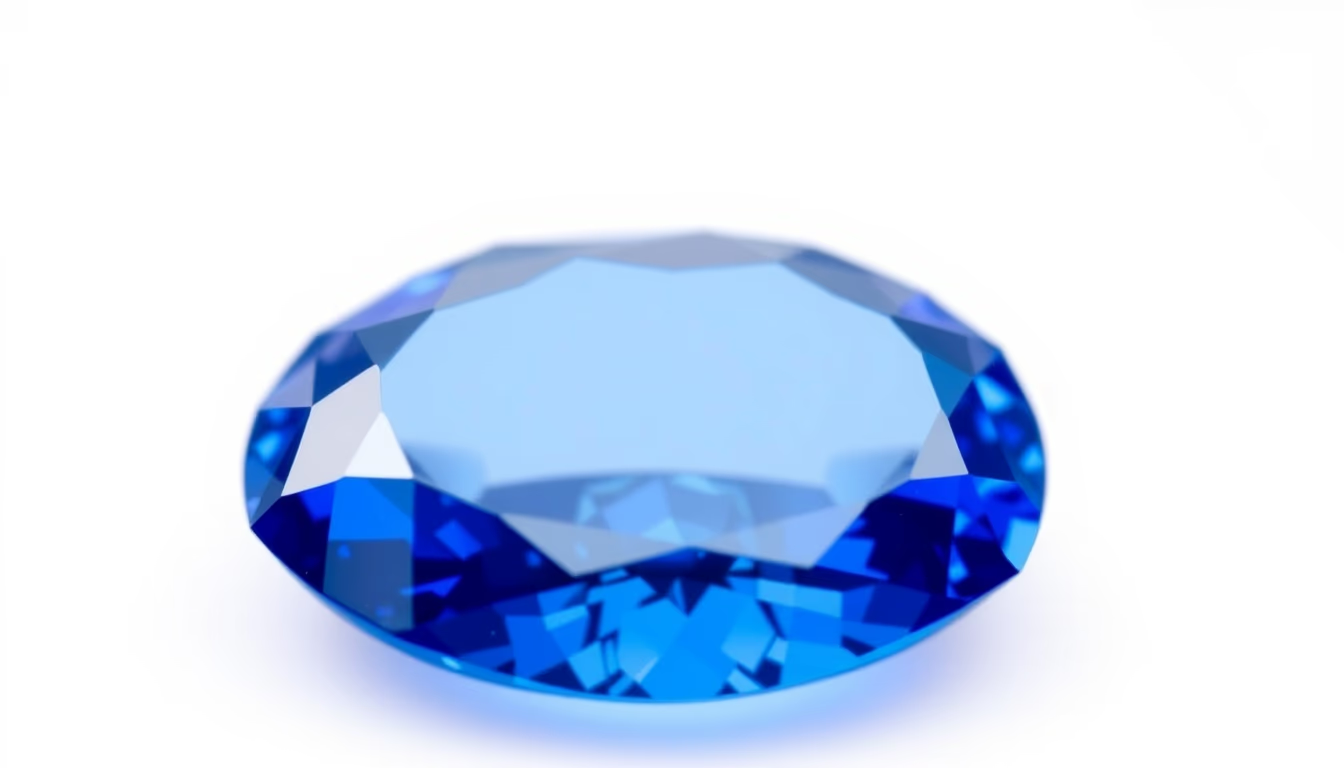
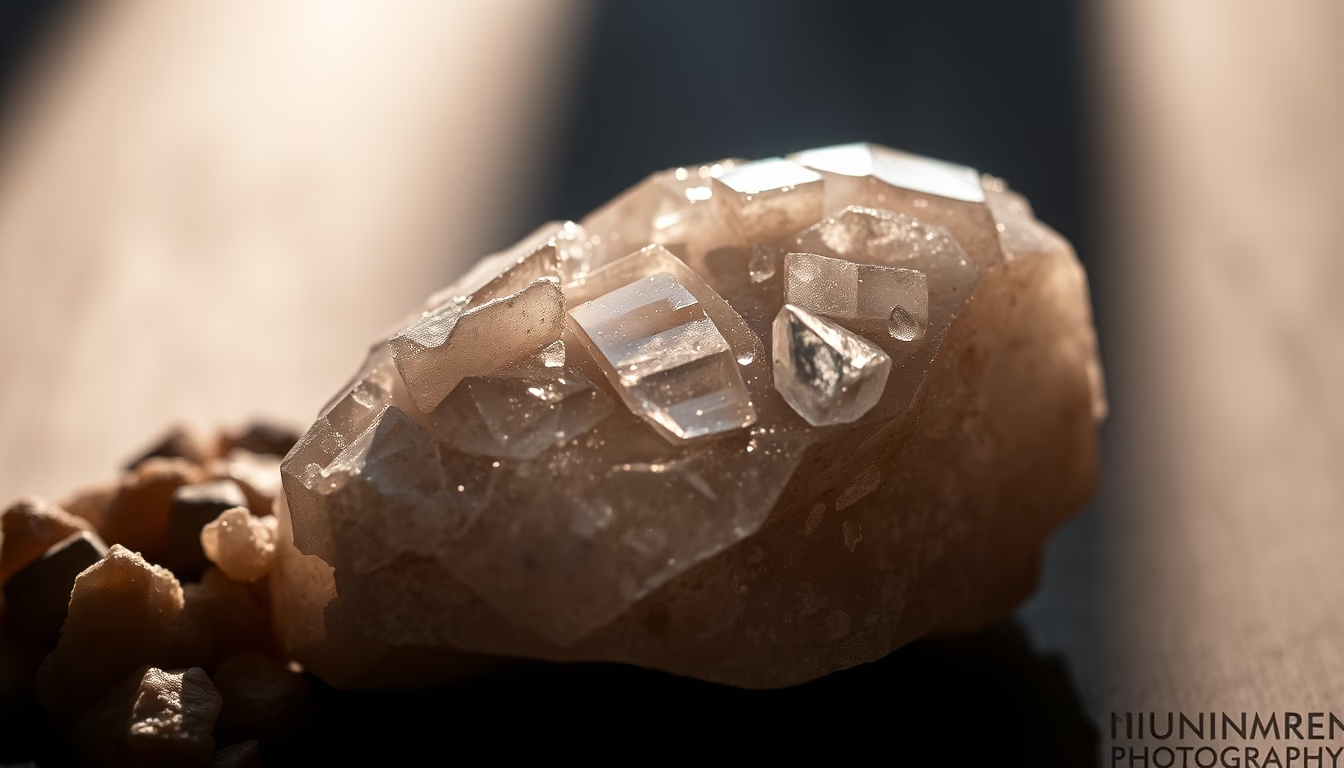
Malachite green pattern
1344×768 · AVIF · CC BY 4.0

Malachite is a green copper carbonate mineral, renowned for its concentric banded patterns and historical use in jewelry and pigments since antiquity.
About this subject
Malachite is a secondary copper mineral formed by the weathering of copper ore deposits in oxidation zones. Its characteristic green color, ranging from light to deep dark green, results from copper ions in its crystal structure. The mineral crystallizes in the monoclinic system but is more commonly found in fibrous or banded aggregates, creating the famous concentric patterns that resemble eyes or rings.
Historically, malachite was used as a copper ore (containing about 57% copper) and as an ornamental stone. In ancient Egypt, it was mined in the Sinai and used for scarabs and amulets. In Tsarist Russia, large blocks of malachite were used to veneer columns and halls, such as the Malachite Room in the Winter Palace in St. Petersburg. During the Renaissance, ground malachite produced the green pigment malachite green, used in tempera paintings and frescoes.
Major sources of malachite include the Democratic Republic of Congo (Katanga), Russia (Urals), Australia, Mexico, and the United States (Arizona). In gemology, it is a popular semi-precious stone but requires care due to its relative softness (hardness 3.5, 4 on Mohs scale) and sensitivity to acids and heat. Because of its copper content, it is toxic and should not be ingested or used in water.
Interestingly, malachite is often associated with protective and healing properties in esoteric traditions, used as a talisman against negative energies. In modern industry, synthetic malachite is produced to mimic natural patterns, but natural malachite remains the most valued by collectors and designers.
Frequently Asked Questions
What is malachite?
Malachite is a green copper carbonate mineral formed by the alteration of copper deposits. It is known for its banded concentric patterns and is used as a gemstone and pigment.
Where is malachite found?
Major deposits are in the Democratic Republic of Congo, Russia (Urals), Australia, Mexico, and the United States (Arizona). It also occurs in smaller quantities elsewhere.
Is malachite toxic?
Yes, due to its copper content, malachite is toxic if ingested or inhaled as dust. Avoid contact with acids and do not use it in water or in jewelry that contacts the mouth.
Direct URL
https://pub-c7d6a6ea828543ac903a74a341ccb2e1.r2.dev/imagens/malachite-green-pattern-studio-editorial-portrait-p1.avifHow to credit
Include a visible link back to UtilizAí. Copy one of the snippets below:
<a href="https://xn--utiliza-eza.com/en/midia/imagens/malachite-green-pattern-studio-editorial-portrait-p1">Malachite green pattern</a> by <a href="https://xn--utiliza-eza.com">UtilizAí</a>, licensed under <a href="https://creativecommons.org/licenses/by/4.0/">CC BY 4.0</a>.
[Malachite green pattern](https://xn--utiliza-eza.com/en/midia/imagens/malachite-green-pattern-studio-editorial-portrait-p1) by [UtilizAí](https://xn--utiliza-eza.com), CC BY 4.0
License: CC-BY-4.0