Mainframe computer ibm
1344×768 · AVIF · CC BY 4.0
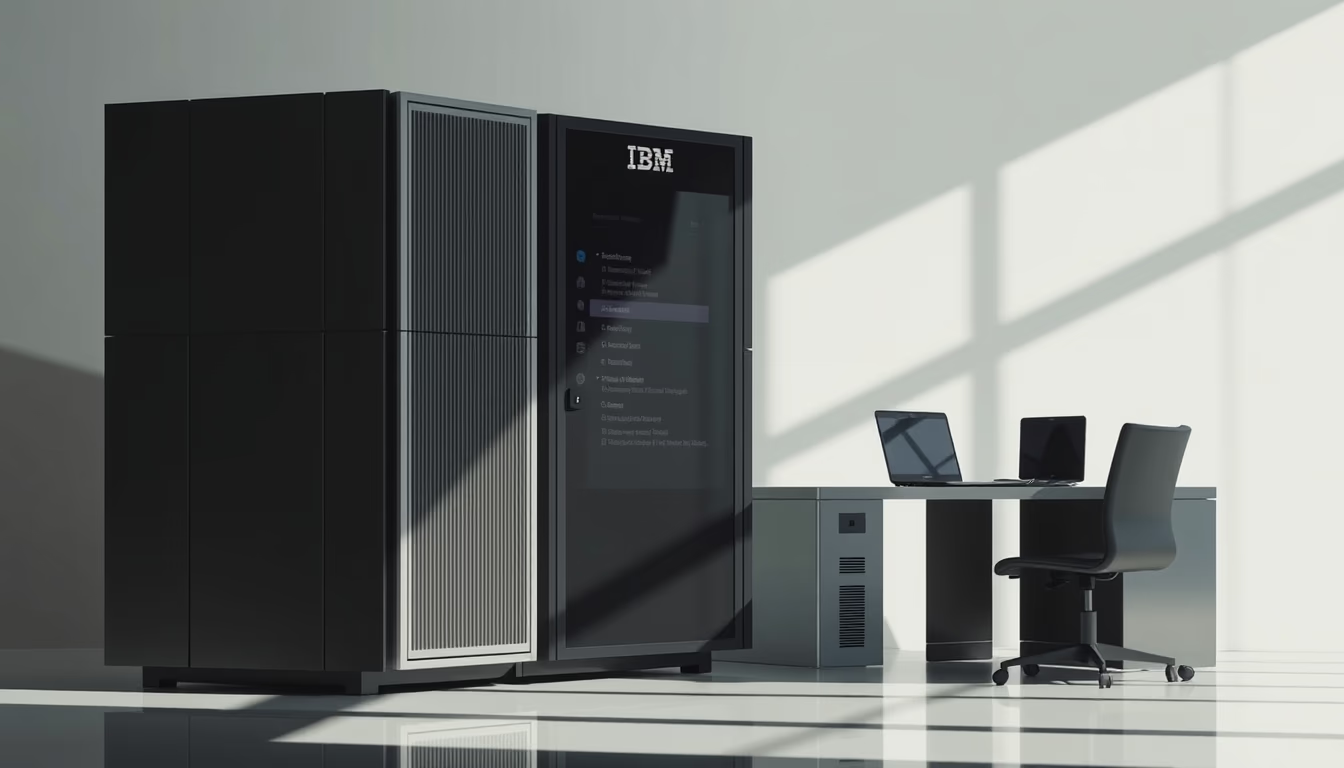
IBM mainframes are large-scale computers renowned for their reliability and massive processing power, used by businesses and governments since the 1960s.
About this subject
IBM mainframes originated with the revolutionary System/360, launched in 1964, which standardized computer architecture and enabled model compatibility. This mainframe family introduced concepts like multiprogramming and virtualization decades before they became mainstream. Today, IBM mainframes (such as the z16 series) run on IBM's own Telum processors and handle mission-critical workloads in sectors like banking, insurance, and air travel.
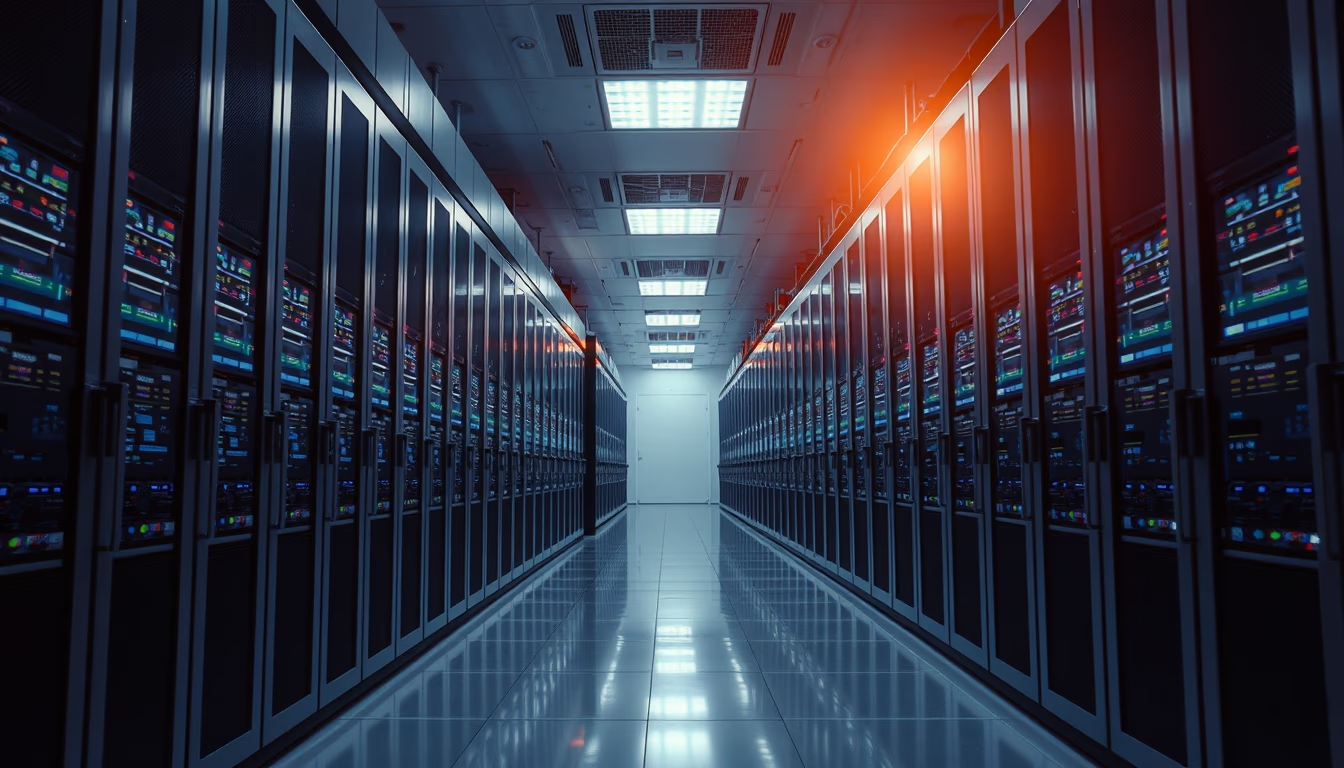
The hallmark of mainframes is reliability: they achieve 99.999% availability (five nines), with hardware redundancy and hot-swappable components. They also offer advanced security with integrated encryption and workload isolation via hypervisors. A single mainframe can host thousands of Linux or z/OS virtual machines, consolidating servers and reducing operational costs.
Today, IBM mainframes are central to global financial transaction systems: they process roughly 87% of credit card transactions worldwide and 68% of corporate IT production workloads. IBM continues to invest in innovation, integrating artificial intelligence and quantum computing simulation into new models.
The mainframe industry has spawned a rich ecosystem of software and services, with languages like COBOL still in active use. Despite predictions of obsolescence, mainframes persist due to their massive efficiency: a modern mainframe consumes less energy per transaction than an equivalent x86 server farm. Companies like IBM are training a new generation of specialists to ensure the technology's continuity.
Frequently Asked Questions
What makes an IBM mainframe different from a regular server?
Mainframes are built for high-volume processing with extreme reliability and security. They feature hardware redundancy, hot-swappable components, and support for thousands of concurrent virtual machines, which traditional x86 servers cannot match at scale.
Are IBM mainframes still in use today?
Yes, heavily. They are the backbone of payment systems, airline reservations, and government databases. An estimated 71% of global financial transactions rely on IBM mainframes.
What programming language is most common on mainframes?
COBOL remains widely used, but modern mainframes also support Java, Python, Node.js, and others. The z/OS operating system provides environments compatible with Linux and Open Source.
Direct URL
https://pub-c7d6a6ea828543ac903a74a341ccb2e1.r2.dev/imagens/mainframe-computer-ibm-minimalist-composition-p11.avifHow to credit
Include a visible link back to UtilizAí. Copy one of the snippets below:
<a href="https://xn--utiliza-eza.com/en/midia/imagens/mainframe-computer-ibm-minimalist-composition-p11">Mainframe computer ibm</a> by <a href="https://xn--utiliza-eza.com">UtilizAí</a>, licensed under <a href="https://creativecommons.org/licenses/by/4.0/">CC BY 4.0</a>.
[Mainframe computer ibm](https://xn--utiliza-eza.com/en/midia/imagens/mainframe-computer-ibm-minimalist-composition-p11) by [UtilizAí](https://xn--utiliza-eza.com), CC BY 4.0
License: CC-BY-4.0