Lotus sutra japanese
1344×768 · AVIF · CC BY 4.0
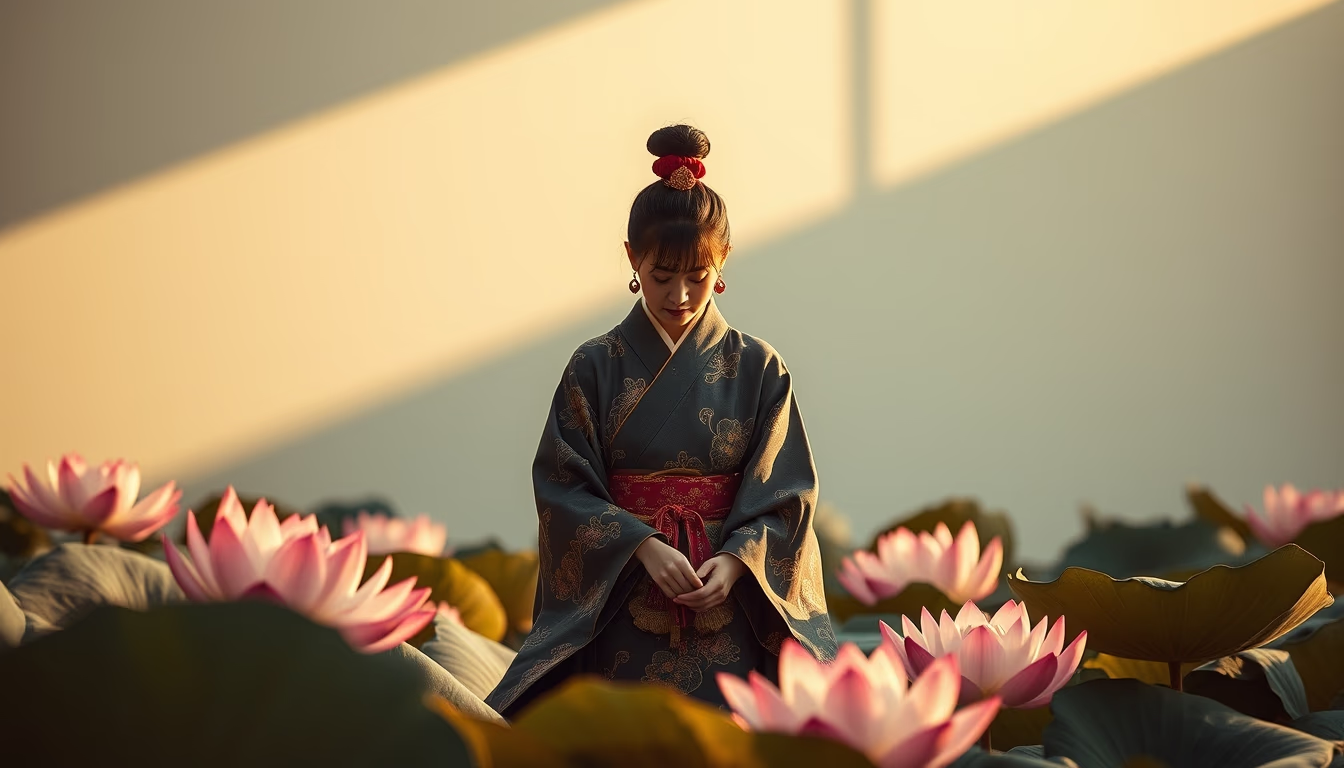
The Lotus Sutra, a core Mahayana Buddhist text, profoundly influenced Japan, shaping schools like Tendai and Nichiren, and inspiring art and culture.
About this subject
The Lotus Sutra (Saddharma Puṇḍarīka Sūtra) is one of the most revered texts in Mahayana Buddhism. Originally composed in Sanskrit around the 1st century BCE, it was translated into Chinese by Kumarajiva in 406 CE, a version that became the basis for its spread across East Asia. In Japan, the sutra arrived as early as the 6th century during the introduction of Buddhism, and quickly gained prominence for its message that all beings can attain enlightenment.
The influence of the Lotus Sutra in Japan is immense. The Tendai school, founded by Saichō in the 9th century, adopted the sutra as its foundational text, promoting its study and recitation on Mount Hiei. Later, in the 13th century, the monk Nichiren proclaimed the Lotus Sutra as the only true doctrine, basing his practice on the recitation of the Daimoku: "Namu Myōhō Renge Kyō". This emphasis gave rise to one of Japan's most distinct and influential Buddhist traditions, with followers to this day performing ceremonies and pilgrimages.
Beyond the religious aspect, the Lotus Sutra inspired rich artistic manifestations. Illuminated manuscripts, such as the "Lotus Sutra of the Itsukushima Shrine" (Heike Nōkyō) from the 12th century, combine refined calligraphy with gold and silver illustrations. These scrolls were offered by samurai clans as acts of merit and devotion. The sutra's iconography also appears in paintings, statues, and temple architecture, notably at Hōryū-ji and Tōdai-ji.
Today, the Lotus Sutra continues to be studied and recited in Japan, both in monastic and lay contexts. Its emphasis on compassion, skillful means (upāya), and spiritual equality resonates in modern Buddhist movements and interfaith dialogues. The text has also influenced Japanese literature and philosophy, with authors such as Daisaku Ikeda applying its principles toward peace.
Frequently Asked Questions
Why is the Lotus Sutra important in Japanese Buddhism?
The Lotus Sutra is central to Japanese Buddhism, especially in the Tendai and Nichiren schools. It teaches that all beings can attain enlightenment and has influenced Japan's art, culture, and politics for centuries.
How is the Lotus Sutra used in religious practice in Japan?
In Nichiren Buddhism, the sutra is venerated through chanting the Daimoku ("Namu Myōhō Renge Kyō") and copying manuscripts. In Tendai, it is studied and recited in rituals. Many temples hold sutra reading ceremonies (Shōmyō).
Are there famous manuscripts of the Lotus Sutra in Japan?
Yes, notable examples include the "Heike Nōkyō" (Lotus Sutra of Itsukushima Shrine) with gold and silver illuminations, and 12th-century scrolls at Hōryū-ji Temple. These manuscripts are considered national treasures.
Direct URL
https://pub-c7d6a6ea828543ac903a74a341ccb2e1.r2.dev/imagens/lotus-sutra-japanese-magazine-editorial-fresh11.avifHow to credit
Include a visible link back to UtilizAí. Copy one of the snippets below:
<a href="https://xn--utiliza-eza.com/en/midia/imagens/lotus-sutra-japanese-magazine-editorial-fresh11">Lotus sutra japanese</a> by <a href="https://xn--utiliza-eza.com">UtilizAí</a>, licensed under <a href="https://creativecommons.org/licenses/by/4.0/">CC BY 4.0</a>.
[Lotus sutra japanese](https://xn--utiliza-eza.com/en/midia/imagens/lotus-sutra-japanese-magazine-editorial-fresh11) by [UtilizAí](https://xn--utiliza-eza.com), CC BY 4.0
License: CC-BY-4.0