Lotus sutra japanese
1344×768 · AVIF · CC BY 4.0
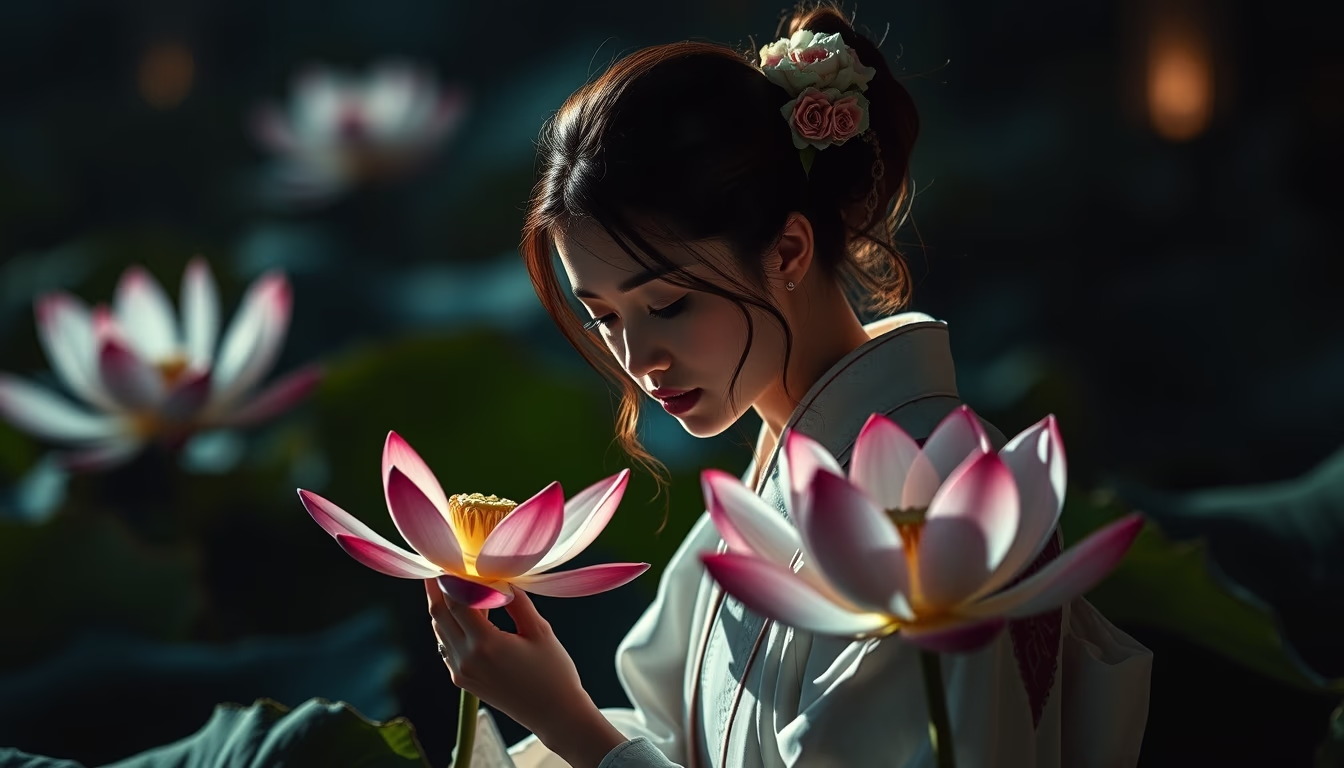
The Lotus Sutra (Myōhōrengekyō) is one of the most revered texts in Mahayana Buddhism, with profound influence on Japanese culture.
About this subject
The Lotus Sutra, known in Japanese as Myōhōrengekyō, is a central text of Mahayana Buddhism, widely disseminated in Japan since the 6th century. Its doctrine emphasizes the universality of enlightenment and the possibility for all beings to attain Buddhahood, regardless of social status or gender. The sutra was translated into Chinese by Kumarajiva in the 5th century, and this version became the basis for Japanese schools such as Tendai and Nichiren. Nichiren, a 13th-century monk, regarded the Lotus Sutra as the only correct teaching for the present age, promoting the recitation of its title (Nam Myōhōrengekyō) as a core practice.
The Lotus Sutra's influence on Japanese art and culture is immense. Illuminated manuscripts from the Heian period are national treasures, adorned with gold and silver on indigo-dyed paper. The sutra also inspired literary works like The Tale of Genji and theatrical performances such as Nō and Kabuki. Famous temples like Enryaku-ji on Mount Hiei and the Kanazawa complex house ancient copies that are objects of pilgrimage and scholarly study.
The Lotus Sutra's content is divided into 28 chapters, filled with parables and teachings on the nature of reality. One of the most well-known passages is the Parable of the Burning House, which illustrates the Buddha's skillful means (upaya) to guide sentient beings to salvation. The doctrine of the single vehicle (ekayana) argues that all Buddhist practices converge into one truth, dissolving hierarchies among schools. This message of inclusivity and hope contributed to the sutra's popularity among laypeople and monastics over the centuries.
Today, the Lotus Sutra continues to be chanted in Japanese temples and homes, especially within the Nichiren school and Soka Gakkai, a lay Buddhist organization. Modern studies explore its influence on pacifist thought and ecology, highlighting the interdependence of all beings. The image of an ancient manuscript of the sutra, with its refined calligraphy and elaborate decoration, evokes centuries of devotion and transmission of the dharma.
Frequently Asked Questions
What is the Lotus Sutra?
It is a sacred text of Mahayana Buddhism that teaches the universality of enlightenment and the possibility for all beings to become Buddhas. In Japan, it is known as Myōhōrengekyō and is central to the Tendai and Nichiren schools.
Why is the Lotus Sutra important in Japan?
It has profoundly influenced Japanese art, literature, and religion. Illuminated manuscripts are national treasures, and its doctrine inspired Buddhist movements like Nichiren's, which promotes chanting the sutra's title as a core practice.
How is the Lotus Sutra used today?
It is chanted in temples and homes, especially by followers of the Nichiren school and Soka Gakkai. It is also studied academically, and its ideas are applied to pacifist and ecological thought.
Direct URL
https://pub-c7d6a6ea828543ac903a74a341ccb2e1.r2.dev/imagens/lotus-sutra-japanese-fine-art-photography-fresh10.avifHow to credit
Include a visible link back to UtilizAí. Copy one of the snippets below:
<a href="https://xn--utiliza-eza.com/en/midia/imagens/lotus-sutra-japanese-fine-art-photography-fresh10">Lotus sutra japanese</a> by <a href="https://xn--utiliza-eza.com">UtilizAí</a>, licensed under <a href="https://creativecommons.org/licenses/by/4.0/">CC BY 4.0</a>.
[Lotus sutra japanese](https://xn--utiliza-eza.com/en/midia/imagens/lotus-sutra-japanese-fine-art-photography-fresh10) by [UtilizAí](https://xn--utiliza-eza.com), CC BY 4.0
License: CC-BY-4.0