Lotus evija
1344×768 · AVIF · CC BY 4.0

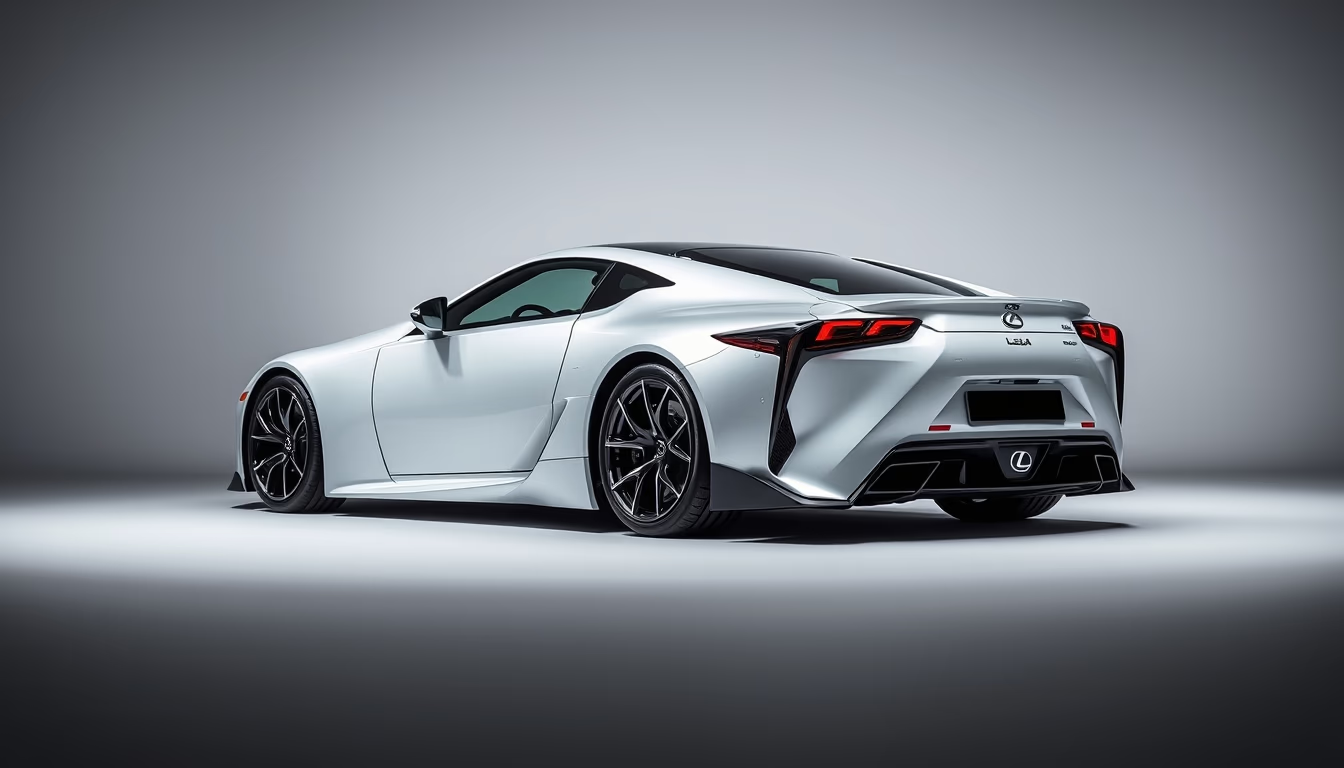
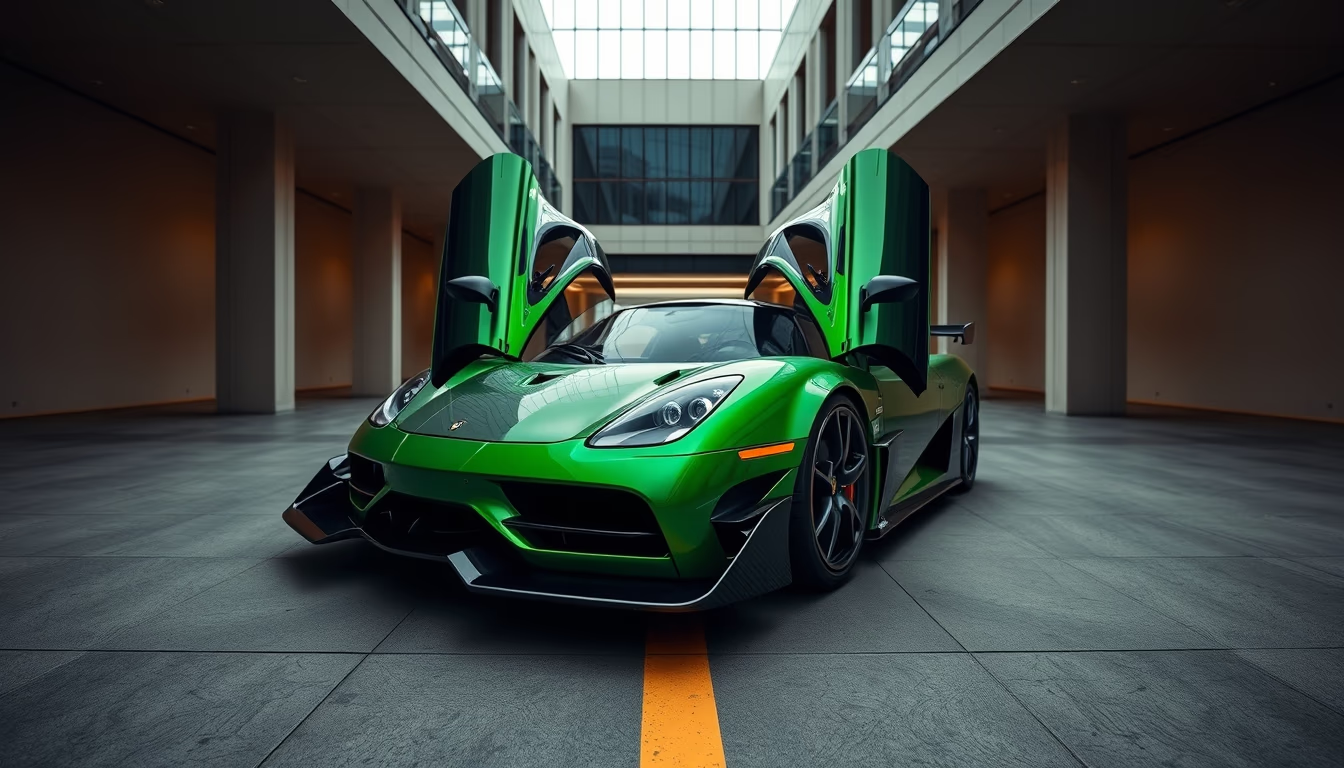
The Lotus Evija is a British electric hypercar that combines extreme power, aerodynamic design, and advanced battery technology, marking Lotus's rebirth as an electric vehicle manufacturer.
About this subject
The Lotus Evija is the first fully electric hypercar from the British manufacturer Lotus, officially unveiled in 2019 as a milestone in the brand's transition to electric mobility. With 2,000 horsepower and instant torque, the Evija accelerates from 0 to 100 km/h in under 3 seconds, rivaling models such as the Rimac Nevera and the Pininfarina Battista. Its all-wheel drive system uses four electric motors, one per wheel, enabling torque vectoring and precise dynamic control.
The 70 kWh lithium-ion battery was developed in partnership with Williams Advanced Engineering and offers an estimated range of 400 km (WLTP cycle). Ultra-fast 800V charging allows 80% capacity recovery in just 18 minutes. The exterior design, influenced by aeronautical engineering, features Venturi ducts on the sides and an active rear diffuser, generating up to 2,500 kg of downforce. The carbon fiber body keeps the curb weight at 1,680 kg, notably low for a high-performance electric vehicle.
Production of the Evija is limited to 130 units, each priced over £2 million. Lotus positions the model as a "halo hypercar" to showcase its technical capabilities and rejuvenate the brand's image, which struggled financially before the acquisition by Chinese Geely in 2017. The Evija also marks Lotus's first collaboration with British battery maker Nyobolt, focused on fast charging.
Interestingly, the name "Evija" derives from "Eve" (Latin for "eve") and "ija" (suffix for strength), symbolizing the dawn of a new era for Lotus. The minimalist interior combines sustainable leather and Alcantara, a digital instrument cluster, and a compact steering wheel. Despite the performance focus, the car offers driving modes for daily use and connectivity with telemetry apps. The Evija has set unofficial records on simulator tracks, but has yet to be validated on Nürburgring or other official circuits.
Frequently Asked Questions
How many Lotus Evija will be produced?
Production of the Lotus Evija is strictly limited to 130 units, each built to order and priced at over £2 million.
What is the range and charging time of the Lotus Evija?
The Evija has a 70 kWh battery providing a WLTP range of approximately 400 km. Thanks to the 800V system, it can charge from 0 to 80% in just 18 minutes.
Is the Lotus Evija really faster than a combustion car?
In terms of acceleration, yes. With 2,000 hp and all-wheel drive, the Evija accelerates from 0 to 100 km/h in under 3 seconds, outperforming most combustion supercars. However, its top speed is electronically limited to 320 km/h.
Direct URL
https://pub-c7d6a6ea828543ac903a74a341ccb2e1.r2.dev/imagens/lotus-evija-magazine-editorial-fresh10.avifHow to credit
Include a visible link back to UtilizAí. Copy one of the snippets below:
<a href="https://xn--utiliza-eza.com/en/midia/imagens/lotus-evija-magazine-editorial-fresh10">Lotus evija</a> by <a href="https://xn--utiliza-eza.com">UtilizAí</a>, licensed under <a href="https://creativecommons.org/licenses/by/4.0/">CC BY 4.0</a>.
[Lotus evija](https://xn--utiliza-eza.com/en/midia/imagens/lotus-evija-magazine-editorial-fresh10) by [UtilizAí](https://xn--utiliza-eza.com), CC BY 4.0
License: CC-BY-4.0