Lock and key digital concept
1344×768 · AVIF · CC BY 4.0
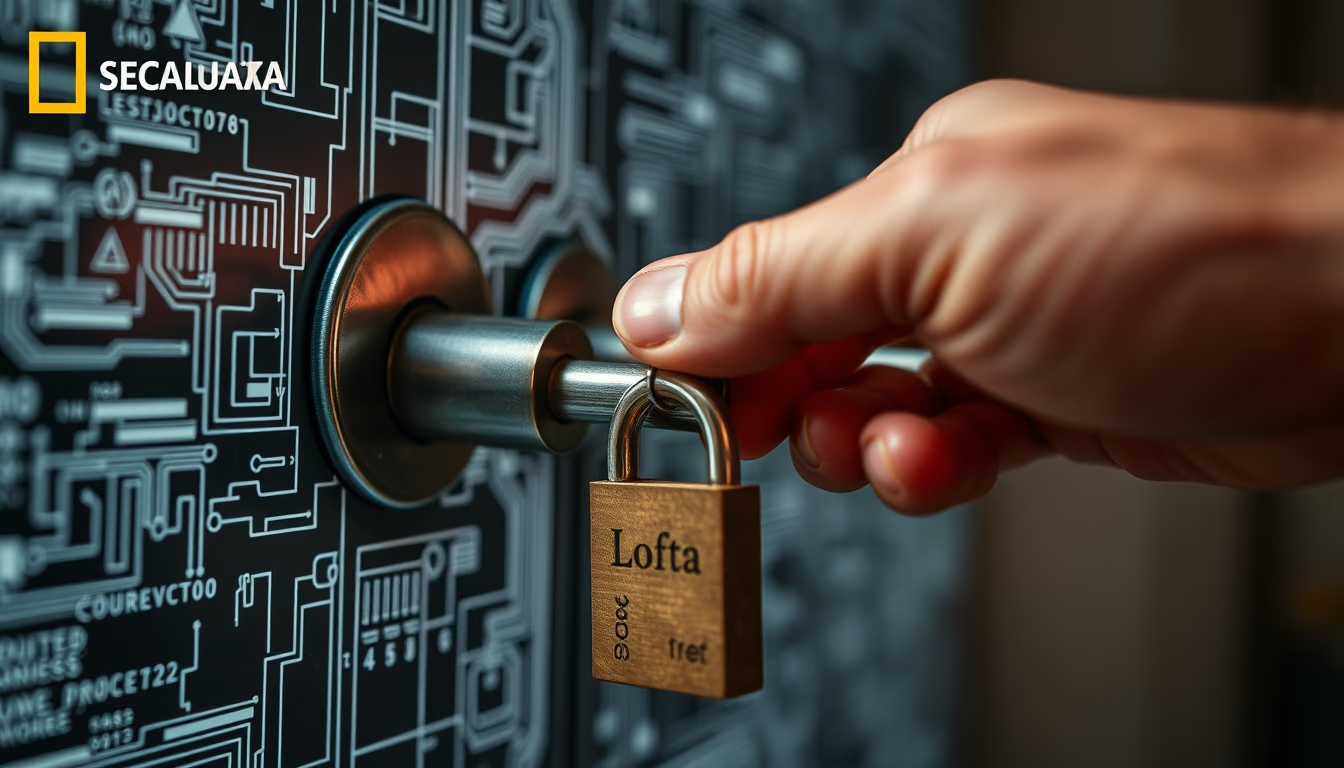
Modern digital security relies on cryptographic algorithms that act as virtual locks, protecting data from unauthorized access.
About this subject
Encryption is the foundation of security in the digital age. Algorithms such as AES (Advanced Encryption Standard) and RSA (Rivest-Shamir-Adleman) are widely used to protect data transmissions, from instant messages to banking transactions. AES, for instance, is a standard adopted by the U.S. government for classified information, using keys of 128, 192, or 256 bits.
In Brazil, the General Data Protection Law (LGPD) has driven the adoption of security measures, including encryption of sensitive data. Companies that fail to implement adequate protection may face fines of up to 2% of their revenue. Globally, cybercrime costs are projected to reach $10.5 trillion annually by 2025, according to Cybersecurity Ventures.
The concept of a "digital lock" also relates to two-factor authentication (2FA) and the use of public and private keys. Systems like PGP (Pretty Good Privacy) allow users to exchange encrypted messages without sharing the secret key. End-to-end encryption, used by apps like WhatsApp and Signal, ensures that only the sender and recipient can read conversations.
Despite advances, threats such as brute-force attacks and exploits in quantum algorithms pose future challenges. Post-quantum cryptography is under development to resist quantum computers, which could break current systems like RSA.
Frequently Asked Questions
What is end-to-end encryption?
It is a communication method where only the participants in a conversation can read the messages, preventing intermediaries (such as service providers) from accessing the content.
What is the most secure encryption algorithm currently?
There is no single "most secure" algorithm, but AES with a 256-bit key is widely considered secure for most applications, adopted by governments and industries.
How does the LGPD influence the use of encryption in Brazil?
The LGPD requires organizations to adopt technical security measures, such as encryption, to protect personal data. Non-compliance can result in fines and penalties.
Direct URL
https://pub-c7d6a6ea828543ac903a74a341ccb2e1.r2.dev/imagens/lock-and-key-digital-concept-national-geographic-style-p2.avifHow to credit
Include a visible link back to UtilizAí. Copy one of the snippets below:
<a href="https://xn--utiliza-eza.com/en/midia/imagens/lock-and-key-digital-concept-national-geographic-style-p2">Lock and key digital concept</a> by <a href="https://xn--utiliza-eza.com">UtilizAí</a>, licensed under <a href="https://creativecommons.org/licenses/by/4.0/">CC BY 4.0</a>.
[Lock and key digital concept](https://xn--utiliza-eza.com/en/midia/imagens/lock-and-key-digital-concept-national-geographic-style-p2) by [UtilizAí](https://xn--utiliza-eza.com), CC BY 4.0
License: CC-BY-4.0