Liquid cooling loop
1344×768 · AVIF · CC BY 4.0
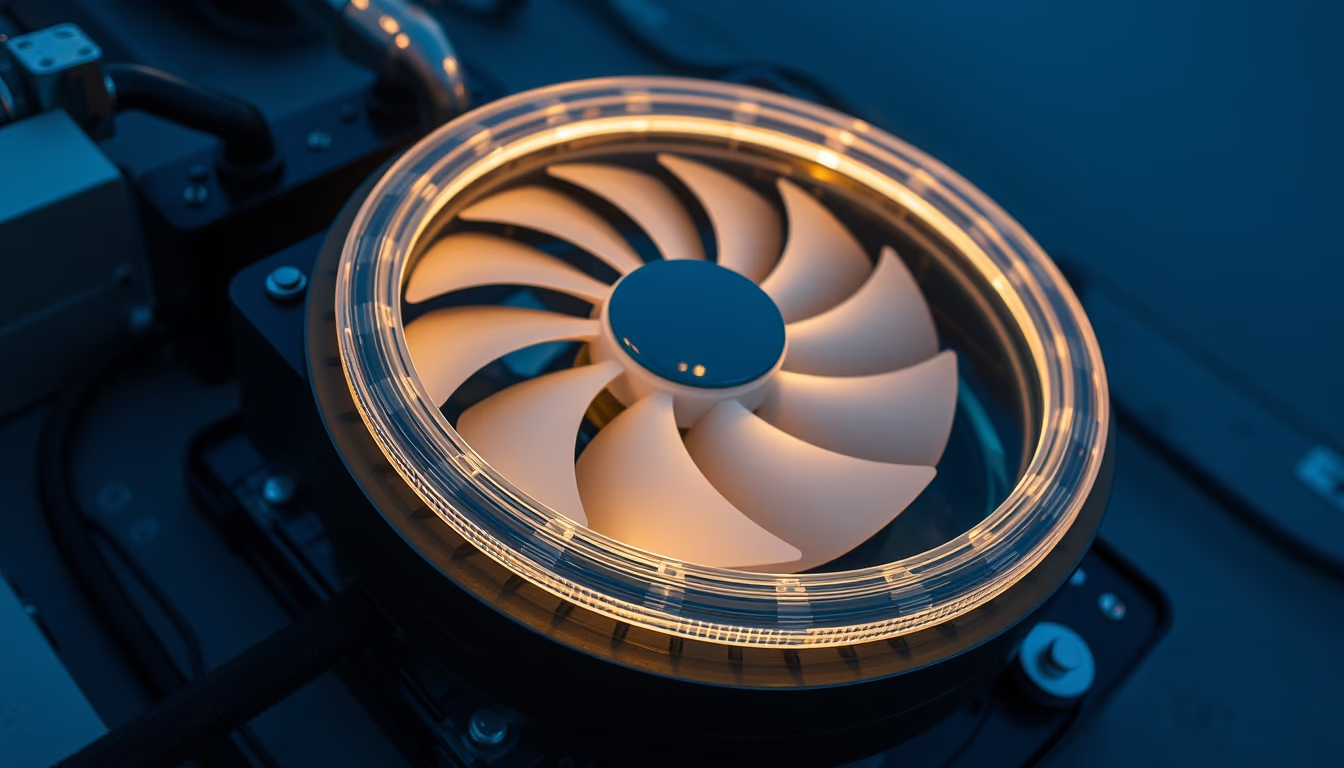
Liquid cooling loops are advanced systems for heat dissipation in high-performance electronic components.
About this subject
A liquid cooling loop, or water cooling loop, is a system consisting of a pump, radiator, tubing, and water blocks that remove heat from high-performance components such as CPUs and GPUs. Unlike air coolers, this method uses a coolant, usually distilled water with additives, to transfer heat more efficiently. It is widely adopted by overclocking enthusiasts and in high-density servers, where excessive heat can reduce performance and component lifespan.
The main advantages of liquid cooling over air cooling include higher thermal dissipation capacity, quieter operation (when well designed), and enhanced aesthetics with transparent tubes and RGB lighting. However, installation requires technical know-how and caution to prevent leaks. There are two main types: all-in-one (AIO) systems, which come pre-assembled and are easier to install, and custom loops, which allow selecting individual components and cooling multiple devices simultaneously.
Computer modding culture frequently features custom loops with rigid acrylic or metal tubing and colored coolants. Beyond desktop use, data centers and supercomputers employ large-scale liquid cooling, such as immersion in dielectric fluids. Though less common, automotive and industrial applications also exist. Periodic maintenance, coolant replacement every 12 to 24 months, depending on the manufacturer, is essential to prevent corrosion and algae growth, ensuring efficiency and longevity.
Frequently Asked Questions
What is the difference between a custom liquid cooling loop and an AIO?
An AIO (all-in-one) is a sealed, pre-assembled system, easier to install but with limited customization. A custom loop allows selecting each component, such as pump, radiator, and tubing, and can cover multiple devices, offering greater efficiency and aesthetics, but requires manual assembly and periodic maintenance.
Is it safe to use distilled water in the system?
Yes, distilled water is the most common coolant because it is pure and non-conductive. However, additives like anti-corrosives and biocides are recommended to prevent oxidation and algae growth. In well-sealed systems, the risk of short circuits is minimal.
How often should maintenance be performed on a custom loop?
It is recommended to replace the coolant every 12 to 24 months, depending on component quality and usage. During replacement, cleaning the radiator and water blocks is important to remove debris. Checking seals and tubing is also essential to prevent leaks.
Direct URL
https://pub-c7d6a6ea828543ac903a74a341ccb2e1.r2.dev/imagens/liquid-cooling-loop-aerial-drone-shot-p6.avifHow to credit
Include a visible link back to UtilizAí. Copy one of the snippets below:
<a href="https://xn--utiliza-eza.com/en/midia/imagens/liquid-cooling-loop-aerial-drone-shot-p6">Liquid cooling loop</a> by <a href="https://xn--utiliza-eza.com">UtilizAí</a>, licensed under <a href="https://creativecommons.org/licenses/by/4.0/">CC BY 4.0</a>.
[Liquid cooling loop](https://xn--utiliza-eza.com/en/midia/imagens/liquid-cooling-loop-aerial-drone-shot-p6) by [UtilizAí](https://xn--utiliza-eza.com), CC BY 4.0
License: CC-BY-4.0