Lighthouse on rocky cliff
1344×768 · AVIF · CC BY 4.0
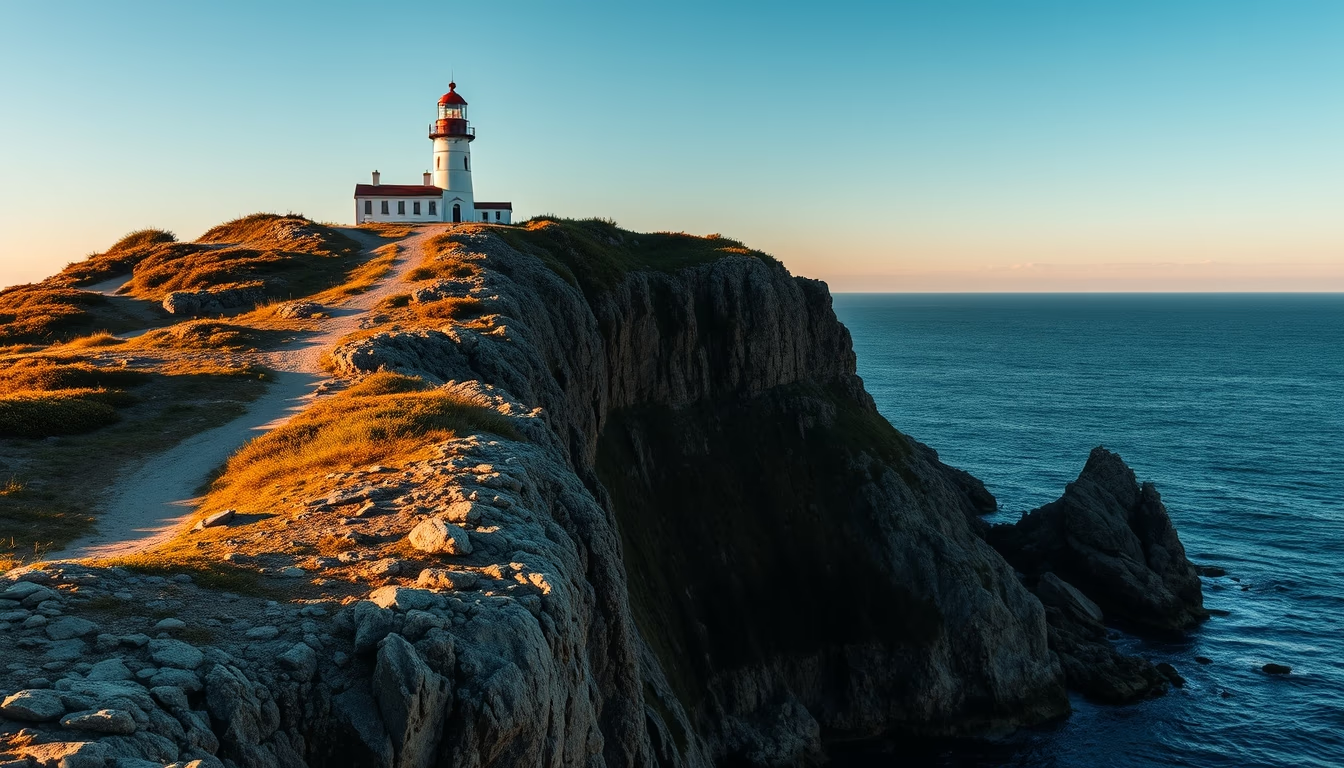
Lighthouses on rocky cliffs are historic navigation landmarks, combining engineering with dramatic landscapes around the world.
About this subject
Lighthouses perched on rocky cliffs represent one of the greatest challenges in coastal engineering and maritime navigation. These structures were built to guide ships through dangerous stretches where reefs and treacherous currents threatened vessels. The Cabo de São Roque Lighthouse in Rio Grande do Norte, Brazil, is an example: erected on cliffs, its light reaches 46 kilometers and has been operating since 1908, making it one of the most powerful in the country.
Internationally, Pigeon Point Lighthouse in California and Kõpu Lighthouse in Estonia are among the oldest still in operation. The former, built in 1871, stands 35 meters tall on a rocky promontory. Kõpu Lighthouse dates from 1531, making it one of the oldest in the world, located on a steep hill on Hiiumaa Island. These constructions required deep foundations and materials resistant to erosion, such as granite and cast iron.
Beyond their practical function, lighthouses on cliffs have become cultural and tourist icons. They appear in literary works such as Virginia Woolf's "To the Lighthouse" and in numerous films. Today, many have been automated or converted into museums, but they continue to symbolize safety and isolation. Maintenance of these lighthouses is complex due to difficult access and extreme weather conditions, including strong winds and rough seas.
With the advent of GPS and radar, lighthouses have lost part of their nautical relevance, but they remain vital for local navigation and historical preservation. Ponta da Baleia Lighthouse on Trindade and Martim Vaz islands, for example, is one of Brazil's most remote, accessible only by scientific expeditions. Its rocky cliff structure underscores how these maritime symbols are intrinsically linked to the most extreme coastal landscapes.
Frequently Asked Questions
Why are some lighthouses painted with red and white stripes?
The red and white stripes serve as a daytime identification pattern, allowing sailors to recognize the lighthouse in daylight. Each lighthouse has a unique color scheme based on its location and nautical charts to avoid confusion with other coastal structures.
What is the oldest lighthouse in the world still in operation?
The oldest lighthouse still operating is Kõpu Lighthouse in Estonia, built in 1531. It stands on a hill on Hiiumaa Island and its light has a range of about 26 nautical miles, making it an important historical and tourist landmark.
How do modern lighthouses function without lighthouse keepers?
Modern lighthouses are automated with light sensors, low-consumption LED lamps, and solar or wind power systems. They are monitored remotely by navigation authorities, who perform periodic maintenance to ensure continuous operation.
Direct URL
https://pub-c7d6a6ea828543ac903a74a341ccb2e1.r2.dev/imagens/lighthouse-on-rocky-cliff-travel-photography-p5.avifHow to credit
Include a visible link back to UtilizAí. Copy one of the snippets below:
<a href="https://xn--utiliza-eza.com/en/midia/imagens/lighthouse-on-rocky-cliff-travel-photography-p5">Lighthouse on rocky cliff</a> by <a href="https://xn--utiliza-eza.com">UtilizAí</a>, licensed under <a href="https://creativecommons.org/licenses/by/4.0/">CC BY 4.0</a>.
[Lighthouse on rocky cliff](https://xn--utiliza-eza.com/en/midia/imagens/lighthouse-on-rocky-cliff-travel-photography-p5) by [UtilizAí](https://xn--utiliza-eza.com), CC BY 4.0
License: CC-BY-4.0