Lighthouse on rocky cliff
1344×768 · AVIF · CC BY 4.0
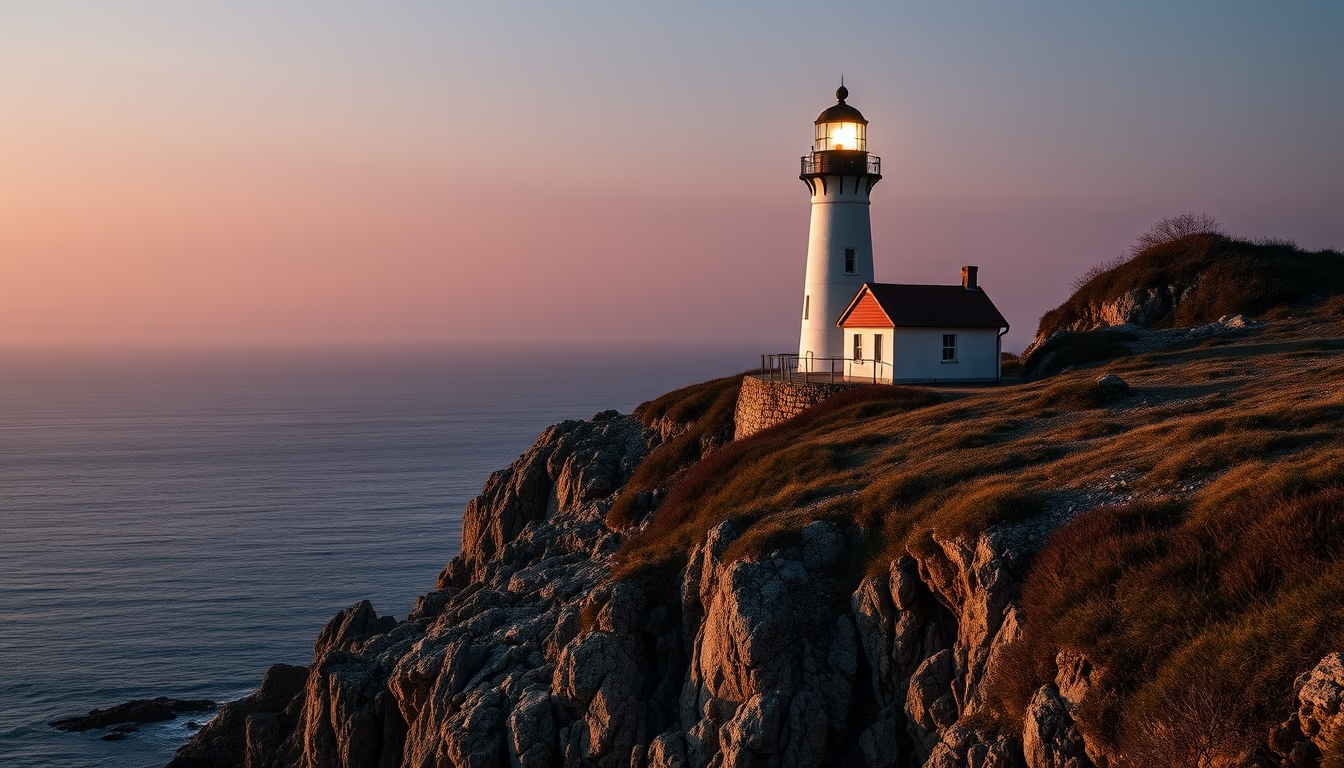
Lighthouses built on rocky cliffs combine challenging engineering and maritime history. They have guided ships on dangerous coastlines for centuries.
About this subject
Lighthouses on rocky cliffs represent one of the oldest and most iconic forms of navigation aid. Their construction requires specific techniques for solid foundations on uneven terrain exposed to strong winds and constant erosion. The Eddystone Lighthouse in England is a pioneering example: first built on a reef in 1698, it had to be rebuilt three times due to harsh conditions. Split Rock Lighthouse in the United States, erected in 1910 on a 41‑meter cliff, was decommissioned in 1969 but remains a National Historic Landmark.
Cliff locations offer strategic advantages: greater visual range for light beams, reduced risk of collision for vessels sailing close to shore, and a lower need for tall towers, since the rocky outcrop’s natural elevation raises the lantern. However, access for maintenance and supply is extremely difficult. Many cliff lighthouses have been automated or replaced by buoys, but they still attract tourists and photographers for their dramatic aesthetics.
Culturally, cliff lighthouses populate the imagination as symbols of isolation and resilience. Literary works such as Virginia Woolf’s "To the Lighthouse" and films like "The Lighthouse" (2019) explore the solitude of lighthouse keepers. Today, most lighthouses worldwide are automated, but historic preservation is debated. The International Association of Lighthouses (IALA) lists over 18,000 active lighthouses, with about 30% located on rocky coasts.
Notably, the oldest operational lighthouse in the world, the Tower of Hercules in Spain, dates from the 2nd century AD and is built on a prominent rock. The Lighthouse of Cabo de São Roque in Brazil marks the closest point of South America to Africa and was erected on sandstone cliffs. These structures not only save lives but also tell the story of engineering and humanity’s relationship with the sea.
Frequently Asked Questions
Why are lighthouses built on rocky cliffs?
Rocky cliffs provide natural elevation, increasing the light’s range and reducing the need for tall towers. They also often mark dangerous navigation points where ships require visual warnings.
How is maintenance done on lighthouses in hard‑to‑reach locations?
Maintenance is carried out by specialized teams using helicopters, boats, and climbing techniques. Many lighthouses have been automated to reduce on‑site visits, but regular inspections are still necessary to ensure operation.
What is the most famous lighthouse built on a cliff?
One of the most famous is Split Rock Lighthouse (USA), built in 1910 on a 41‑meter cliff on Lake Superior. Another iconic example is Cabo de São Roque Lighthouse in Brazil, marking the northeasternmost point of the Americas.
Direct URL
https://pub-c7d6a6ea828543ac903a74a341ccb2e1.r2.dev/imagens/lighthouse-on-rocky-cliff-fine-art-photography-p2.avifHow to credit
Include a visible link back to UtilizAí. Copy one of the snippets below:
<a href="https://xn--utiliza-eza.com/en/midia/imagens/lighthouse-on-rocky-cliff-fine-art-photography-p2">Lighthouse on rocky cliff</a> by <a href="https://xn--utiliza-eza.com">UtilizAí</a>, licensed under <a href="https://creativecommons.org/licenses/by/4.0/">CC BY 4.0</a>.
[Lighthouse on rocky cliff](https://xn--utiliza-eza.com/en/midia/imagens/lighthouse-on-rocky-cliff-fine-art-photography-p2) by [UtilizAí](https://xn--utiliza-eza.com), CC BY 4.0
License: CC-BY-4.0