Lightbox tracing
1344×768 · AVIF · CC BY 4.0
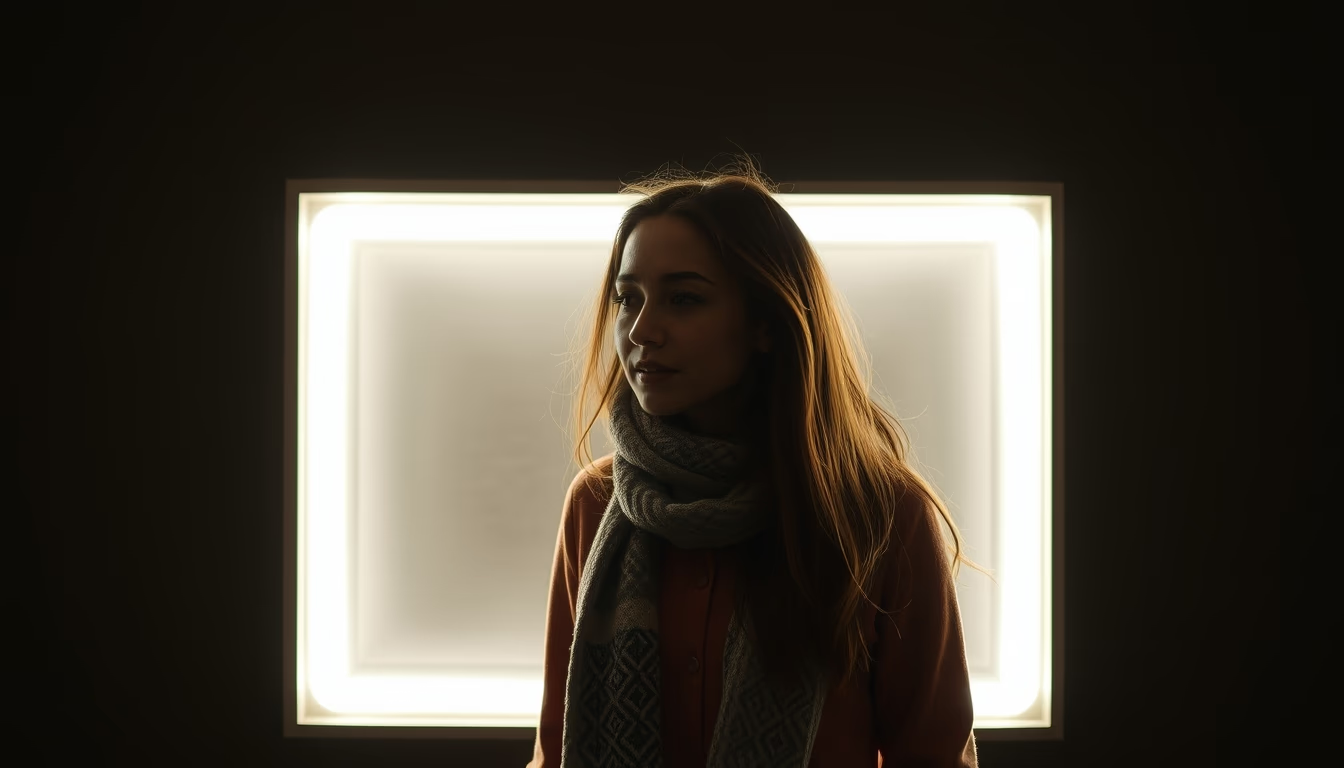
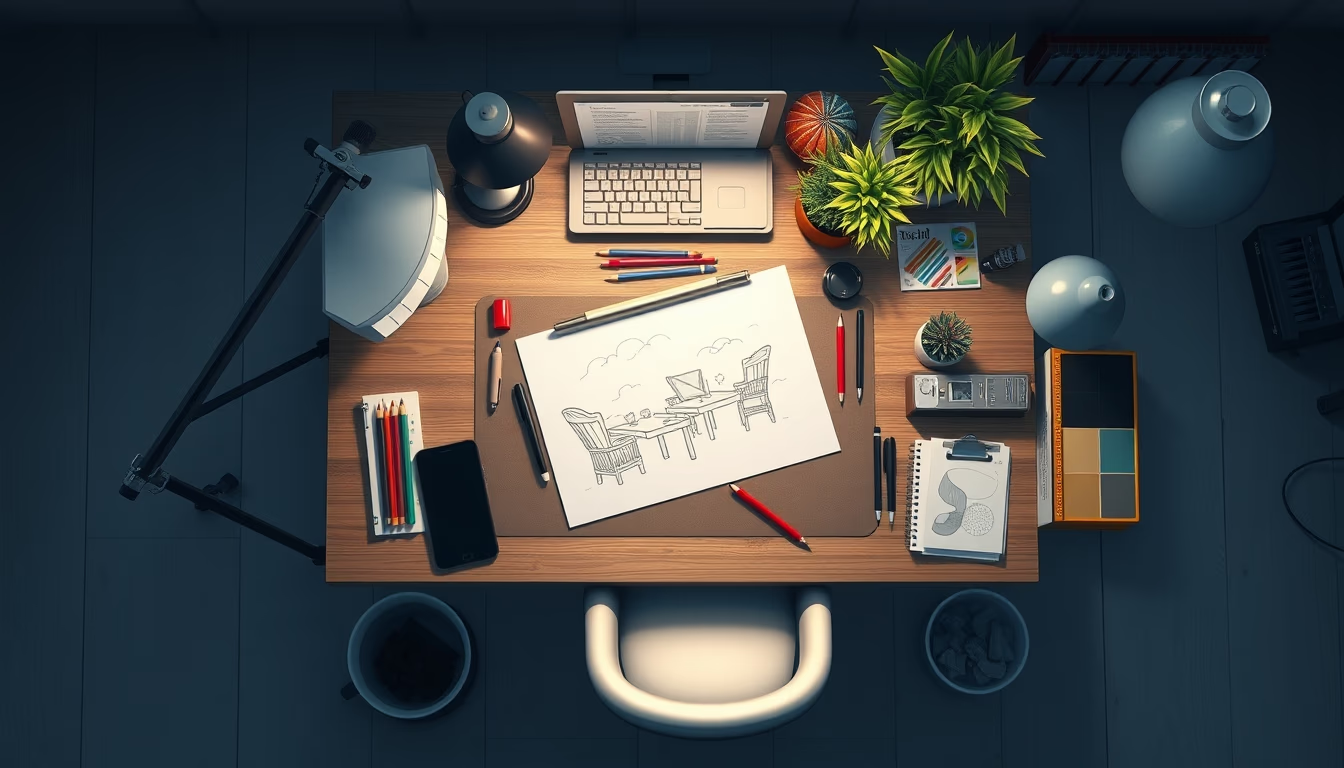
Lightbox tracing is an essential technique in the world of comics and illustration, allowing artists to transfer sketches with precision.
About this subject
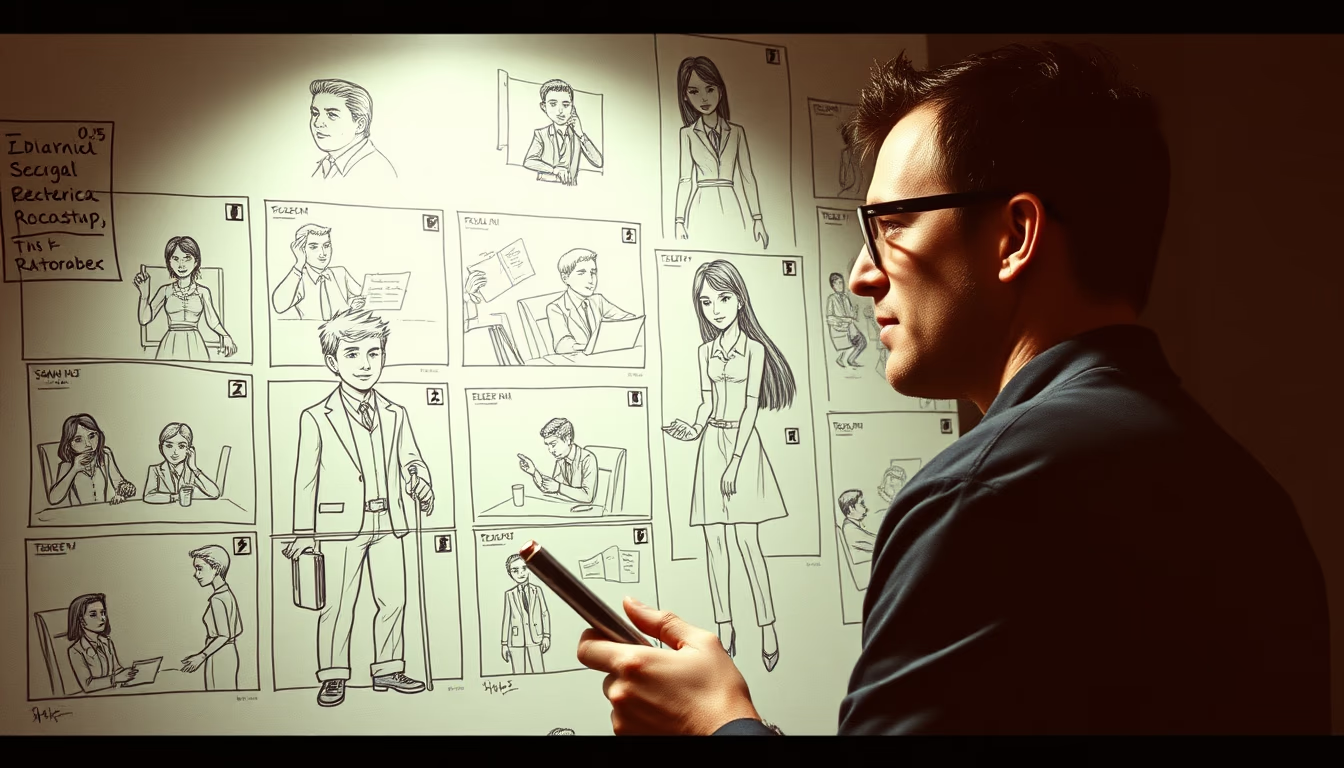
In the process of creating comic books, lightbox tracing plays a fundamental role. It involves using a surface illuminated from below, typically a lightbox, to copy or refine drawings. This technique allows the artist to transfer an initial sketch onto a clean sheet without losing the original lines, adjusting details and compositions with greater control. It is widely used by comic artists, animators, and designers to save time and ensure visual consistency, especially in multi-page production.
The origin of lightbox tracing dates back to early animation studios, like Disney's in the 1930s, where light tables were used to interleave animation frames. Over time, the technique spread to the comic market, adopted by artists such as Will Eisner and Jack Kirby. Modern versions include adjustable LED lightboxes and even tablet apps that simulate the effect. Despite advances in digital tools, many artists still prefer analog tracing for its tactile feel and naturalness.
An interesting curiosity is that lightbox tracing is not limited to pure outlining. Artists often use it to experiment with angles, test perspectives, or correct proportions. In Brazil, the technique is taught in illustration and comics courses, often one of the first steps for beginners. Additionally, the use of translucent papers, such as tracing paper, is common in combination with the lightbox to create layers. This approach allows the artist to build the final art without erasing the sketch, maintaining creative flow.
Finally, lightbox tracing is also a learning tool. Many art students use it to practice copying works by masters, understanding the structure of lines. Although some critics argue that excessive tracing can hinder the development of personal style, when used in moderation, it is a powerful resource to refine techniques and speed up artistic production. Whether in professional studios or at home, the lightbox remains a symbol of precision and dedication in sequential art.
Frequently Asked Questions
What is the difference between lightbox tracing and digital tracing?
Lightbox tracing is analog, using a physical light table and paper, while digital tracing occurs in software with layers and opacity. Both serve to transfer or refine drawings, but the analog method offers a tactile feel, and digital allows quicker adjustments.
Is lightbox tracing recommended for beginners?
Yes, it is a great learning tool. It helps beginners understand proportions and structures by copying references. However, it is important to balance its use with freehand drawing to develop personal style.
What materials are needed for lightbox tracing?
A light table (or a box with an internal light), copy paper for the final drawing, tracing paper or translucent paper for sketches, masking tape to fix them, and pencils or pens for tracing.
Direct URL
https://pub-c7d6a6ea828543ac903a74a341ccb2e1.r2.dev/imagens/lightbox-tracing-documentary-nature-style-fresh13.avifHow to credit
Include a visible link back to UtilizAí. Copy one of the snippets below:
<a href="https://xn--utiliza-eza.com/en/midia/imagens/lightbox-tracing-documentary-nature-style-fresh13">Lightbox tracing</a> by <a href="https://xn--utiliza-eza.com">UtilizAí</a>, licensed under <a href="https://creativecommons.org/licenses/by/4.0/">CC BY 4.0</a>.
[Lightbox tracing](https://xn--utiliza-eza.com/en/midia/imagens/lightbox-tracing-documentary-nature-style-fresh13) by [UtilizAí](https://xn--utiliza-eza.com), CC BY 4.0
License: CC-BY-4.0