Lightbox tracing
1344×768 · AVIF · CC BY 4.0
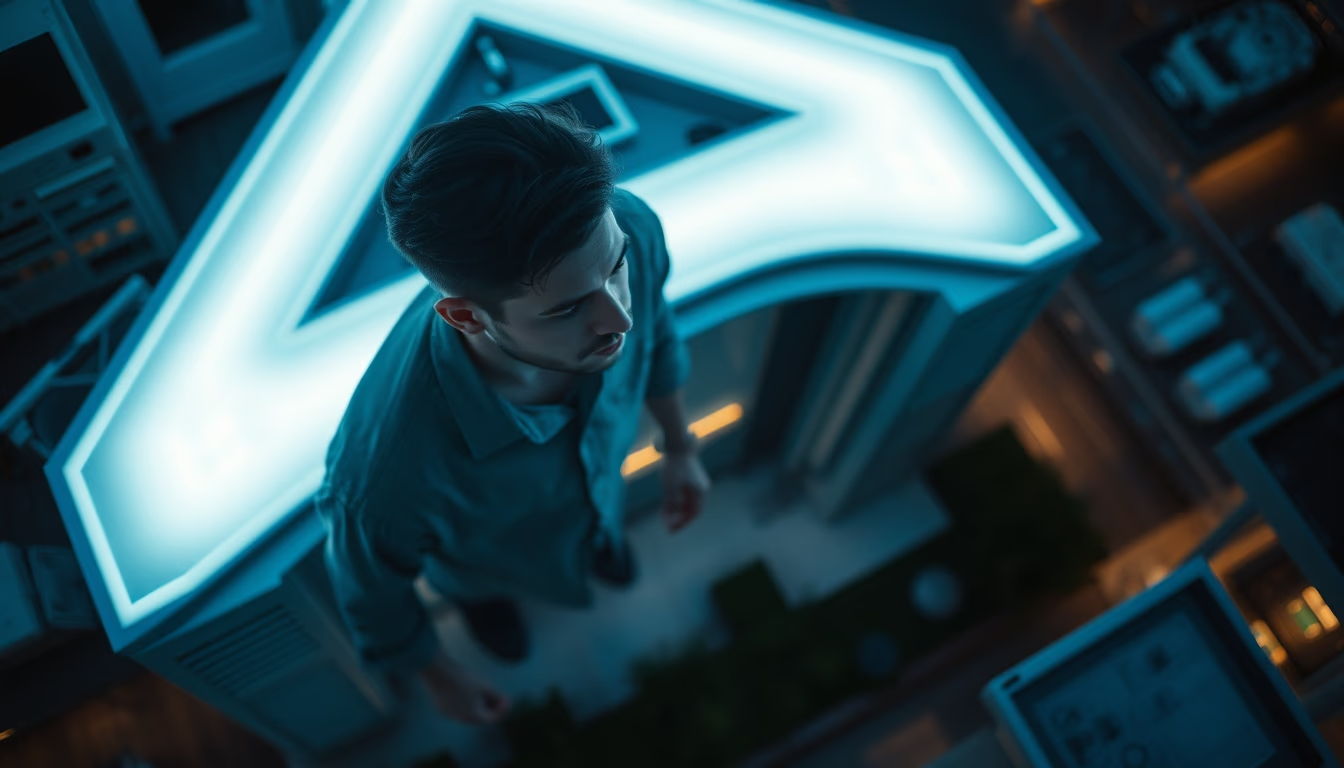
Lightbox tracing is a technique for transferring drawings used by comic artists to create precise inked art, blending tradition with efficiency.
About this subject
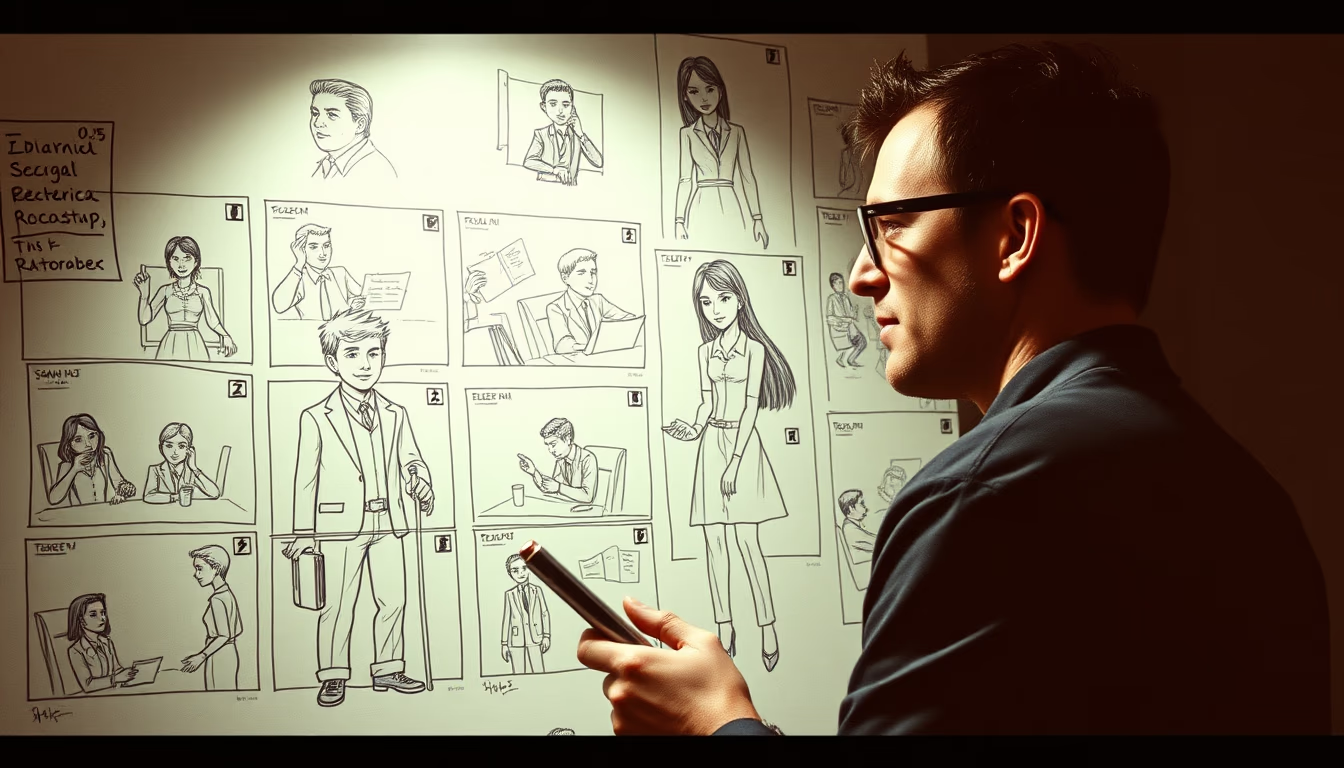
Lightbox tracing, also known as lightbox decal, is a fundamental method in comic book production. It involves placing a sketch over a backlit surface, typically a box with fluorescent or LED lamps, and overlaying a clean sheet to redraw or ink the lines. The technique gained popularity in the early 20th century, with artists like Winsor McCay and Walt Disney Studios adopting it to streamline complex scenes. In Brazil, comic artists such as Mauricio de Sousa and Mike Deodato have used variations of the process, especially before the digital era.
Lightboxes allow artists to refine poses, expressions, and compositions without losing the original proportions. Unlike digital tablets, hand-tracing on paper preserves the natural texture and pencil imperfections valued by collectors. The technique is especially useful in long-running series, where visual consistency across characters and backgrounds is crucial. Beyond comics, it is employed in editorial illustration, tattoo design, and traditional animation.
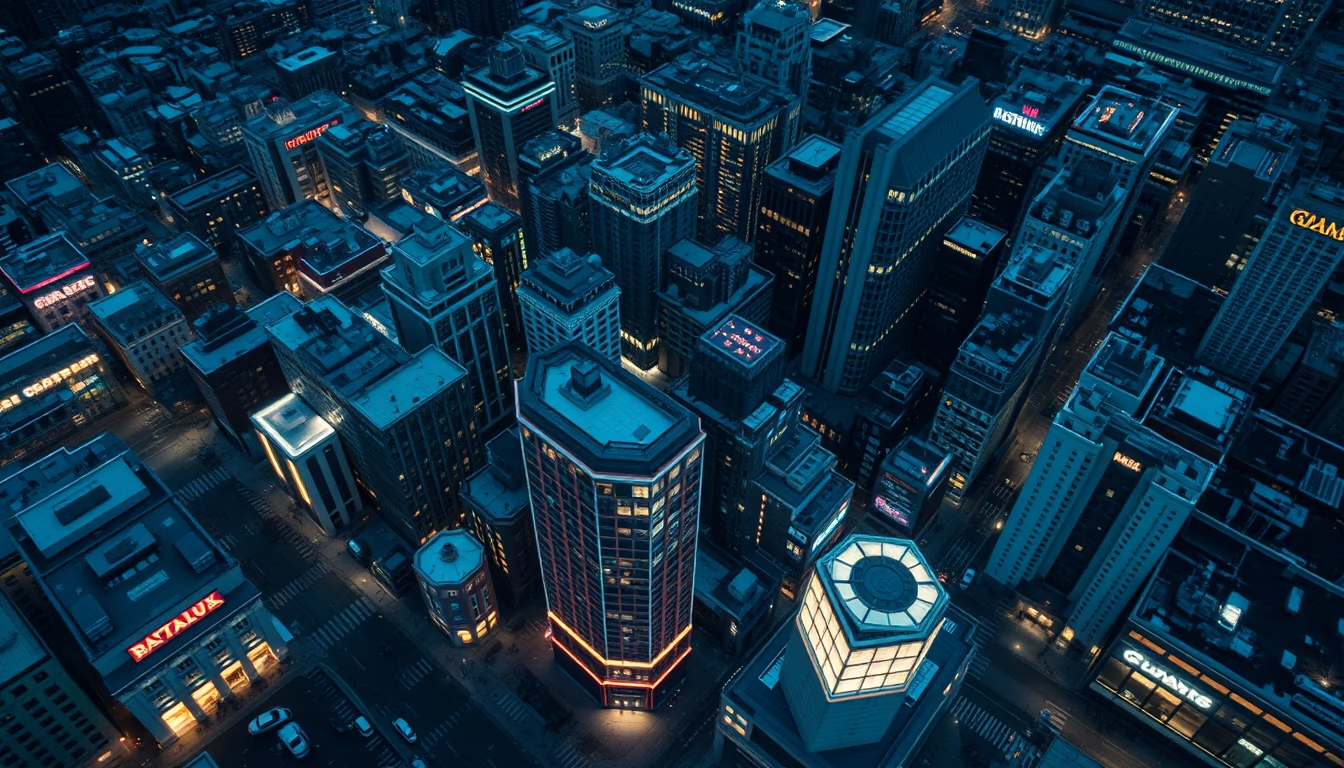
A contemporary example is the "Wave Fresh 10K" project, a series of ocean-themed illustrations that combines lightbox tracing with aerial drone photography. The artist projects the photo as a base and hand-traces the wave lines, creating a dialogue between realism and artistic expression. This hybrid approach shows how the century-old technique adapts to modern tools while retaining the essence of human linework. The resulting images capture water movement with documentary precision but infused with aesthetic intent.
Interestingly, traditional lightboxes are being replaced by illuminated screen tablets from brands like Huion or Wacom, which allow tracing directly on a digital image. However, many artists advocate for physical lightboxes due to ergonomic reasons and the tactile pleasure of paper. The technique is still taught in sequential art courses as part of basic training, alongside perspective and anatomy.
Frequently Asked Questions
What is lightbox tracing and what is it used for?
Lightbox tracing is a technique where you draw over a backlit surface, allowing you to transfer or refine a sketch onto a new sheet. It is widely used in comics, animation, and illustration to maintain proportions and speed up work.
Does lightbox tracing replace the use of a drawing tablet?
Not necessarily. Many artists use both: the lightbox for initial paper tracings and the tablet for coloring and final adjustments. The choice depends on personal style and the need for organic texture versus digital precision.
How does the 'Wave Fresh 10K' project use lightbox tracing?
In 'Wave Fresh 10K', the artist photographs waves with a drone and uses those images as a base on a lightbox to manually trace the wave lines, blending photographic realism with artistic linework.
Direct URL
https://pub-c7d6a6ea828543ac903a74a341ccb2e1.r2.dev/imagens/lightbox-tracing-aerial-drone-shot-fresh7.avifHow to credit
Include a visible link back to UtilizAí. Copy one of the snippets below:
<a href="https://xn--utiliza-eza.com/en/midia/imagens/lightbox-tracing-aerial-drone-shot-fresh7">Lightbox tracing</a> by <a href="https://xn--utiliza-eza.com">UtilizAí</a>, licensed under <a href="https://creativecommons.org/licenses/by/4.0/">CC BY 4.0</a>.
[Lightbox tracing](https://xn--utiliza-eza.com/en/midia/imagens/lightbox-tracing-aerial-drone-shot-fresh7) by [UtilizAí](https://xn--utiliza-eza.com), CC BY 4.0
License: CC-BY-4.0