Leather skiving knife
1344×768 · AVIF · CC BY 4.0
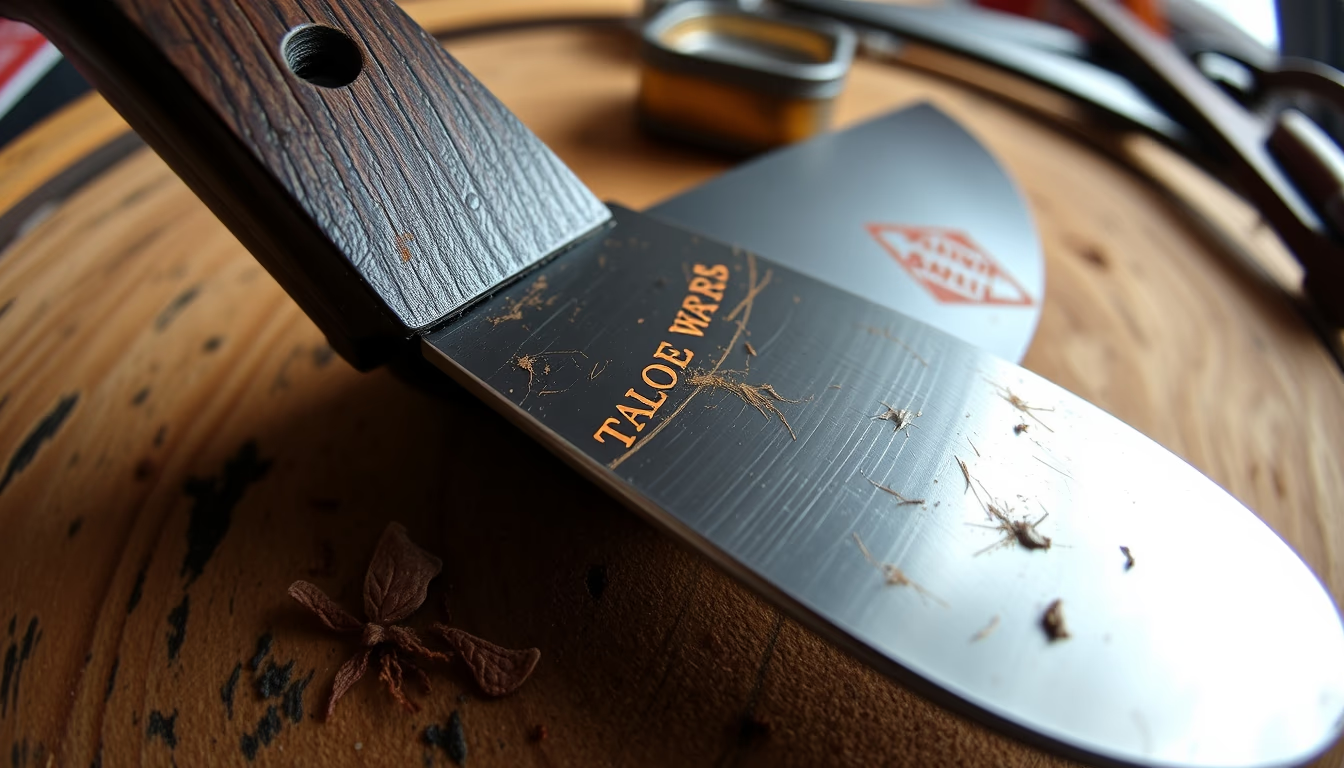
Leather skiving knife, an essential tool for thinning edges and preparing leather pieces for fine craftsmanship.
About this subject
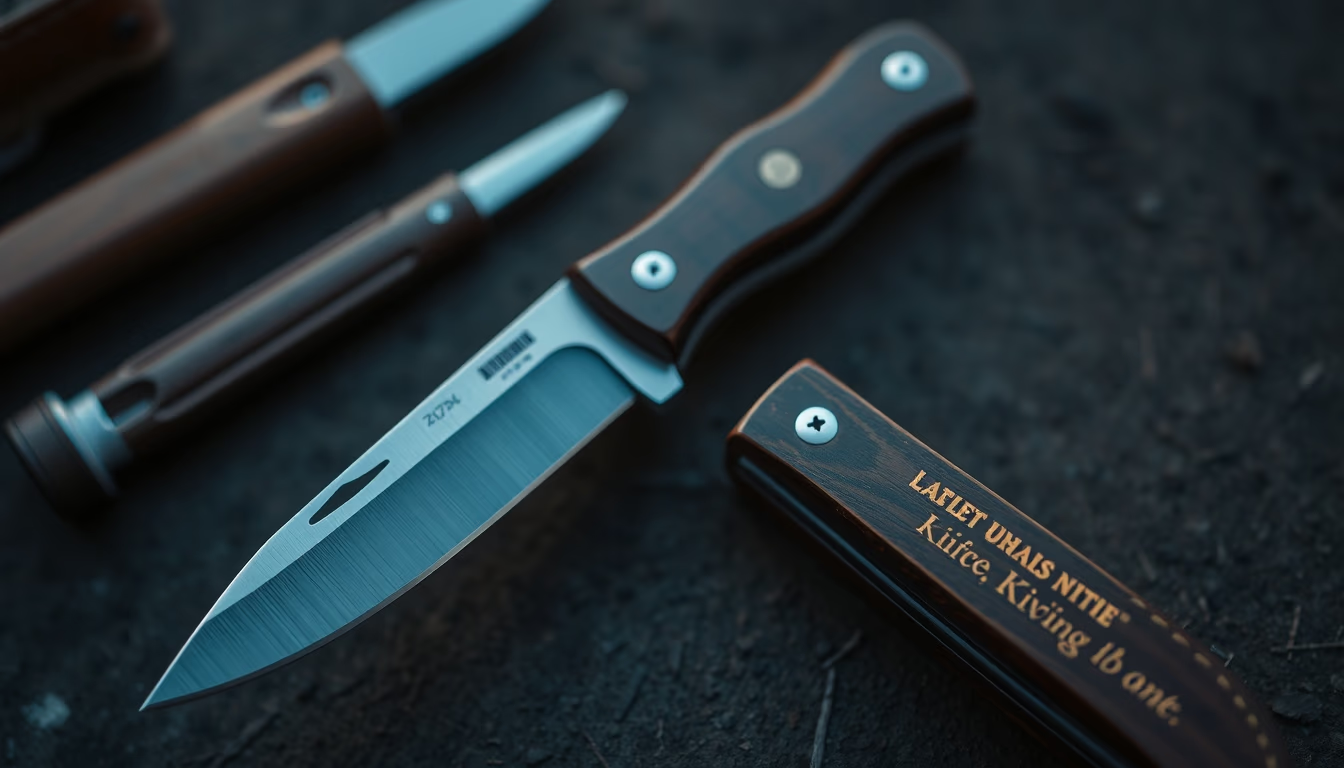
A leather skiving knife is a specialized tool used in leathercraft to reduce the thickness of edges or specific areas, enabling clean folds, seams, and finishes. Unlike a standard utility knife, its blade is short and rigid with a sharp edge on one side, offering precise control when shaving off thin layers of leather. This technique is essential in items like wallets, belts, and bags, where multiple layers require tapered edges to avoid bulkiness.
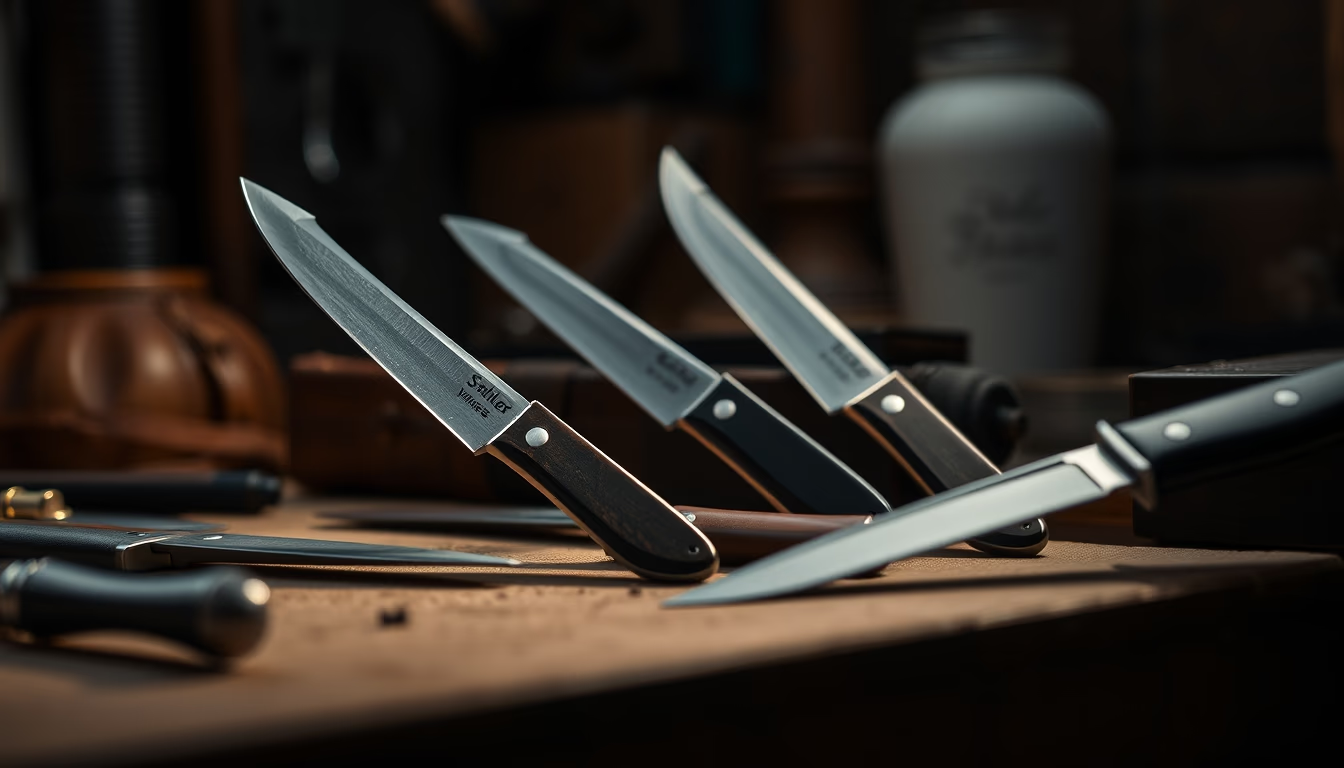
Various models of skiving knives exist, differing in blade shape and angle. Traditional ones feature wooden or metal handles with carbon or stainless steel blades. Consistent sharpening is critical because a dull edge can tear or damage the leather. Skilled craftspeople often keep a sharpening stone nearby to refresh the edge during work.
Historically, manual skiving was the only method to thin leather before the advent of splitting machines. Even today, many artisans prefer the manual control of a skiving knife for fine adjustments, especially on vegetable-tanned or chrome-tanned leathers. In leatherworking schools, mastering this tool is considered a milestone, requiring coordination and tactile sensitivity.
The skiving knife should not be confused with a cobbler's knife or a leather cutting knife. While those are used for cutting whole pieces, the skiving knife is dedicated solely to thinning. In specialty stores, one can find knives with interchangeable blades for easier maintenance. Beginners are advised to start with firmer leathers and practice on scraps before working on finished pieces.
Frequently Asked Questions
What is the difference between a skiving knife and a leather cutting knife?
A skiving knife is designed to thin edges by removing thin layers of leather, whereas a cutting knife (like a head knife) is used to cut whole pieces or shapes. The skiving knife has a shorter, stiffer blade with a single bevel, offering more control for skiving.
What type of steel is best for a skiving knife?
Carbon steel (e.g., 1095) is popular for its ease of sharpening and edge retention, but it requires care to avoid rust. Stainless steel (e.g., 440C) is more corrosion-resistant but harder to sharpen. The choice depends on the artisan's preference for maintenance and durability.
How to properly sharpen a leather skiving knife?
Use a water stone or oil stone with fine grit (4000 to 8000). Maintain the original blade angle, typically 15-20 degrees. Make smooth, even strokes, alternating sides. Finish with a strop or honing rod to remove burrs. Test the edge by cutting paper or a thin strip of leather.
Direct URL
https://pub-c7d6a6ea828543ac903a74a341ccb2e1.r2.dev/imagens/leather-skiving-knife-fish-eye-wide-angle-fresh12.avifHow to credit
Include a visible link back to UtilizAí. Copy one of the snippets below:
<a href="https://xn--utiliza-eza.com/en/midia/imagens/leather-skiving-knife-fish-eye-wide-angle-fresh12">Leather skiving knife</a> by <a href="https://xn--utiliza-eza.com">UtilizAí</a>, licensed under <a href="https://creativecommons.org/licenses/by/4.0/">CC BY 4.0</a>.
[Leather skiving knife](https://xn--utiliza-eza.com/en/midia/imagens/leather-skiving-knife-fish-eye-wide-angle-fresh12) by [UtilizAí](https://xn--utiliza-eza.com), CC BY 4.0
License: CC-BY-4.0