Leather journal travel
1344×768 · AVIF · CC BY 4.0
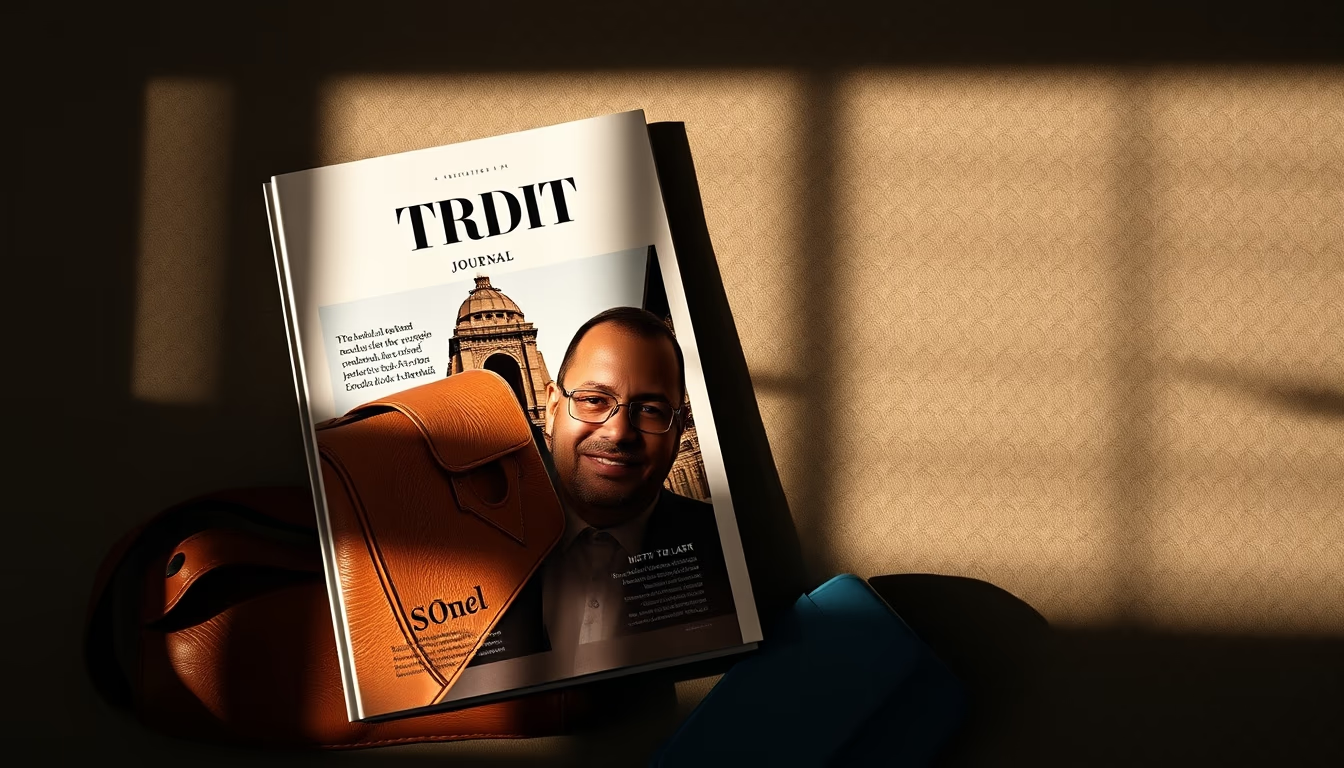
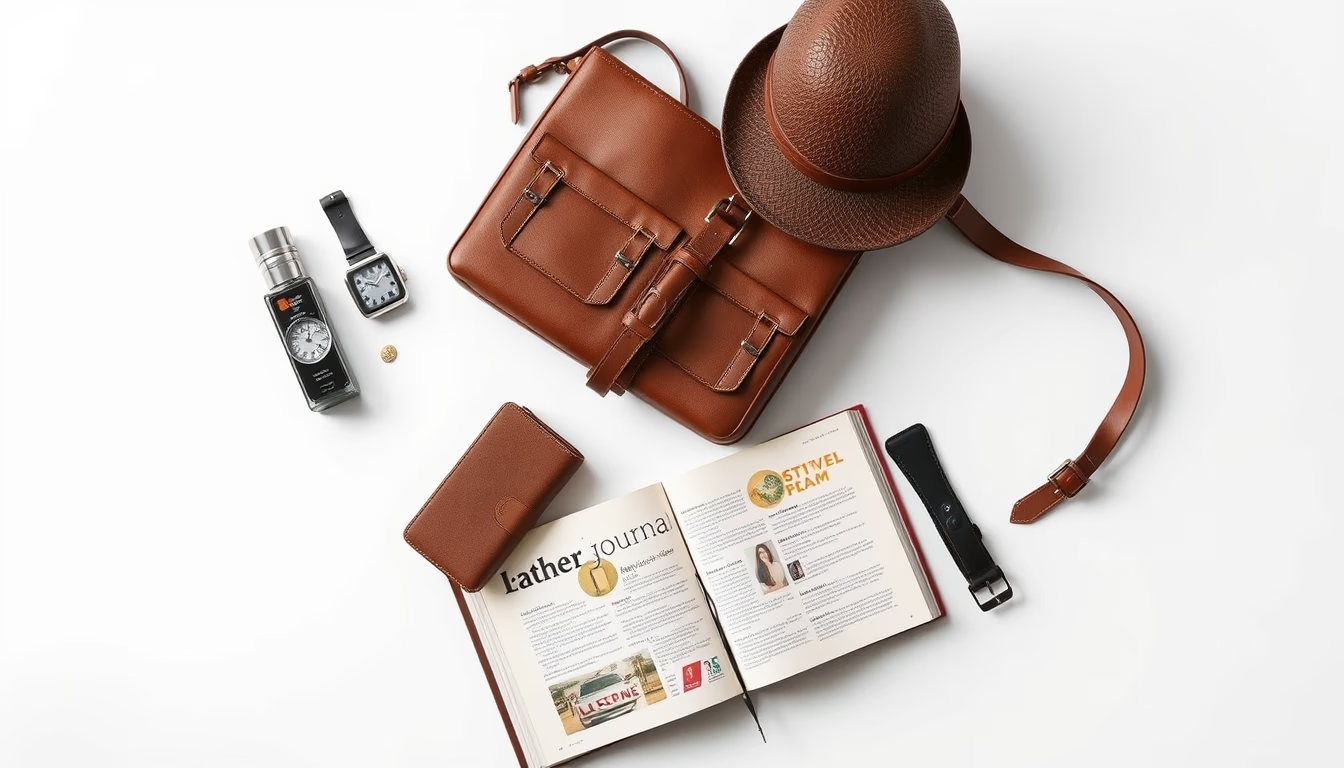
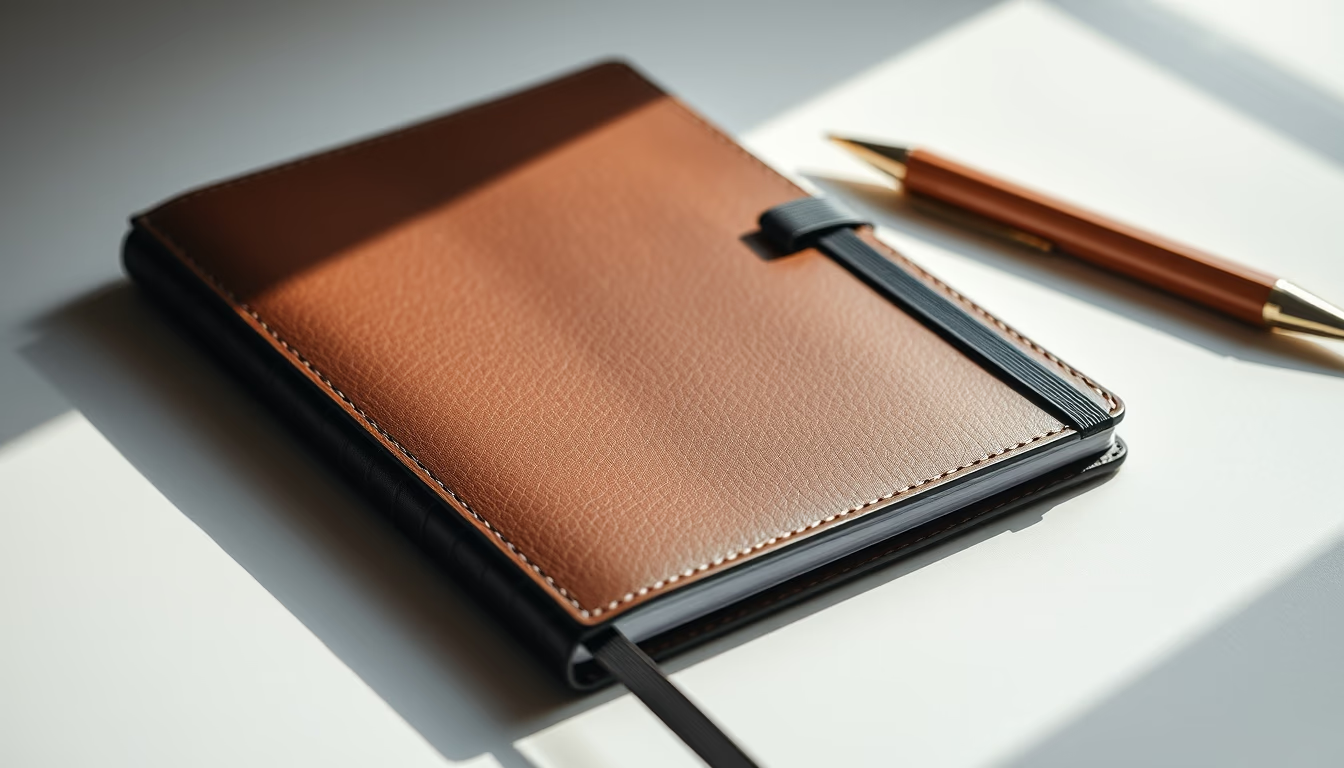
A leather travel journal combines artisanal tradition with functionality, serving as an ideal companion for recording memories and reflections during journeys.
About this subject
Leather travel journals are more than simple notebooks; they represent a centuries-old tradition of personal recording and craftsmanship. Leather, chosen for its durability and noble aging, protects internal pages from the rigors of travel. Many such journals are produced by skilled artisans, selecting high-quality leathers like genuine Italian leather or Brazilian vaqueta. The hand-binding process includes exposed stitching, closures with elastic or metal fasteners, and often acid-free paper to preserve writing for decades.
Historically, travelers such as naturalists, explorers, and writers used leather journals to document discoveries. Charles Darwin, for instance, carried leather-bound notebooks on his expeditions. Today, the habit has gained new life with the creative writing and bullet journal movements. A leather journal can be personalized with embossed covers or dry engraving, becoming a unique object. The natural texture of leather, often with marks and veins, confers authenticity: no two copies are alike.
For the traveler, a leather journal offers practicality: compact sizes (such as A5 or pocket) fit into backpacks or coat pockets. The sturdy cover protects notes in adverse conditions like rain or heat. Many have internal pockets for holding tickets, maps, or photographs. Beyond recording, the act of handwriting stimulates creativity and reflection, valued in a digital age. The characteristic smell of leather and tactile feel reinforce the sensory connection with the travel experience.
Culturally, the leather journal also appears in literary works and films as a symbol of introspection and adventure. In countries like Brazil, where leather craftsmanship is strong in the South and Northeast, such journals are often produced by artisan cooperatives, supporting local economies. Choosing a leather journal reflects conscious consumption: an object made to last, contrasting with disposable industrial notebooks. Thus, the leather travel journal is not just an accessory but a personal legacy in the making.
Frequently Asked Questions
What is the best type of leather for a travel journal?
Vegetable-tanned leather, such as cowhide or Italian leather, is ideal for its durability and aging. Avoid synthetic leathers that peel over time.
How should I care for a leather journal while traveling?
Avoid prolonged sun and rain exposure. If wet, dry naturally in shade. Use a specific leather conditioner every few months.
Are leather journals sustainable?
It depends on the source. Prefer handmade ones from tanneries using eco-friendly processes. They last many years, reducing waste.
Direct URL
https://pub-c7d6a6ea828543ac903a74a341ccb2e1.r2.dev/imagens/leather-journal-travel-magazine-editorial-fresh17.avifHow to credit
Include a visible link back to UtilizAí. Copy one of the snippets below:
<a href="https://xn--utiliza-eza.com/en/midia/imagens/leather-journal-travel-magazine-editorial-fresh17">Leather journal travel</a> by <a href="https://xn--utiliza-eza.com">UtilizAí</a>, licensed under <a href="https://creativecommons.org/licenses/by/4.0/">CC BY 4.0</a>.
[Leather journal travel](https://xn--utiliza-eza.com/en/midia/imagens/leather-journal-travel-magazine-editorial-fresh17) by [UtilizAí](https://xn--utiliza-eza.com), CC BY 4.0
License: CC-BY-4.0