Lapis lazuli blue
1344×768 · AVIF · CC BY 4.0
Lapis lazuli is a deep blue gemstone, used since antiquity in jewelry and pigments. Discover its origin and properties.
About this subject
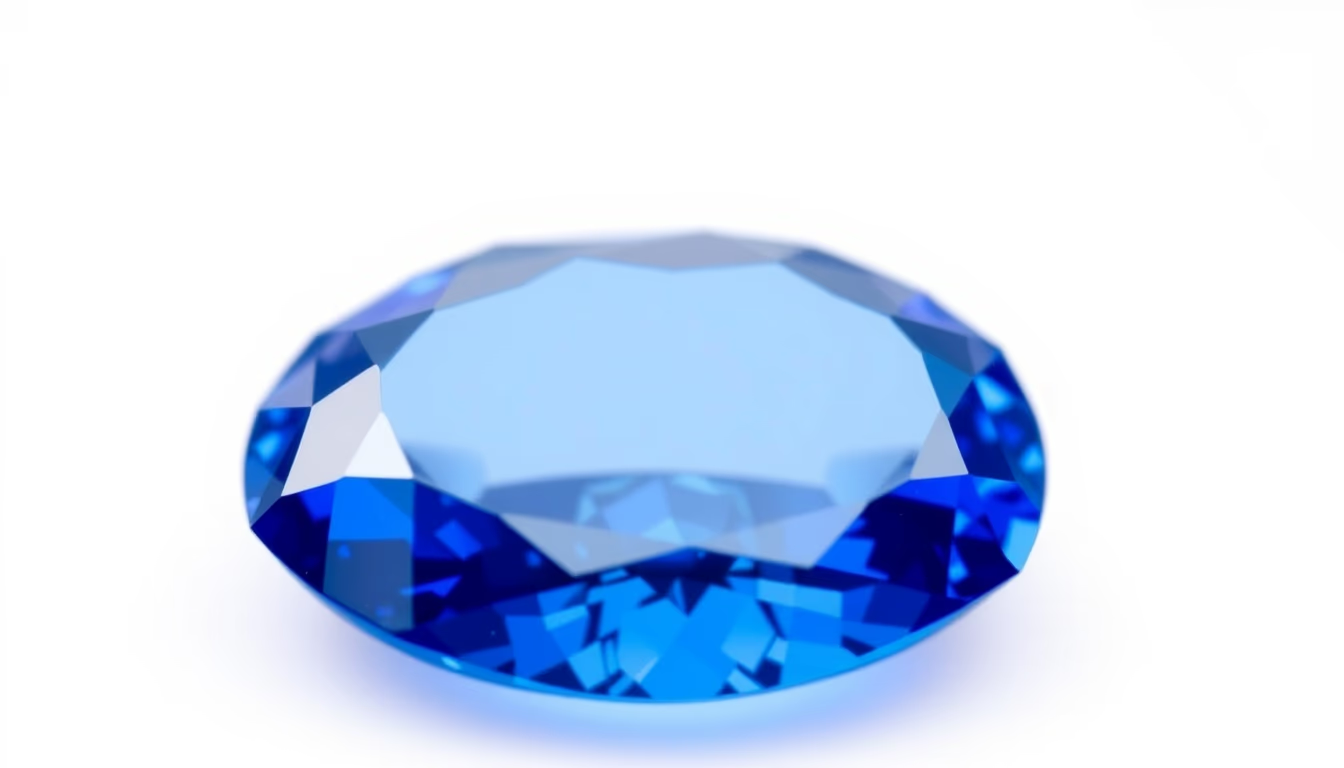
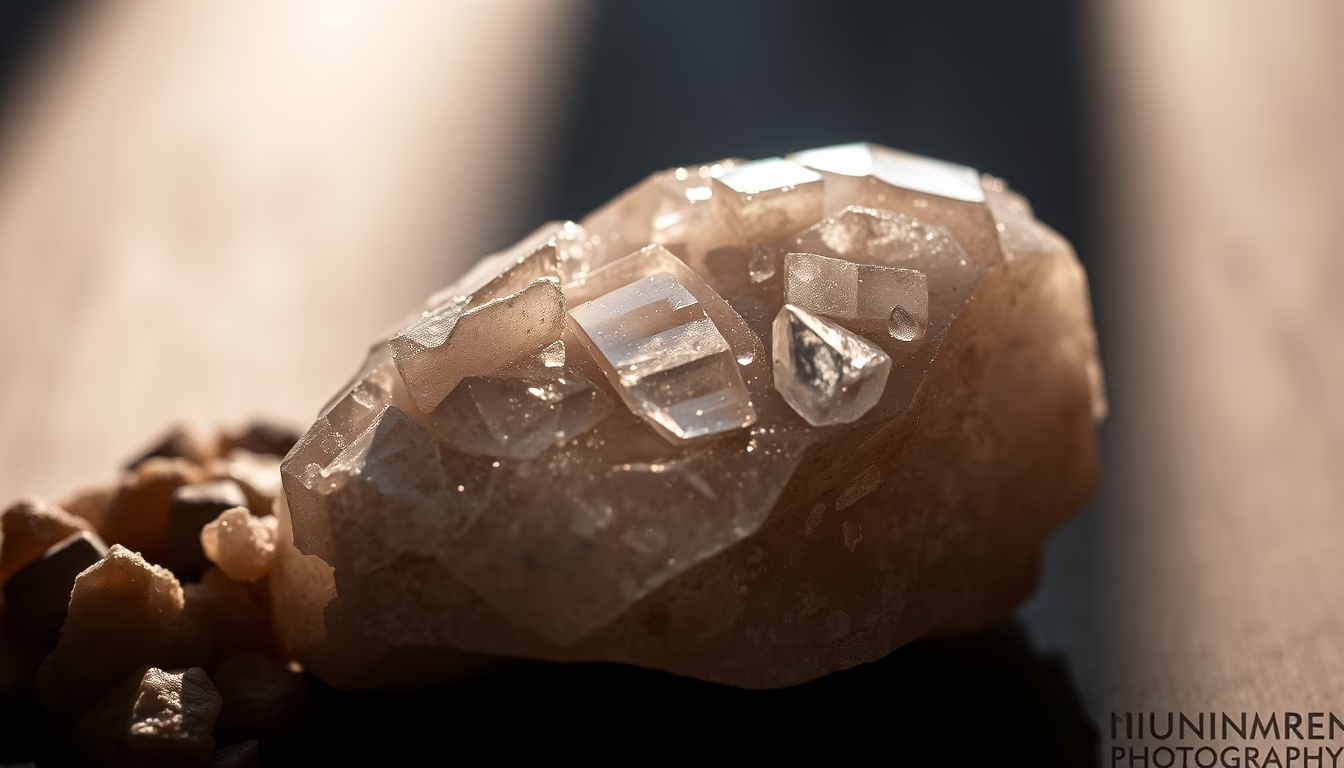
Lapis lazuli is a metamorphic rock composed mainly of lazurite, along with calcite and pyrite. Its characteristic blue color, ranging from light blue to deep violet-blue, results from sulfur in the lazurite. Golden pyrite flecks are common and valued as indicators of authenticity. The primary historical and still most important source is the Sar-e-Sang mine in Badakhshan province, Afghanistan. These mines have been operational for over 6,000 years, supplying lapis lazuli to ancient civilizations. Other significant deposits include Chile (Andes), Russia (Lake Baikal), the United States (Colorado), and Pakistan.
In antiquity, lapis lazuli was highly prized. In Egypt, it was ground to produce ultramarine pigment, used in tombs, funerary masks, and jewelry. Tutankhamun's mask contains inlaid lapis lazuli. During the Renaissance, ultramarine pigment was the most expensive available, reserved for the most important works, such as those by Johannes Vermeer. Beyond pigment, the gem was carved into seals, amulets, and decorative objects. In the Middle Ages, lapis lazuli was believed to ward off the evil eye and bring wisdom.
Physically, lapis lazuli has a hardness of 5 to 5.5 on the Mohs scale, making it relatively brittle. It is sensitive to acids and heat, which can fade its color. Therefore, it should be cleaned carefully with only warm water and mild soap. The gem is often treated with wax or resin to improve color and durability. In the market, quality is assessed by color intensity, absence of visible calcite, and even distribution of pyrite.
In Brazil, lapis lazuli is not naturally found but is imported mainly from Afghanistan. It is used in fine jewelry, sculptures, and decorative pieces. Mineral collectors appreciate raw specimens with visible pyrite crystals. The gem is also popular in spiritual practices, associated with the throat chakra and communication. Its rarity and beauty make it one of the most iconic gemstones in history.
Frequently Asked Questions
What is the composition of lapis lazuli?
Lapis lazuli is a rock composed mainly of lazurite, with calcite and pyrite, which gives it its blue color and golden flecks.
Where is lapis lazuli found?
The main mines are in Afghanistan (Sar-e-Sang), Chile, Russia, and the United States. Afghanistan is the oldest and most famous source.
How was lapis lazuli used in antiquity?
It was ground to produce ultramarine pigment, used in Egyptian tombs and paintings, as well as in jewelry, amulets, and seals.
Direct URL
https://pub-c7d6a6ea828543ac903a74a341ccb2e1.r2.dev/imagens/lapis-lazuli-blue-travel-photography-p7.avifHow to credit
Include a visible link back to UtilizAí. Copy one of the snippets below:
<a href="https://xn--utiliza-eza.com/en/midia/imagens/lapis-lazuli-blue-travel-photography-p7">Lapis lazuli blue</a> by <a href="https://xn--utiliza-eza.com">UtilizAí</a>, licensed under <a href="https://creativecommons.org/licenses/by/4.0/">CC BY 4.0</a>.
[Lapis lazuli blue](https://xn--utiliza-eza.com/en/midia/imagens/lapis-lazuli-blue-travel-photography-p7) by [UtilizAí](https://xn--utiliza-eza.com), CC BY 4.0
License: CC-BY-4.0