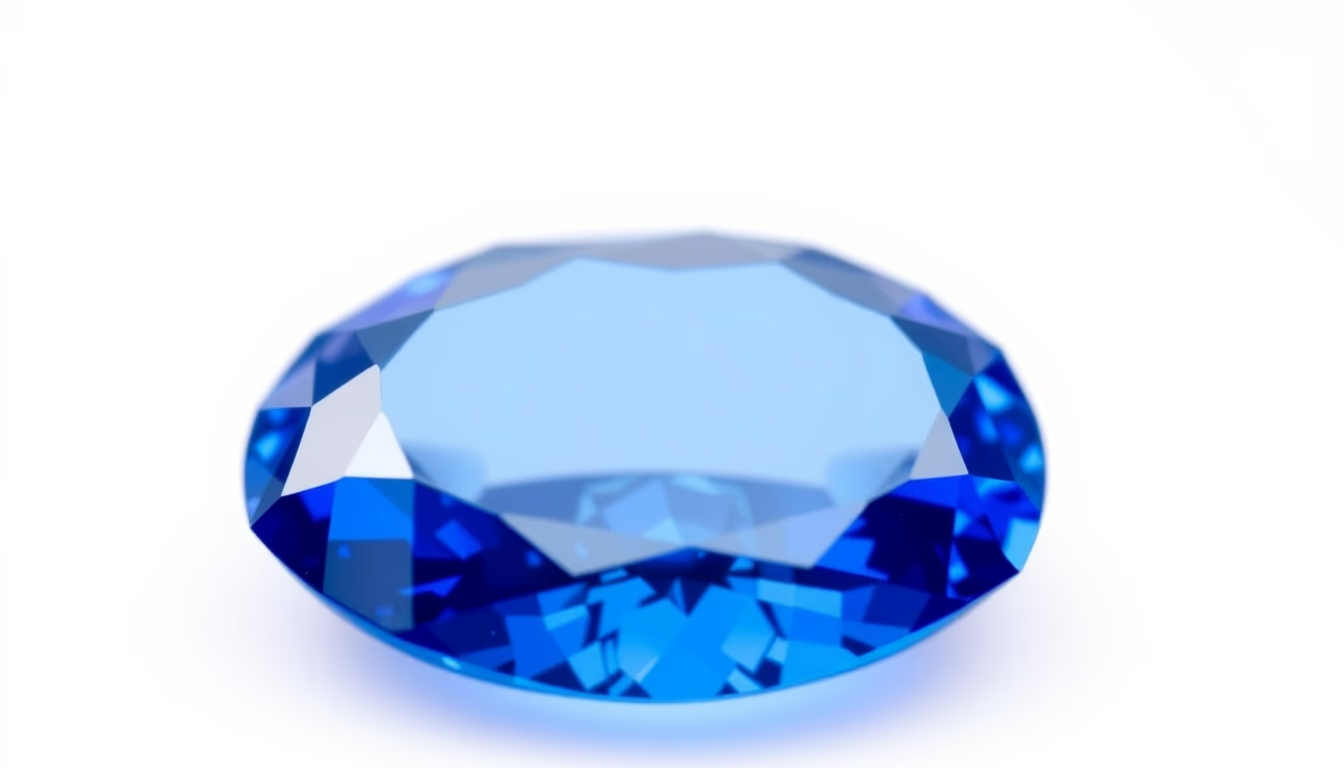
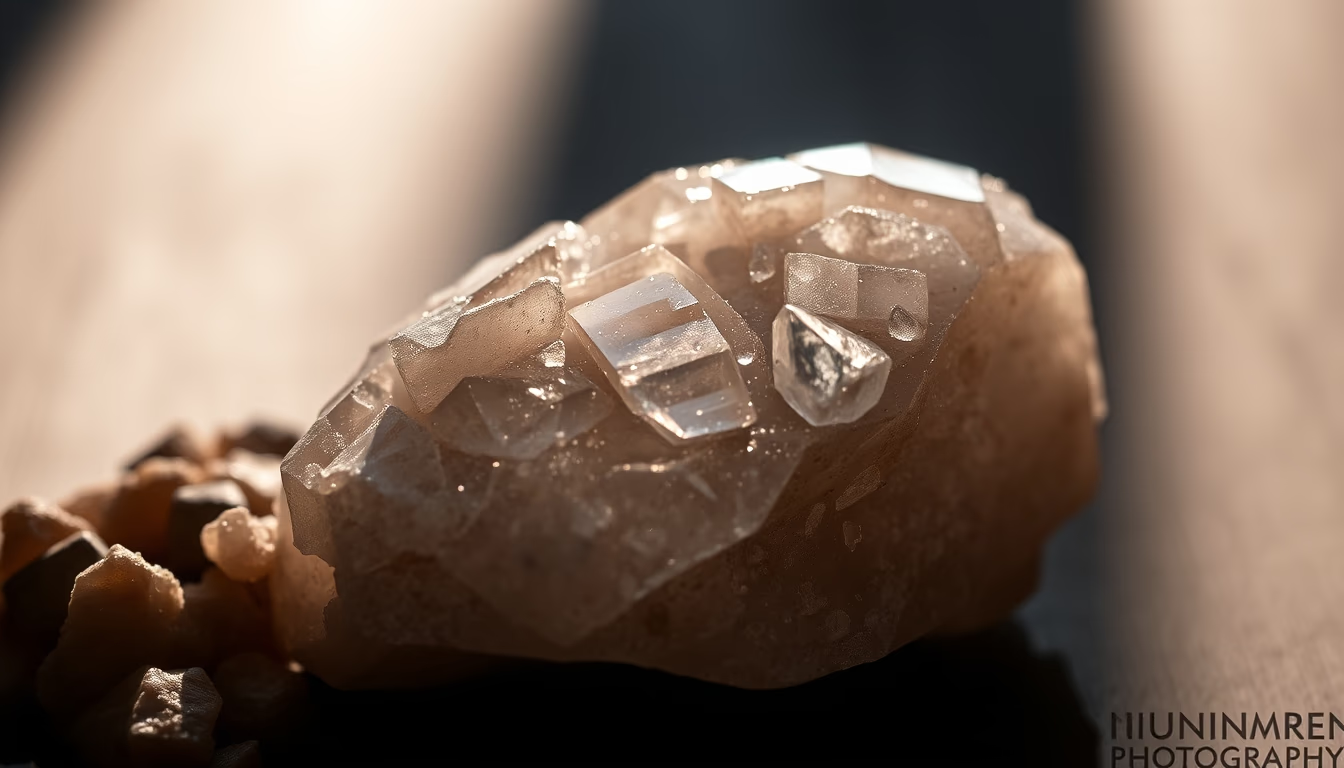
Lapis lazuli blue
1344×768 · AVIF · CC BY 4.0
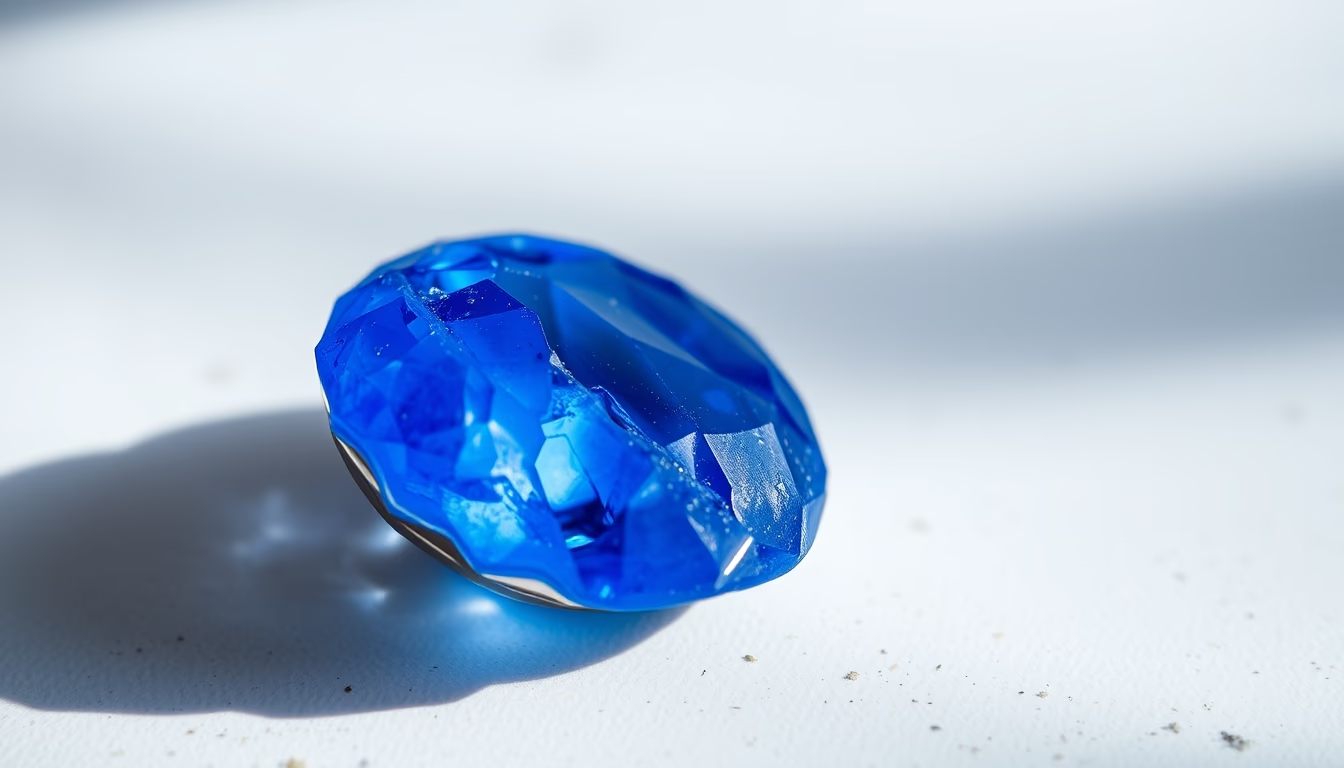
Lapis lazuli, a deep blue semiprecious stone, has been prized for millennia for use in pigments and jewelry.
About this subject
Lapis lazuli is a metamorphic rock primarily composed of lazurite, calcite, and pyrite. Its deep blue color, often speckled with golden pyrite inclusions, results from the mineral lazurite. The world's major mines are located in Afghanistan (the Badakhshan region, active for over 6,000 years), as well as Chile and Russia.
Historically, lapis lazuli was ground to produce ultramarine pigment, one of the most expensive and prized during the Renaissance. Artists like Michelangelo and Johannes Vermeer used the pigment in masterpieces such as "Girl with a Pearl Earring". The high cost was due to difficult extraction and lengthy grinding and purification processes.
In jewelry, lapis lazuli is used in cabochons, beads, and carvings since Ancient Egypt, where it adorned Tutankhamun's funerary mask. It was also associated with spiritual properties, considered a stone of wisdom and truth. On the Mohs scale, it has a hardness of 5 to 6, making it suitable for pieces that do not undergo constant impact.
Interestingly, the word "lapis lazuli" comes from Latin "lapis" (stone) and "lazuli" (blue, derived from Persian). It is the national stone of Afghanistan. Its rarity and beauty continue to fascinate collectors and contemporary artists, who still use natural ultramarine pigment in art restorations.
Frequently Asked Questions
What is the difference between lapis lazuli and sodalite?
Lapis lazuli contains lazurite, calcite, and pyrite, while sodalite is a lighter blue mineral typically without golden inclusions. Sodalite is also less dense and has similar hardness.
How to identify real lapis lazuli?
Look for golden pyrite inclusions and white calcite veins. Genuine lapis lazuli has a deep, uniform blue color and does not fade when heated or exposed to solvents.
Where can lapis lazuli be found?
The main sources are the mines in Badakhshan, Afghanistan (considered the finest), as well as Chile, Russia, Pakistan, and the United States.
Direct URL
https://pub-c7d6a6ea828543ac903a74a341ccb2e1.r2.dev/imagens/lapis-lazuli-blue-magazine-editorial-p5.avifHow to credit
Include a visible link back to UtilizAí. Copy one of the snippets below:
<a href="https://xn--utiliza-eza.com/en/midia/imagens/lapis-lazuli-blue-magazine-editorial-p5">Lapis lazuli blue</a> by <a href="https://xn--utiliza-eza.com">UtilizAí</a>, licensed under <a href="https://creativecommons.org/licenses/by/4.0/">CC BY 4.0</a>.
[Lapis lazuli blue](https://xn--utiliza-eza.com/en/midia/imagens/lapis-lazuli-blue-magazine-editorial-p5) by [UtilizAí](https://xn--utiliza-eza.com), CC BY 4.0
License: CC-BY-4.0