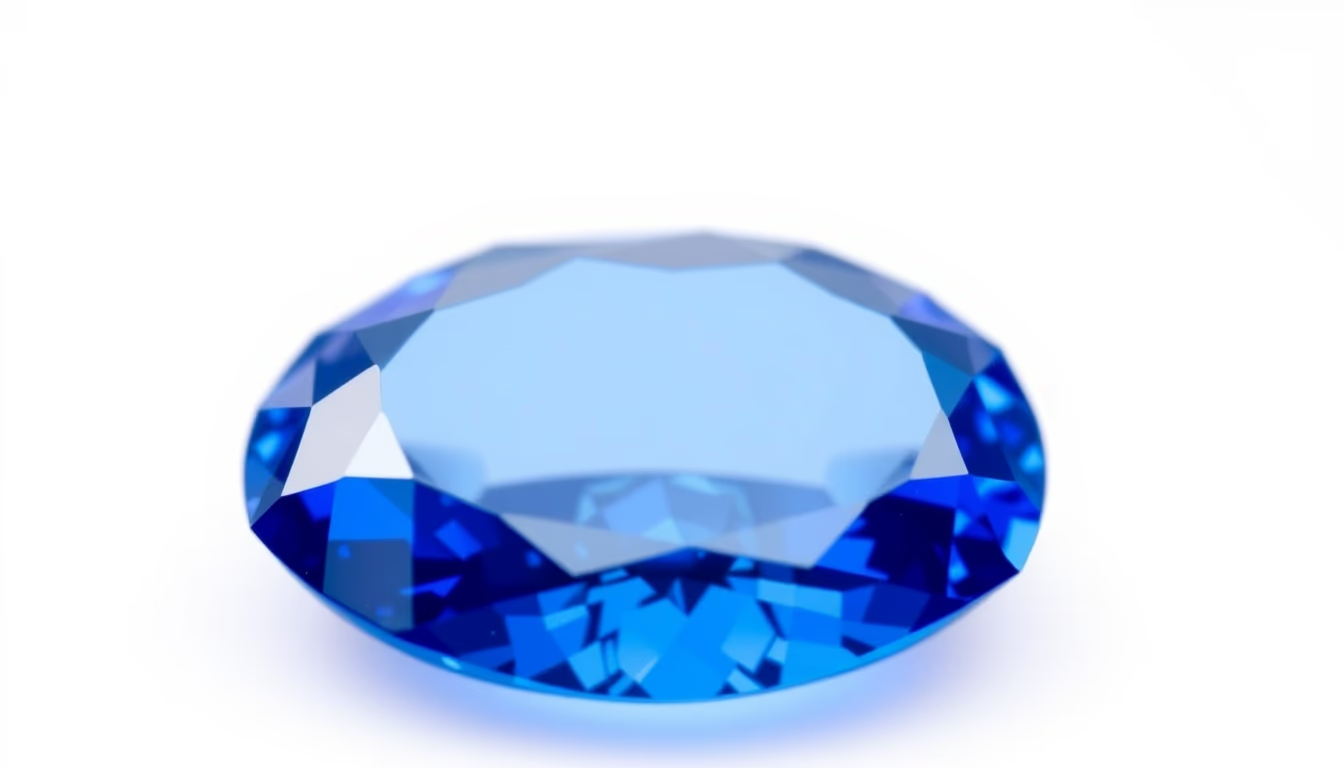
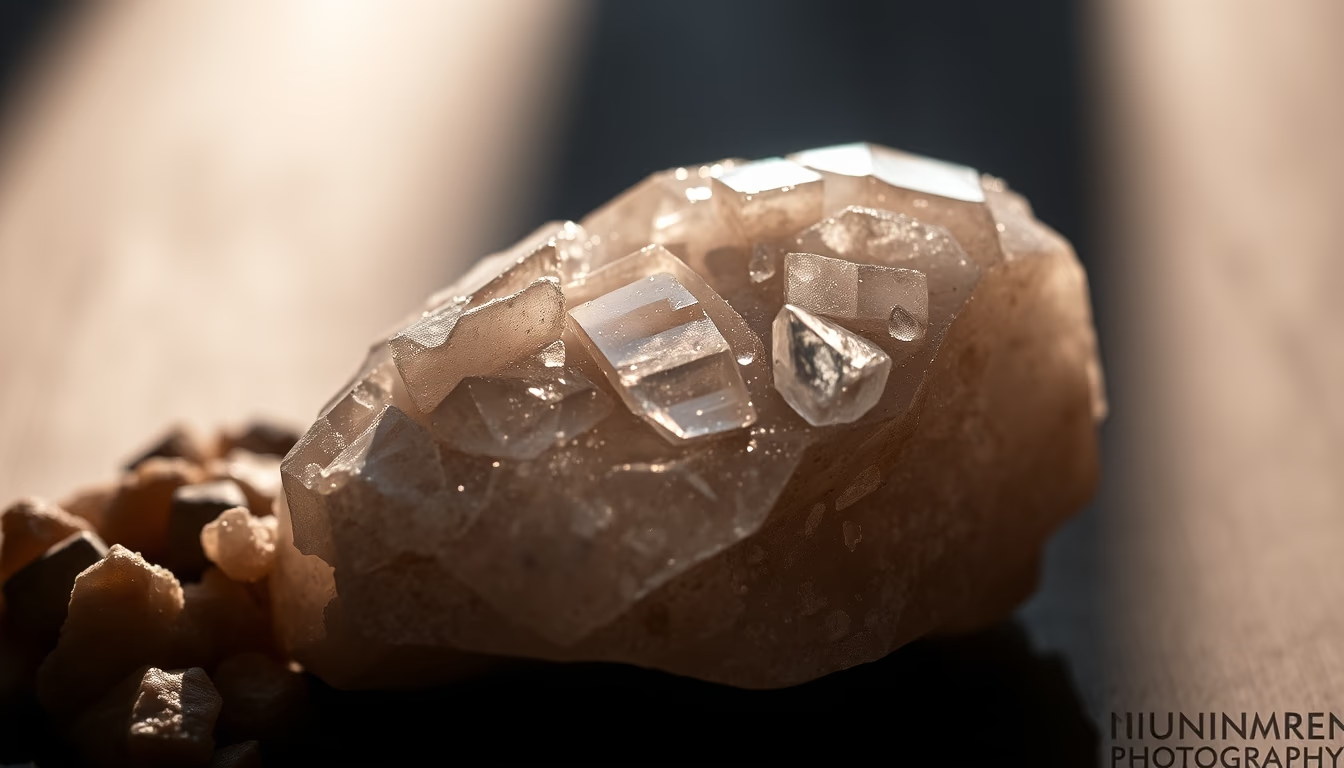
Lapis lazuli blue
1344×768 · AVIF · CC BY 4.0

Lapis lazuli, a deep blue semiprecious stone, was ground to produce ultramarine, the most valuable pigment of the Middle Ages.
About this subject
Lapis lazuli is a metamorphic rock composed mainly of lazurite, a silicate that gives it its characteristic blue color. It forms in contact metamorphic zones between limestone and igneous rocks, such as in Afghanistan, the primary historical source. The Sar-e-Sang mine in Badakhshan province has been exploited for over 6,000 years and still produces the finest specimens.
In antiquity, lapis lazuli was considered more valuable than gold. Egyptians used it in jewelry, amulets, and cosmetics; the powder was applied as eyeshadow by pharaohs. In medieval Europe, the pigment ultramarine (from Latin ultramarinus, 'beyond the sea') was obtained by grinding the stone and washing the powder. It was reserved for the robes of the Virgin Mary in illuminated manuscripts and religious panels, symbolizing purity and royalty. Artists like Giotto and Jan van Eyck paid fortunes for the pigment, which never faded.
Mining lapis lazuli is artisanal and dangerous. Miners work in narrow tunnels at over 3,000 meters altitude, using hammers and chisels. After extraction, stones are graded by quality: the most intense and uniform blue is the most valuable. Today, besides Afghanistan, smaller deposits exist in Chile, Russia, and the United States, but the Afghan variety remains the benchmark.
Lapis lazuli also plays a role in traditional medicine and spirituality. In Islamic culture, it was used in talismans for protection against the evil eye. In India, it was part of toothpaste and remedies for digestive issues. Today, it is widely used in jewelry, decorative objects, and as pigment in art restoration. Synthetic ultramarine blue, invented in the 19th century, replaced the natural pigment in painting, but the original stone remains a symbol of luxury and history.
Frequently Asked Questions
What is lapis lazuli and how is it formed?
Lapis lazuli is a blue metamorphic rock composed mainly of lazurite, calcite, and pyrite. It forms in contact metamorphic zones between carbonate and igneous rocks under high temperature and pressure.
Why was lapis lazuli so valuable in the Middle Ages?
Because it was the only source of ultramarine pigment, an intense and permanent blue. Mining and processing were extremely expensive: the stone came from Afghanistan and required weeks of grinding and washing to obtain pure pigment.
What are the main uses of lapis lazuli today?
Today it is used in fine jewelry, decorative objects, sculptures, and art restoration. It is also prized by mineral collectors and in meditation and crystal healing practices.
Direct URL
https://pub-c7d6a6ea828543ac903a74a341ccb2e1.r2.dev/imagens/lapis-lazuli-blue-fine-art-photography-p4.avifHow to credit
Include a visible link back to UtilizAí. Copy one of the snippets below:
<a href="https://xn--utiliza-eza.com/en/midia/imagens/lapis-lazuli-blue-fine-art-photography-p4">Lapis lazuli blue</a> by <a href="https://xn--utiliza-eza.com">UtilizAí</a>, licensed under <a href="https://creativecommons.org/licenses/by/4.0/">CC BY 4.0</a>.
[Lapis lazuli blue](https://xn--utiliza-eza.com/en/midia/imagens/lapis-lazuli-blue-fine-art-photography-p4) by [UtilizAí](https://xn--utiliza-eza.com), CC BY 4.0
License: CC-BY-4.0