Lapis lazuli blue
1344×768 · AVIF · CC BY 4.0

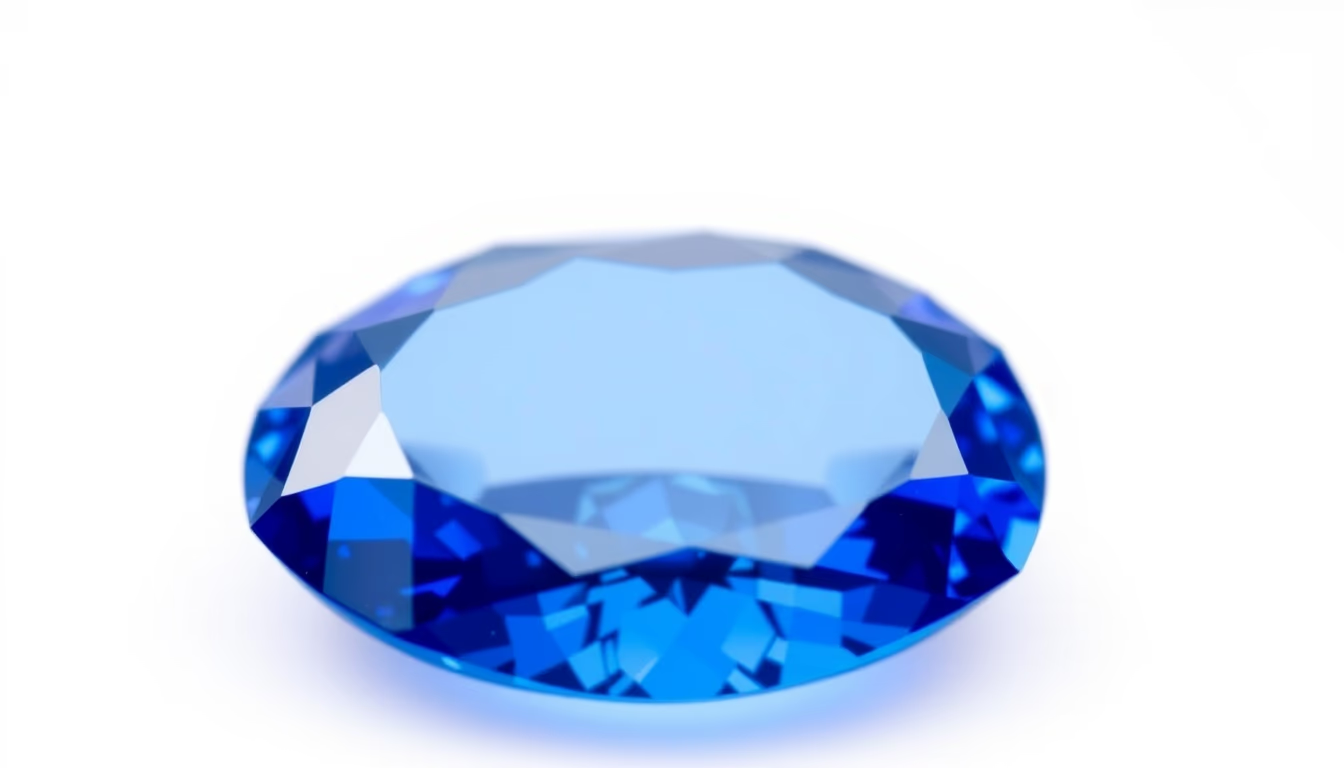
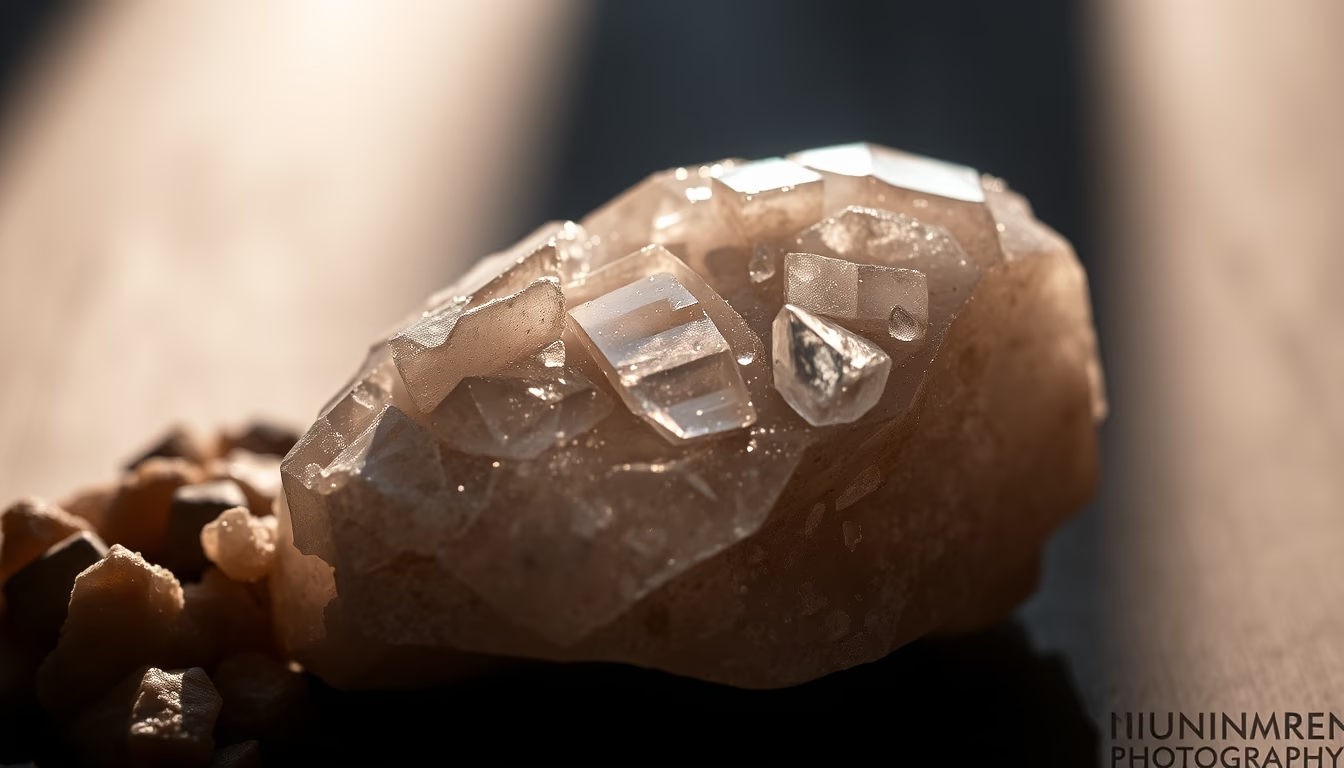
Lapis lazuli, an intense blue gemstone prized since antiquity, is known for its use in jewelry and as the ultramarine pigment.
About this subject
Lapis lazuli is a metamorphic rock composed mainly of lazurite, calcite, and pyrite, giving it a deep blue color with golden inclusions. Its history spans over 6,000 years, with mining concentrated in the Badakhshan region of Afghanistan, still the most famous source today. In antiquity, it was as valuable as gold, used in jewelry, amulets, and carvings in Egypt, Mesopotamia, and the Indus Valley Civilization. The powdered stone was ground to produce ultramarine pigment, one of the most expensive and coveted in art history, used by masters like Michelangelo and Vermeer in masterpieces such as "Girl with a Pearl Earring" and the Sistine Chapel ceiling. During the Renaissance, the pigment was often reserved for the robes of the Virgin Mary, symbolizing purity and royalty. Beyond Afghanistan, smaller deposits exist in Chile, Russia, and the United States, but Afghan quality remains the most prized. Lapis lazuli is also used in holistic therapies, believed to promote mental clarity and communication. Its hardness on the Mohs scale is 5 to 5.5, making it suitable for jewelry but requiring care to avoid scratches.
Frequently Asked Questions
What does the word lapis lazuli mean?
Lapis lazuli comes from Latin 'lapis' (stone) and Persian 'lāžward' (blue), referring to its characteristic color. The name has been used since ancient times.
Is lapis lazuli still used to make pigment?
Yes, but on a small scale. Natural ultramarine pigment is very expensive, so most modern blue pigments are synthetic. Artists can still purchase genuine ultramarine from sources like Afghanistan.
How to identify genuine lapis lazuli?
Genuine lapis lazuli has golden pyrite inclusions and a non-uniform blue color with white calcite veins. Synthetic or dyed stones typically have uniform color and lack pyrite. A simple test is to heat the stone; if it smells like sulfur, it is natural.
Direct URL
https://pub-c7d6a6ea828543ac903a74a341ccb2e1.r2.dev/imagens/lapis-lazuli-blue-film-grain-authentic-p11.avifHow to credit
Include a visible link back to UtilizAí. Copy one of the snippets below:
<a href="https://xn--utiliza-eza.com/en/midia/imagens/lapis-lazuli-blue-film-grain-authentic-p11">Lapis lazuli blue</a> by <a href="https://xn--utiliza-eza.com">UtilizAí</a>, licensed under <a href="https://creativecommons.org/licenses/by/4.0/">CC BY 4.0</a>.
[Lapis lazuli blue](https://xn--utiliza-eza.com/en/midia/imagens/lapis-lazuli-blue-film-grain-authentic-p11) by [UtilizAí](https://xn--utiliza-eza.com), CC BY 4.0
License: CC-BY-4.0