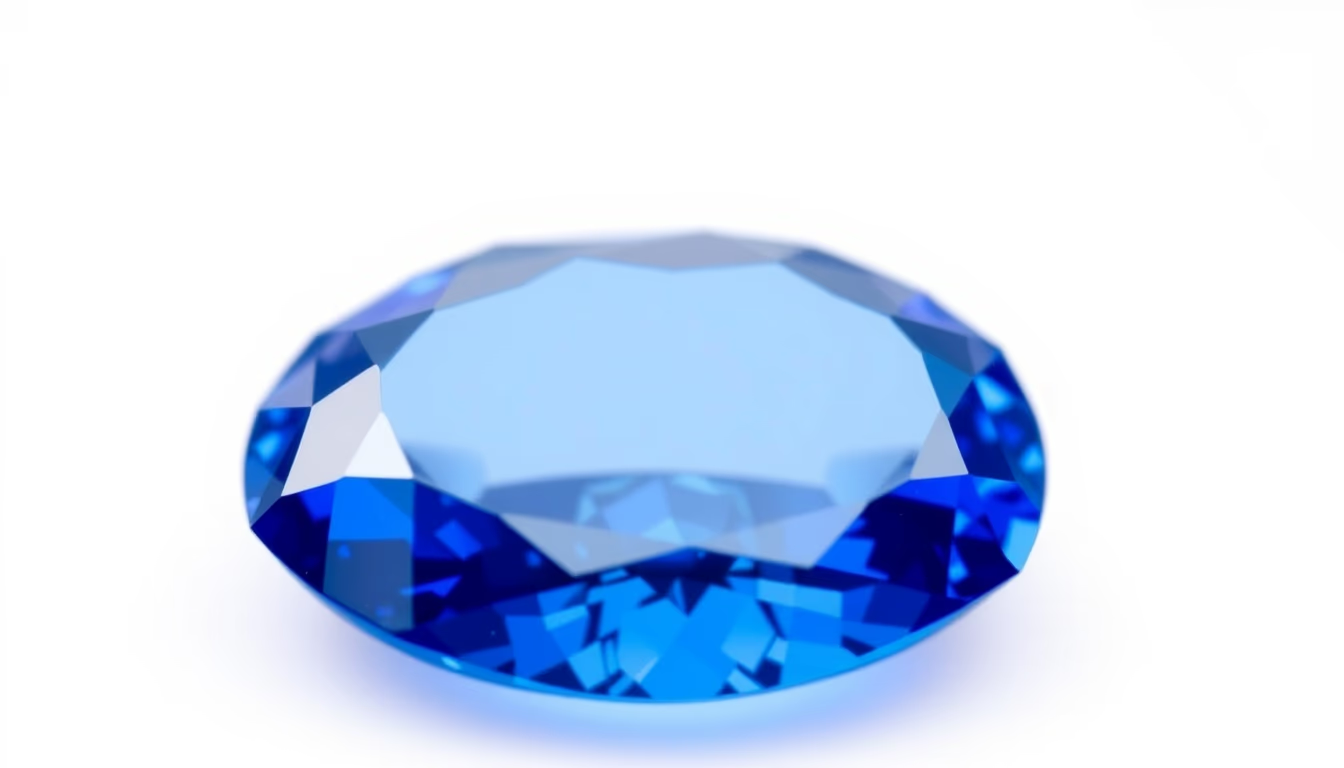
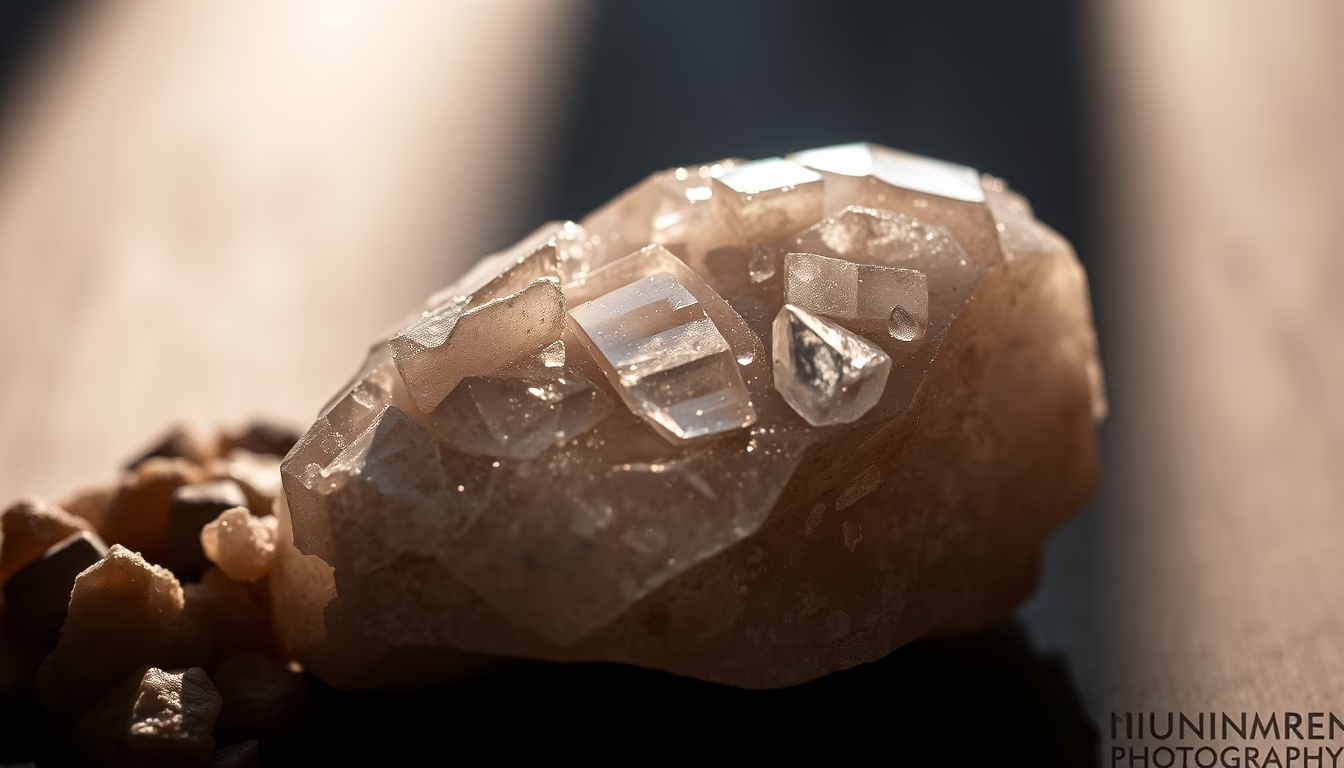
Lapis lazuli blue
1344×768 · AVIF · CC BY 4.0
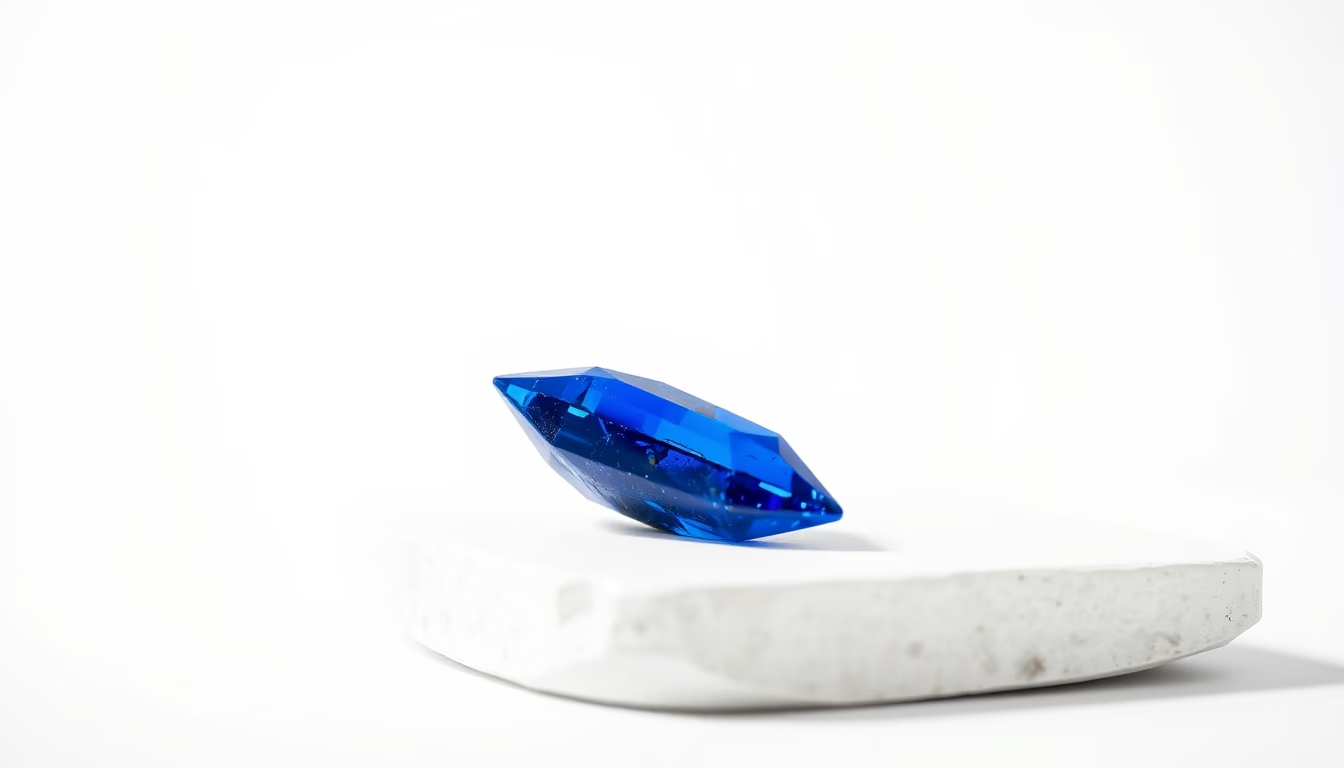
Lapis lazuli, one of the most precious gemstones of antiquity, captivates with its deep blue color and historical use in art and jewelry.
About this subject
Lapis lazuli is a metamorphic rock primarily composed of lazurite, calcite, and pyrite. Its intense blue color, often flecked with golden pyrite specks, results from lazurite, a complex silicate of sodium, aluminum, and sulfur. With a hardness of 5 to 5.5 on the Mohs scale, it is a relatively soft gemstone but highly prized.
The most traditional and famous deposits are in Afghanistan, in the Badakhshan region, where the mineral has been mined for over six thousand years. Other notable sources include Chile (Ovalle), Russia (near Lake Baikal), and Pakistan. Afghan lapis lazuli is considered the finest, with the deepest blue and least calcite.
Historically, lapis lazuli was used by ancient civilizations such as the Sumerians, Egyptians, Greeks, and Romans. In Egypt, it was used in jewelry, amulets, and the funerary mask of Tutankhamun. During the Renaissance, the stone was ground finely to produce ultramarine pigment, the most expensive and precious blue of the time, used in masterpieces by artists like Vermeer and Michelangelo.
Today, beyond its use in jewelry and decorative sculptures, lapis lazuli is still appreciated for its timeless beauty. In modern culture, it symbolizes wisdom, truth, and loyalty, and is also used in crystal therapy and meditation practices, although there is no scientific evidence for its claimed energetic benefits.
Frequently Asked Questions
Is lapis lazuli a precious stone?
It is a highly valued semiprecious gemstone, but it is not classified as a precious stone (like diamond, ruby, sapphire, or emerald).
Where does lapis lazuli come from?
The most famous mines are in Afghanistan's Badakhshan region, where lapis lazuli has been mined for over 6,000 years. Other producing countries include Chile, Russia, and Pakistan.
What is lapis lazuli used for today?
Besides jewelry and decorative objects, ground lapis lazuli is still used as a pigment in artistic painting, known as ultramarine.
Direct URL
https://pub-c7d6a6ea828543ac903a74a341ccb2e1.r2.dev/imagens/lapis-lazuli-blue-commercial-product-photography-p6.avifHow to credit
Include a visible link back to UtilizAí. Copy one of the snippets below:
<a href="https://xn--utiliza-eza.com/en/midia/imagens/lapis-lazuli-blue-commercial-product-photography-p6">Lapis lazuli blue</a> by <a href="https://xn--utiliza-eza.com">UtilizAí</a>, licensed under <a href="https://creativecommons.org/licenses/by/4.0/">CC BY 4.0</a>.
[Lapis lazuli blue](https://xn--utiliza-eza.com/en/midia/imagens/lapis-lazuli-blue-commercial-product-photography-p6) by [UtilizAí](https://xn--utiliza-eza.com), CC BY 4.0
License: CC-BY-4.0