Knitting needles wool
1344×768 · AVIF · CC BY 4.0
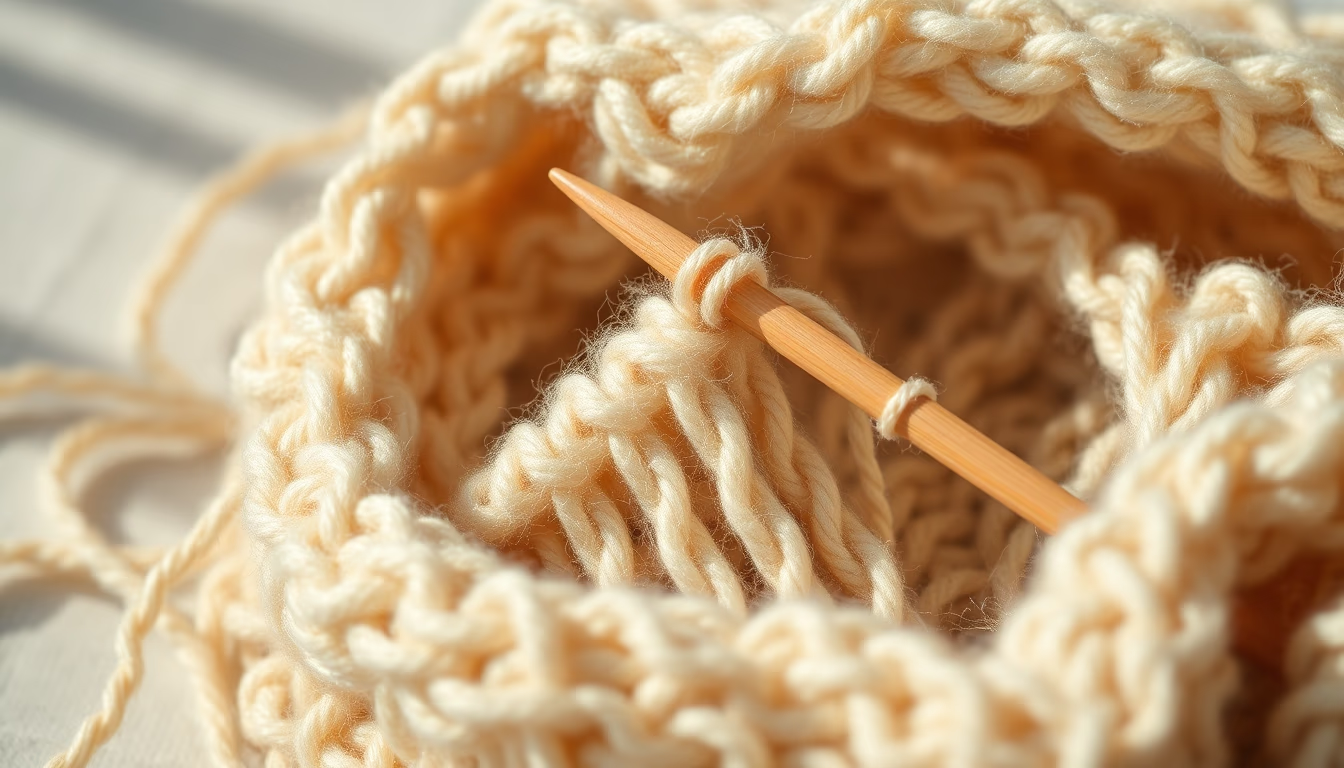
Knitting needles and balls of wool: essential tools for textile craft combining tradition, technique, and creativity.
About this subject
Knitting is an ancient technique of interlocking yarn to create fabric, with origins tracing back to the Middle East and later to medieval Europe. Early needles were made from bone, wood, or metal, and threads came from natural fibers like wool, linen, and cotton. Today, textile crafts encompass a wide range of styles, from utilitarian items like socks and scarves to three-dimensional art pieces.
Knitting needles vary in material and shape: straight needles are common for flat pieces, circular needles allow seamless tubes, and double-pointed needles are essential for small circular projects like socks. Needle thickness is standardized by numbering, directly influencing stitch density. Wool, the most used fiber, comes from different sheep breeds. Each type offers unique properties: merino is soft and fine, Shetland is resilient and rustic, and lambswool is exceptionally gentle.
Culturally, knitting transcends mere clothing creation. During world wars, it was a patriotic activity to produce garments for soldiers. Today, knitting is enjoying a revival as a therapeutic and sustainable hobby, with online communities, craft fairs, and the 'slow fashion' movement. Yarn bombing projects transform public spaces with colorful installations, blending art and activism.
Beyond creative pleasure, knitting offers proven mental health benefits: stress reduction, improved motor coordination, and potential cognitive decline prevention. The simplicity of repetitive movement promotes a meditative state. For beginners, it is advisable to start with medium needles (4, 5 mm) and similar thickness yarn (worsted weight), which facilitate learning basic stitches.
Frequently Asked Questions
What is the difference between straight and circular knitting needles?
Straight needles are used for flat pieces (like scarves) and have points at only one end. Circular needles are two cables joined by a flexible cord, allowing seamless tube knitting or large flat projects while distributing weight better.
How to choose the ideal wool for a knitting project?
Consider the purpose: soft wools (merino) for sensitive skin, durable ones (Shetland) for hard-wearing items, and light wools (lambswool) for babies. Check the yarn weight label (worsted, chunky, etc.) and match with the recommended needle size.
What are the benefits of learning to knit?
Knitting reduces stress and anxiety, improves fine motor coordination, enhances focus, and provides a sense of accomplishment. It is also a social and sustainable activity, allowing creation of custom clothing and items.
Direct URL
https://pub-c7d6a6ea828543ac903a74a341ccb2e1.r2.dev/imagens/knitting-needles-wool-magazine-editorial-p0.avifHow to credit
Include a visible link back to UtilizAí. Copy one of the snippets below:
<a href="https://xn--utiliza-eza.com/en/midia/imagens/knitting-needles-wool-magazine-editorial-p0">Knitting needles wool</a> by <a href="https://xn--utiliza-eza.com">UtilizAí</a>, licensed under <a href="https://creativecommons.org/licenses/by/4.0/">CC BY 4.0</a>.
[Knitting needles wool](https://xn--utiliza-eza.com/en/midia/imagens/knitting-needles-wool-magazine-editorial-p0) by [UtilizAí](https://xn--utiliza-eza.com), CC BY 4.0
License: CC-BY-4.0