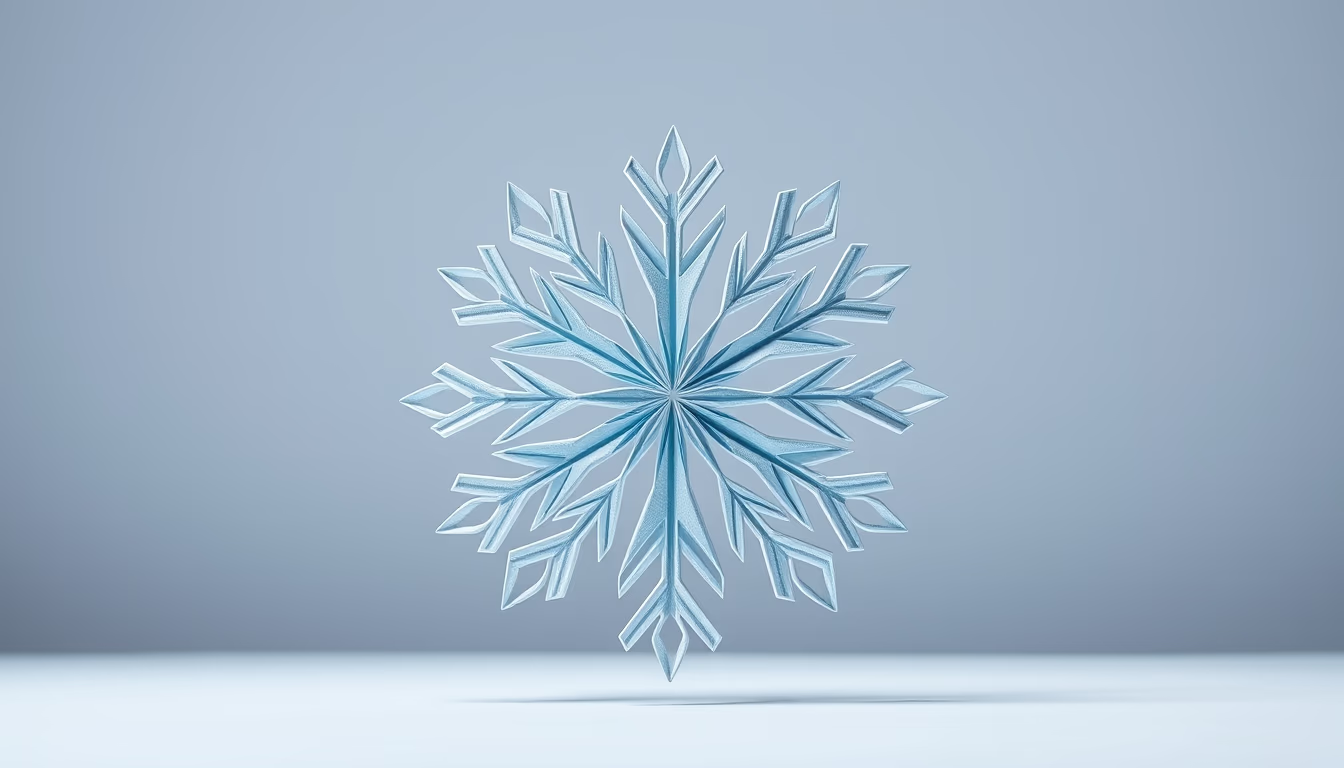
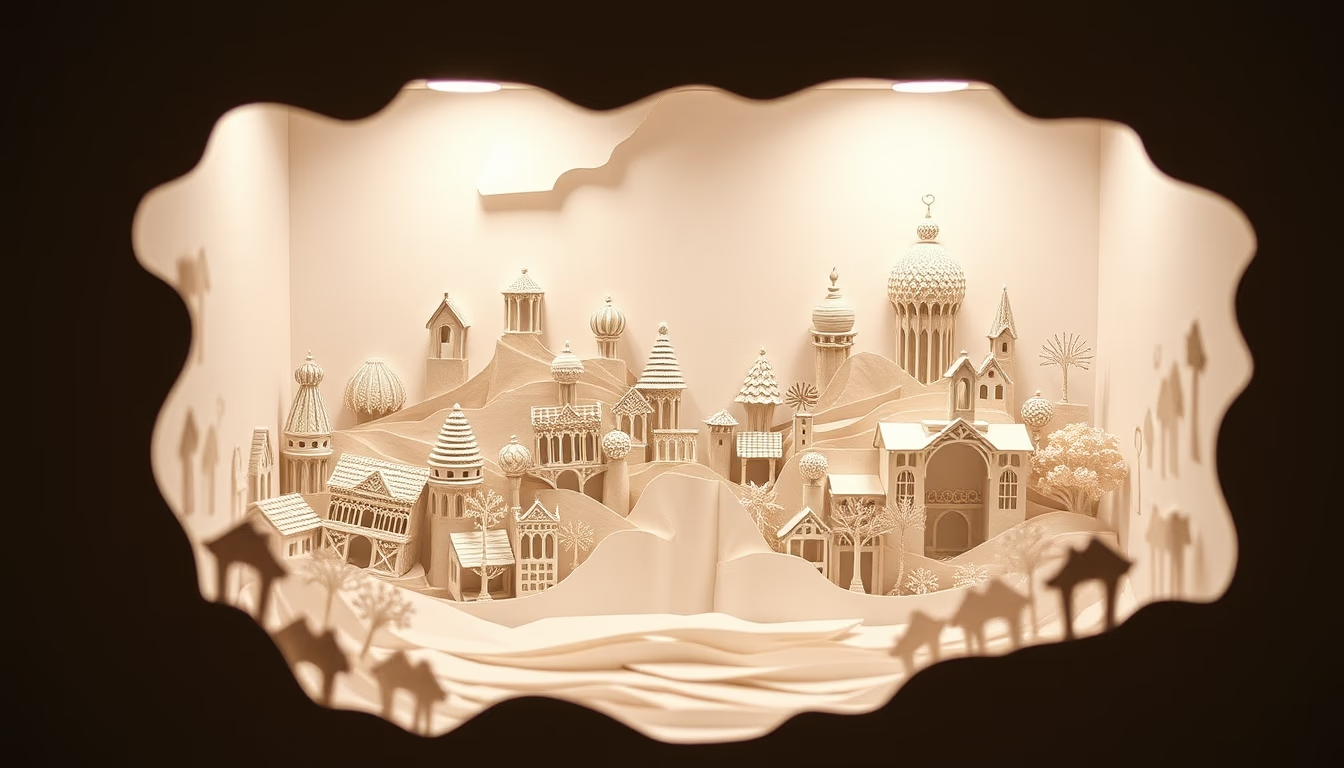
Kirigami snowflake
1344×768 · AVIF · CC BY 4.0
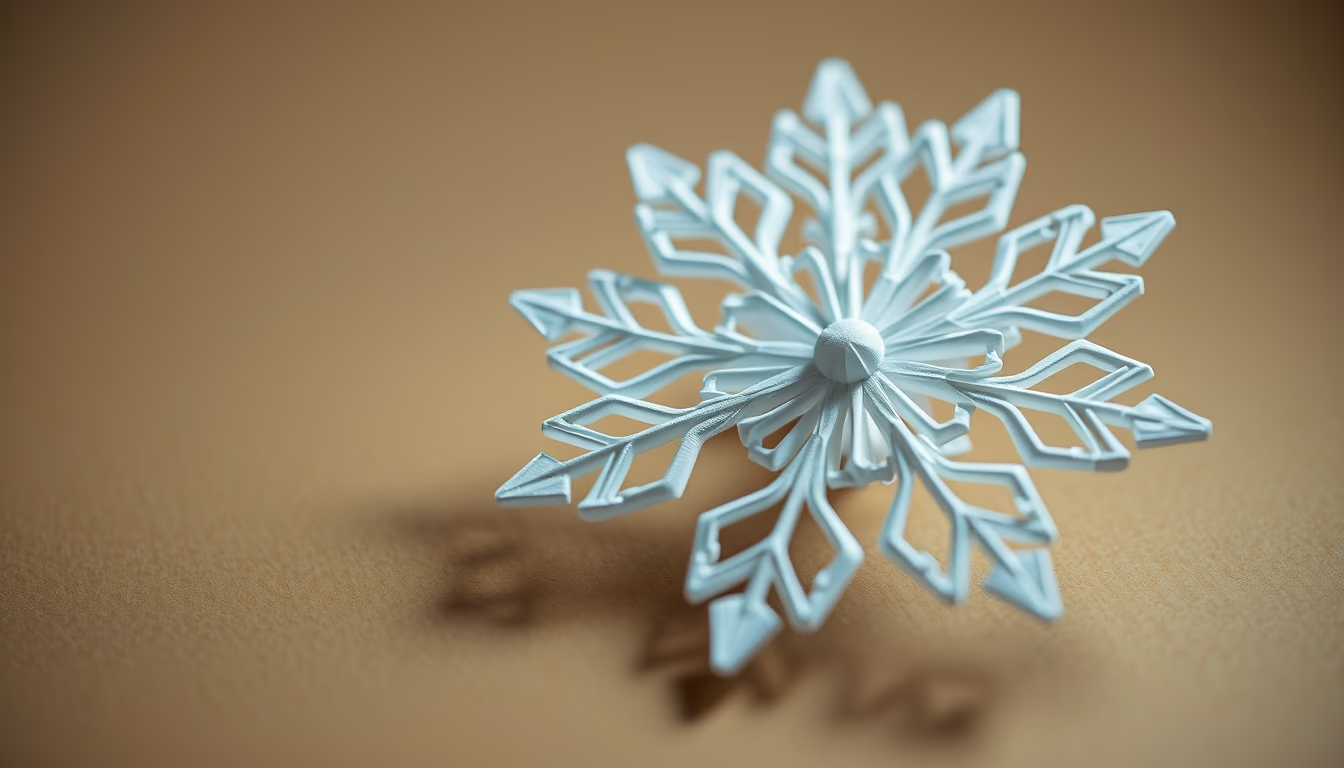
A kirigami snowflake, a Japanese paper-cutting art that transforms a simple sheet into delicate symmetrical decoration.
About this subject
Kirigami, originating in Japan, is a variation of origami that allows precise cuts in paper, creating complex shapes like this snowflake. Unlike origami, which uses only folds, kirigami employs scissors or craft knives to cut patterns, resulting in three-dimensional or openwork pieces. The technique dates back to the 7th century, when paper was introduced to Japan, and became popular in festivals and seasonal decorations, especially during winter.
Making a kirigami snowflake starts with a square sheet of paper, folded several times to achieve radial symmetry. Cuts are then made along the folded edges; when unfolded, a hexagonal pattern emerges, mimicking the natural symmetry of real snowflakes. This technique requires precision and patience, as each cut defines the final outcome. In Japan, kirigami is taught in schools as an activity that develops fine motor skills and creativity.
Culturally, kirigami snowflakes are associated with winter and the Japanese New Year, symbolizing purity and renewal. They are also used in Western celebrations like Christmas, hung on windows or trees. The art has spread globally, influencing other papercraft forms such as German scherenschnitte. Today, contemporary artists create large-scale kirigami pieces, blending traditional techniques with modern designs.
Interestingly, kirigami has inspired engineering advances, such as flexible solar cells and medical stents that use cutting patterns to expand. This scientific application shows how an ancient art can contribute to technological innovation.
Frequently Asked Questions
What is the difference between kirigami and origami?
In origami, only folding is allowed, no cutting. Kirigami permits cuts in the paper, creating openwork or three-dimensional shapes that are not possible with folding alone.
What type of paper is used for kirigami?
Lightweight yet sturdy papers, such as Japanese washi paper or medium-weight copy paper, are ideal. Very thick paper makes precise cutting difficult, while very thin paper tears easily.
Are kirigami snowflakes always symmetrical?
Yes, the technique of folding the paper before cutting ensures radial symmetry. Most snowflakes have six sides, but symmetry with 4, 8, or more parts can be created depending on the number of folds.
Direct URL
https://pub-c7d6a6ea828543ac903a74a341ccb2e1.r2.dev/imagens/kirigami-snowflake-film-grain-authentic-fresh16.avifHow to credit
Include a visible link back to UtilizAí. Copy one of the snippets below:
<a href="https://xn--utiliza-eza.com/en/midia/imagens/kirigami-snowflake-film-grain-authentic-fresh16">Kirigami snowflake</a> by <a href="https://xn--utiliza-eza.com">UtilizAí</a>, licensed under <a href="https://creativecommons.org/licenses/by/4.0/">CC BY 4.0</a>.
[Kirigami snowflake](https://xn--utiliza-eza.com/en/midia/imagens/kirigami-snowflake-film-grain-authentic-fresh16) by [UtilizAí](https://xn--utiliza-eza.com), CC BY 4.0
License: CC-BY-4.0