Kingfisher diving water
1344×768 · AVIF · CC BY 4.0
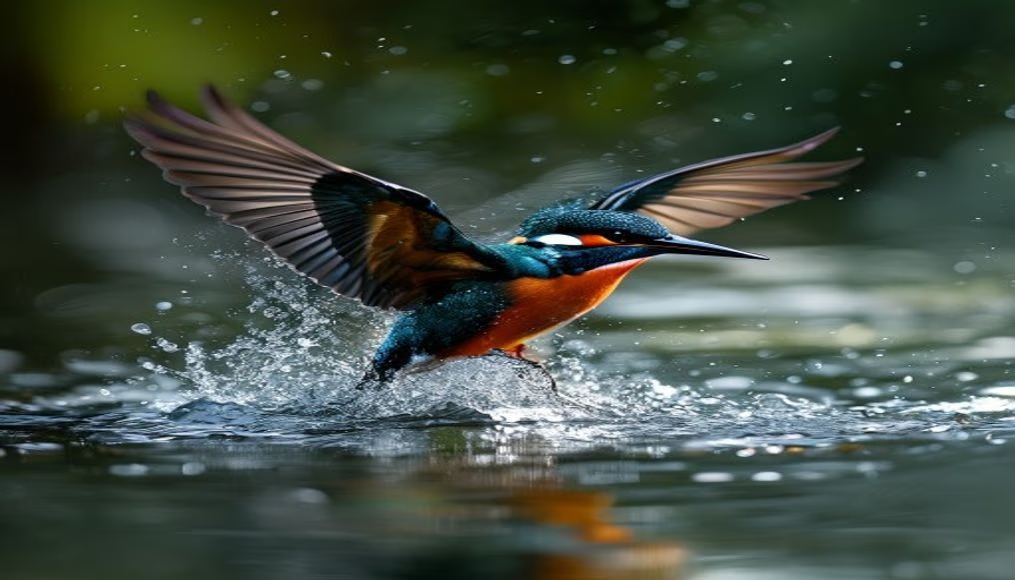
The kingfisher is renowned for its precise dives in pursuit of fish. Discover how its visual and physical adaptations ensure success in aquatic hunting.
About this subject
The kingfisher is a medium-sized bird belonging to the family Alcedinidae, with over 90 species distributed globally. Common in rivers, lakes, and mangroves, species like the belted kingfisher (Megaceryle alcyon) in North America or the common kingfisher (Alcedo atthis) in Eurasia are expert fishers, preying on fish, crustaceans, and amphibians through a vertical dive from a perch.
Hunting involves remarkable evolutionary adaptations. Kingfishers have binocular vision, enabling precise distance and depth calculation even underwater. They also possess a nictitating membrane that acts as built-in goggles, protecting the eyes during the dive. Research indicates they can compensate for light refraction at the water's surface, adjusting their dive angle to strike the prey accurately every time.
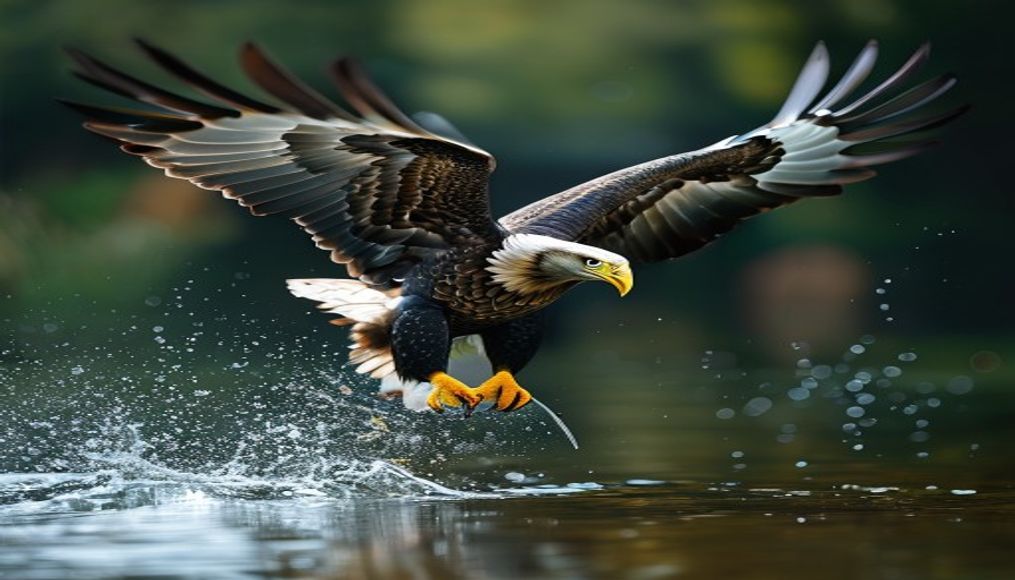
The dive itself is swift and efficient. The bird folds its wings against the body, achieving a streamlined shape that minimizes water resistance. Its long, sharp bill functions like a spear, grasping the fish with a precise motion. After capturing, the kingfisher returns to a perch to swallow the prey whole, often beating it against a branch to immobilize it.
Interestingly, kingfishers nest in burrows dug into riverbanks or cliffs, where they lay eggs and raise chicks. This location offers protection from predators and proximity to food sources. Such behavior highlights the kingfisher's strong association with aquatic habitats and its dependence on healthy ecosystems for survival.
Frequently Asked Questions
Why does the kingfisher dive headfirst into the water?
The headfirst dive allows the kingfisher to strike prey quickly and precisely. Its beak acts as a spear, and the streamlined position reduces drag in the water.
How does the kingfisher see fish underwater?
It has a nictitating membrane that protects the eyes while maintaining clear vision. Its binocular vision also compensates for light refraction at the water's surface.
Where does the kingfisher build its nest?
Typically, it excavates tunnels in riverbanks or cliffs. These underground nests provide safety from predators and remain close to hunting grounds.
Direct URL
https://pub-c7d6a6ea828543ac903a74a341ccb2e1.r2.dev/imagens/kingfisher-diving-water-high-fashion-editorial-p2.avifHow to credit
Include a visible link back to UtilizAí. Copy one of the snippets below:
<a href="https://xn--utiliza-eza.com/en/midia/imagens/kingfisher-diving-water-high-fashion-editorial-p2">Kingfisher diving water</a> by <a href="https://xn--utiliza-eza.com">UtilizAí</a>, licensed under <a href="https://creativecommons.org/licenses/by/4.0/">CC BY 4.0</a>.
[Kingfisher diving water](https://xn--utiliza-eza.com/en/midia/imagens/kingfisher-diving-water-high-fashion-editorial-p2) by [UtilizAí](https://xn--utiliza-eza.com), CC BY 4.0
License: CC-BY-4.0