Kelp forest underwater
1344×768 · AVIF · CC BY 4.0
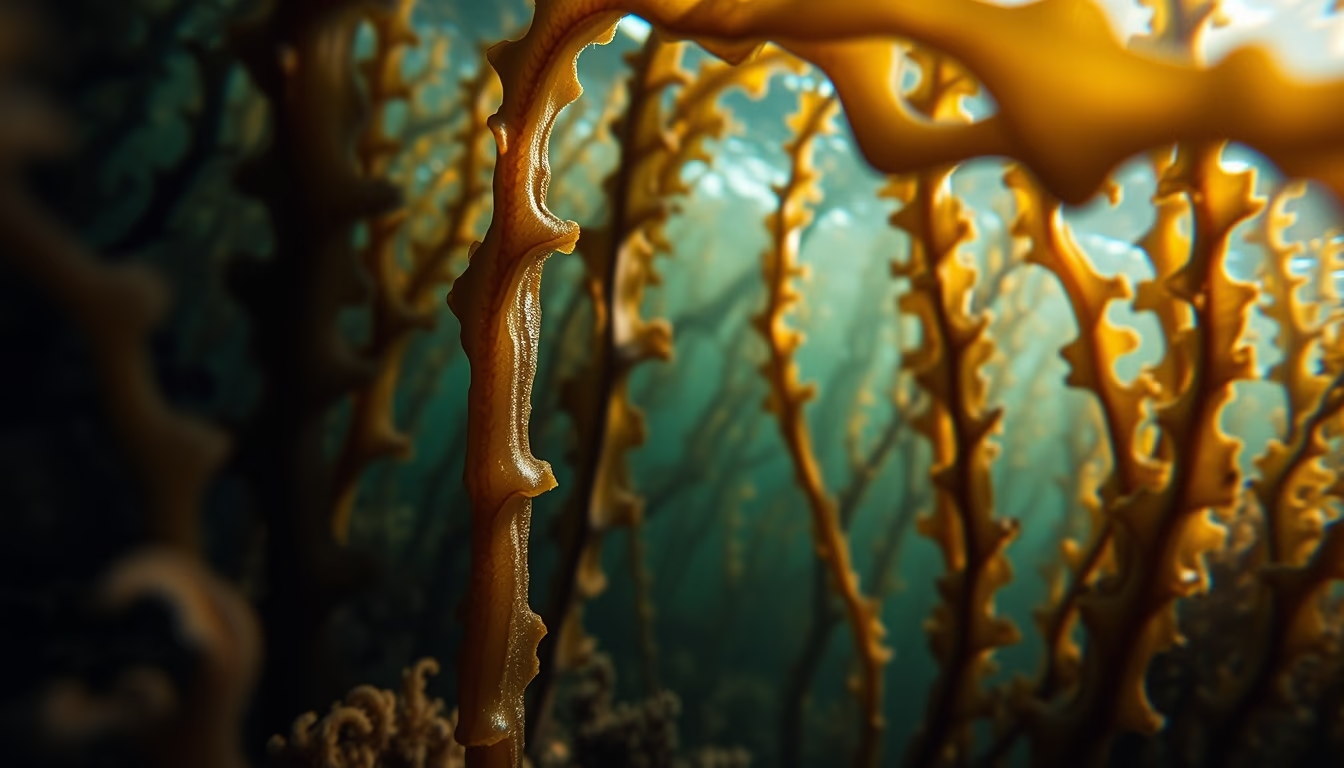
Kelp forests are underwater marine ecosystems formed by giant algae, vital for coastal biodiversity.
About this subject
Kelp forests are underwater marine ecosystems dominated by large brown algae, mainly of the genus Macrocystis. These algae can grow up to 60 meters tall, forming structures that resemble terrestrial forests. They occur in cold, nutrient-rich waters such as the coasts of California, Chile, South Africa, and New Zealand. In Brazil, species like Laminaria abyssalis are found off the southeastern coast, though dense kelp forests are more typical of temperate regions.
These ecosystems provide shelter and food for countless marine species, from sea urchins and fish to mammals like sea otters and sea lions. The three-dimensional structure of kelp creates microhabitats that increase local biodiversity, functioning as nurseries for juveniles. In addition, kelp absorbs carbon dioxide and produces oxygen, contributing to climate regulation.
Unfortunately, kelp forests are threatened by global warming, pollution, and overfishing of natural predators of sea urchins. In some regions, such as Tasmania and California, drastic declines have already occurred. Conservation efforts include active restoration by divers and urchin culling, as well as the establishment of marine protected areas. Much remains to be learned about the resilience of these ecosystems in the face of climate change.
Frequently Asked Questions
What are kelp forests?
Kelp forests are marine ecosystems formed by giant brown algae of the genus Macrocystis and other species, creating a three-dimensional underwater habitat rich in biodiversity.
Where can I find kelp forests?
They occur in cold, nutrient-rich waters worldwide, such as the west coast of North America (California), Chile, South Africa, New Zealand, and parts of Australia. In Brazil, related species exist off the southeast coast, though less abundant.
Why are kelp forests important for the environment?
They provide habitat and food for many marine species, protect coastlines from erosion, sequester carbon, and produce oxygen, contributing to ocean health and climate regulation.
Direct URL
https://pub-c7d6a6ea828543ac903a74a341ccb2e1.r2.dev/imagens/kelp-forest-underwater-macro-closeup-p4.avifHow to credit
Include a visible link back to UtilizAí. Copy one of the snippets below:
<a href="https://xn--utiliza-eza.com/en/midia/imagens/kelp-forest-underwater-macro-closeup-p4">Kelp forest underwater</a> by <a href="https://xn--utiliza-eza.com">UtilizAí</a>, licensed under <a href="https://creativecommons.org/licenses/by/4.0/">CC BY 4.0</a>.
[Kelp forest underwater](https://xn--utiliza-eza.com/en/midia/imagens/kelp-forest-underwater-macro-closeup-p4) by [UtilizAí](https://xn--utiliza-eza.com), CC BY 4.0
License: CC-BY-4.0