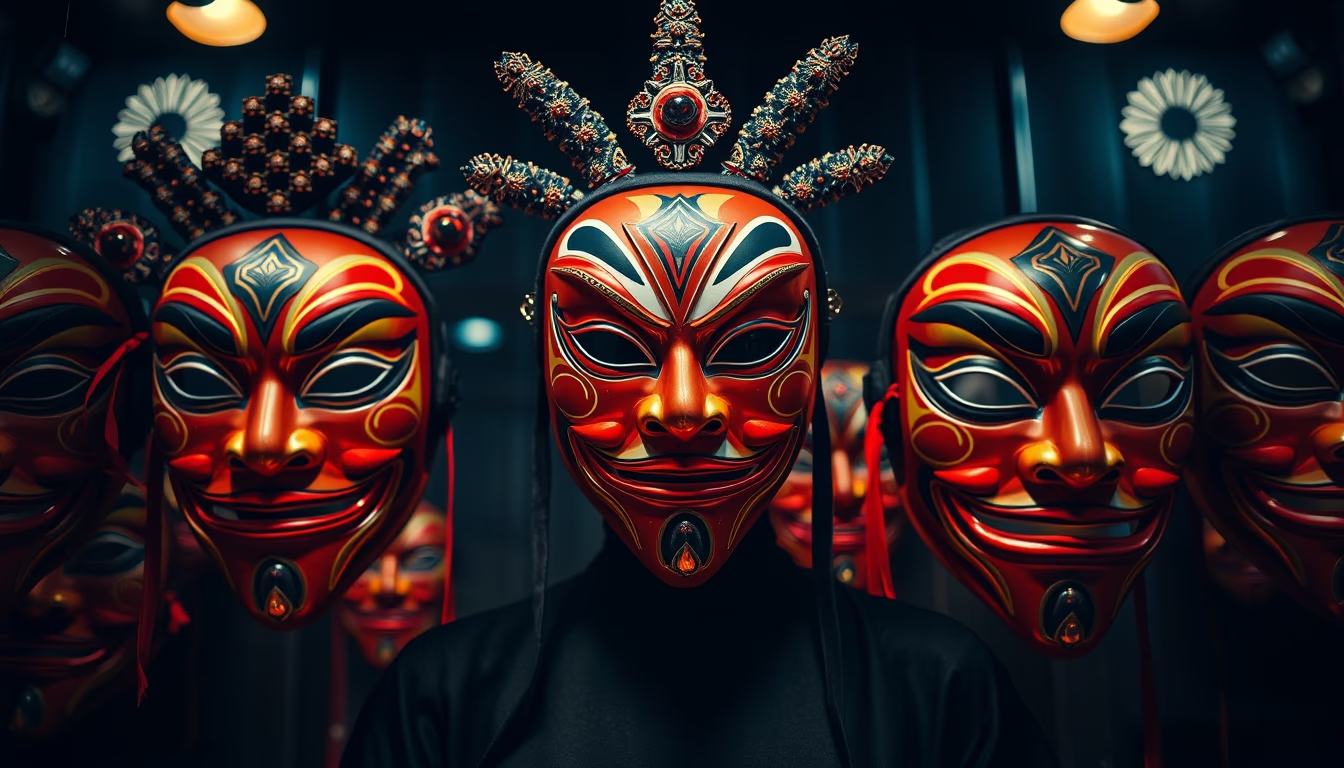
Kabuki stage japanese
1344×768 · AVIF · CC BY 4.0
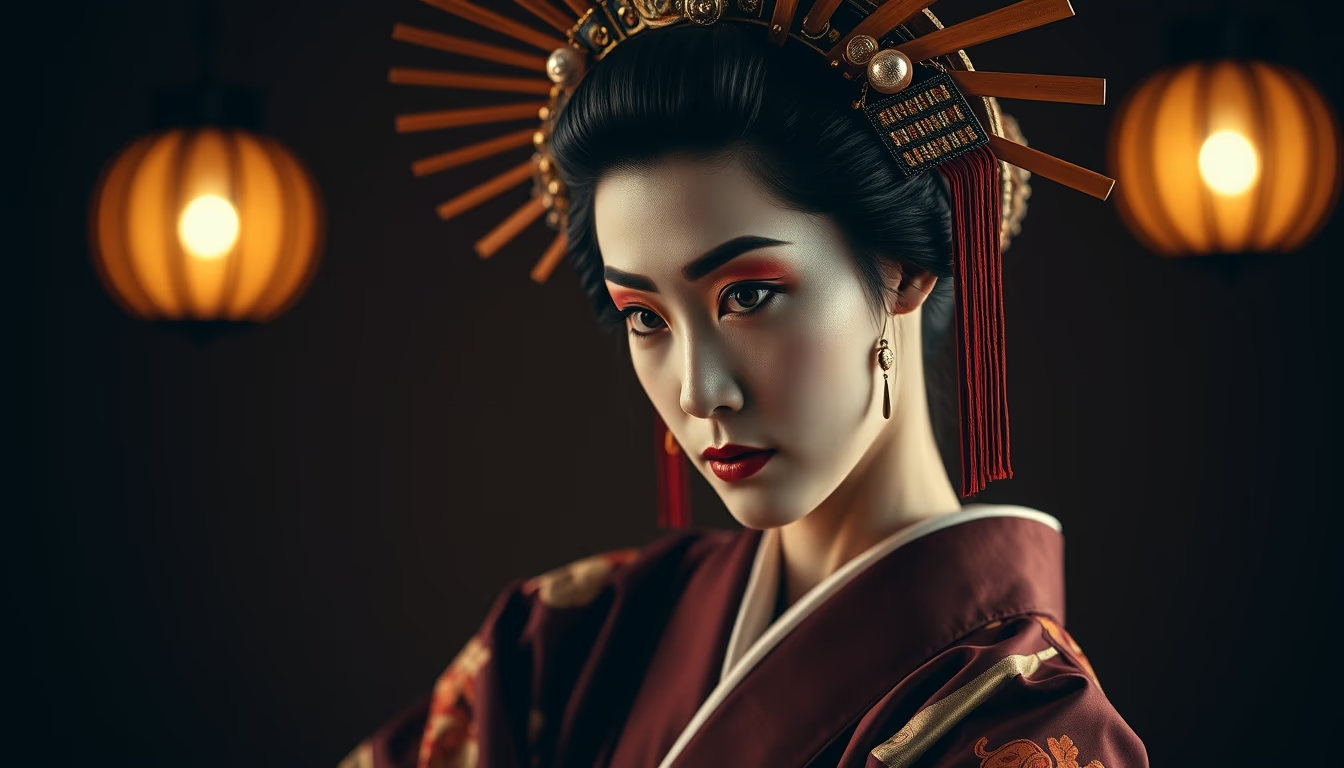
Discover the secrets of kabuki, a classic Japanese theater known for its dramatic performances, elaborate costumes, and innovative revolving stage.
About this subject
Kabuki is a form of traditional Japanese theater that emerged in the early Edo period, around 1603. Legend has it that a Shinto priestess named Izumo no Okuni created the style by performing dramatic dances in dry riverbeds in Kyoto. Kabuki quickly became popular among all social classes, although the Tokugawa government imposed restrictions, leading to all-male troupes that remain to this day. As of 2024, kabuki was recognized by UNESCO as an Intangible Cultural Heritage of Humanity.
The kabuki stage is a feat of stage engineering. It features a walkway called hanamichi that cuts through the audience, allowing for dramatic entrances and exits. Additionally, the main stage has a revolving mechanism that enables quick scene changes. Kabuki makeup, known as kumadori, uses bold colors to symbolize emotions: red for heroism and anger, blue for villainy or sadness. Actors, all male, wear heavy wigs and kimono, and their voices are trained in a nasal, stylized manner.
Kabuki's cultural importance extends beyond entertainment. It influenced Japanese cinema, such as Akira Kurosawa's films, and inspired Western artists like Van Gogh, who painted kabuki scenes. Today, kabuki continues to be performed in theaters in Tokyo, Osaka, and Kyoto, with sold-out houses. The most famous actor of the modern era was Matsumoto Hakuo II, who died in 2021, leaving a legacy of over 60 years. Interestingly, kabuki also incorporates dance and music, with instruments like the shamisen and taiko.
In 2023, a Japanese government survey indicated that young people's interest in kabuki increased thanks to initiatives such as LED screen subtitles and live streaming. Despite its formality, kabuki retains a rebellious and popular spirit, contrasting with the more aristocratic Noh theater. For visitors to Japan, watching a kabuki play is a unique sensory experience, with vibrant colors, striking sounds, and narratives blending historical drama and fantasy.
Frequently Asked Questions
What is kabuki?
Kabuki is a traditional Japanese theater form that combines drama, dance, and music, known for elaborate costumes, striking makeup, and a stage with special mechanisms like the hanamichi and revolving floor.
How is kabuki different from Noh?
Noh is older and more formal, using masks and slow movements, while kabuki is more colorful, dynamic, and popular, aimed at mass entertainment, with main actors not wearing masks.
What is the hanamichi in kabuki?
The hanamichi is a walkway that extends from the back of the auditorium to the stage, used for dramatic entrances and exits, bringing actors closer to the audience.
Direct URL
https://pub-c7d6a6ea828543ac903a74a341ccb2e1.r2.dev/imagens/kabuki-stage-japanese-studio-editorial-portrait-fresh5.avifHow to credit
Include a visible link back to UtilizAí. Copy one of the snippets below:
<a href="https://xn--utiliza-eza.com/en/midia/imagens/kabuki-stage-japanese-studio-editorial-portrait-fresh5">Kabuki stage japanese</a> by <a href="https://xn--utiliza-eza.com">UtilizAí</a>, licensed under <a href="https://creativecommons.org/licenses/by/4.0/">CC BY 4.0</a>.
[Kabuki stage japanese](https://xn--utiliza-eza.com/en/midia/imagens/kabuki-stage-japanese-studio-editorial-portrait-fresh5) by [UtilizAí](https://xn--utiliza-eza.com), CC BY 4.0
License: CC-BY-4.0