Jupiter great red spot
1344×768 · AVIF · CC BY 4.0
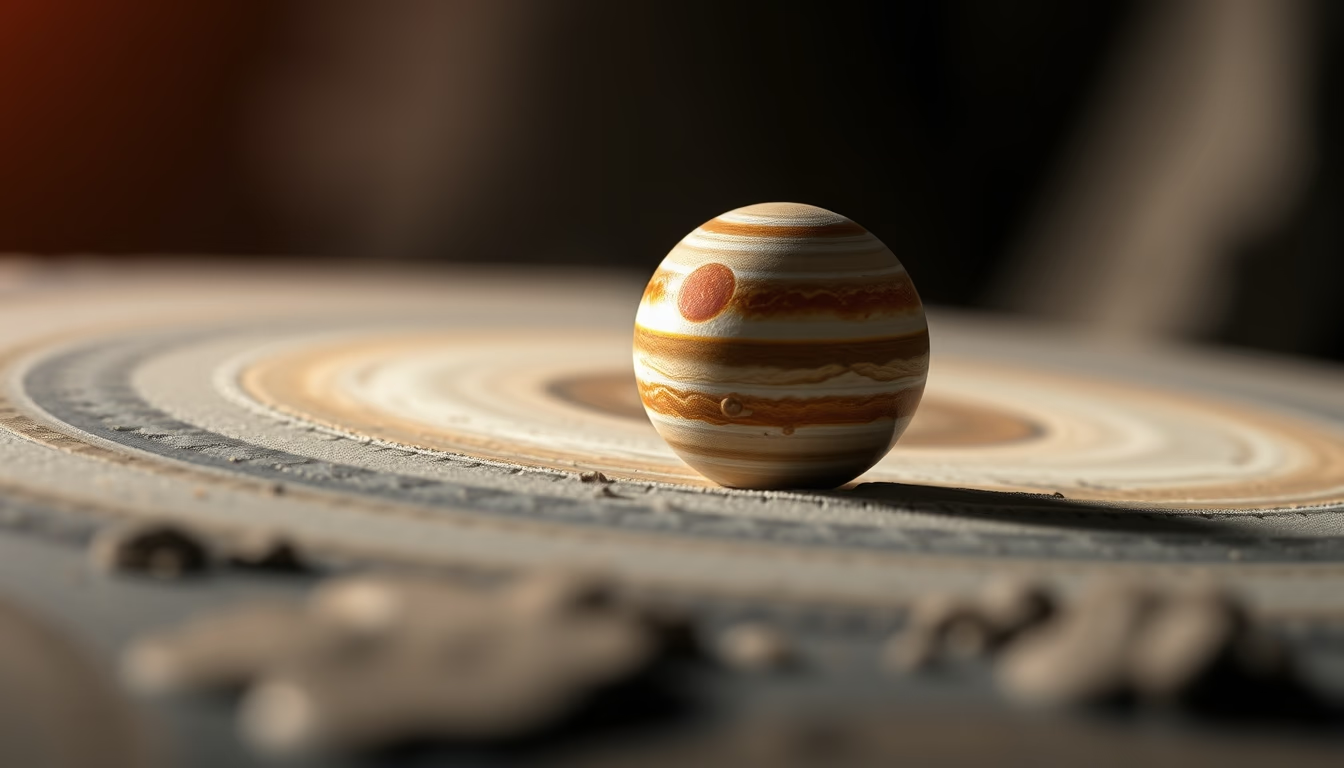
The Great Red Spot is a persistent anticyclonic storm on Jupiter, larger than Earth and observed for centuries.
About this subject
Jupiter's Great Red Spot is one of the most iconic features in the Solar System. It is a persistent high-pressure anticyclonic storm located in the planet's southern hemisphere, observed for at least 350 years. Its current width is about 16,000 km, large enough to encompass Earth, though it has been gradually shrinking, in the late 19th century, measurements indicated a diameter of about 40,000 km.
The reddish coloration of the spot is not fully explained, but it is believed to result from chemical compounds such as phosphorus, sulfur, or hydrocarbons in the upper clouds, reacting with solar ultraviolet radiation. The temperature at the cloud tops is relatively cold (about -160 °C), but inner layers are warmer, driving the circulation.
Observations from probes like Voyager, Galileo, and Juno have revealed striking details: the spot has a darker core and turbulent edges, with winds reaching 680 km/h. Recent Juno studies show that the storm extends hundreds of kilometers below the clouds, with deep roots into the planet's interior. Despite its longevity, the spot is not static, it interacts with smaller storms and has changed shape over decades.
Interestingly, the Great Red Spot is not unique: Jupiter has other similarly colored spots, such as Oval BA (also called Red Spot Jr.), which formed from the merger of three smaller storms. However, due to its size and history, the Great Red Spot remains the most emblematic meteorological phenomenon in the Solar System.
Frequently Asked Questions
How big is Jupiter's Great Red Spot?
Currently, the Great Red Spot is about 16,000 km in diameter, large enough to fit Earth. However, it is shrinking: in the 19th century, it measured approximately 40,000 km.
Why is the Great Red Spot red?
The reddish color is still a mystery, but it is believed to be caused by compounds like phosphorus, sulfur, or hydrocarbons in the upper clouds, reacting with solar ultraviolet radiation.
Will the Great Red Spot disappear?
Yes, the spot is shrinking and may disappear in a few decades or centuries. However, scientists are not certain of its exact fate, as its internal dynamics are still poorly understood.
Direct URL
https://pub-c7d6a6ea828543ac903a74a341ccb2e1.r2.dev/imagens/jupiter-great-red-spot-tilt-shift-miniature-p1.avifHow to credit
Include a visible link back to UtilizAí. Copy one of the snippets below:
<a href="https://xn--utiliza-eza.com/en/midia/imagens/jupiter-great-red-spot-tilt-shift-miniature-p1">Jupiter great red spot</a> by <a href="https://xn--utiliza-eza.com">UtilizAí</a>, licensed under <a href="https://creativecommons.org/licenses/by/4.0/">CC BY 4.0</a>.
[Jupiter great red spot](https://xn--utiliza-eza.com/en/midia/imagens/jupiter-great-red-spot-tilt-shift-miniature-p1) by [UtilizAí](https://xn--utiliza-eza.com), CC BY 4.0
License: CC-BY-4.0