Juno jupiter polar
1344×768 · AVIF · CC BY 4.0
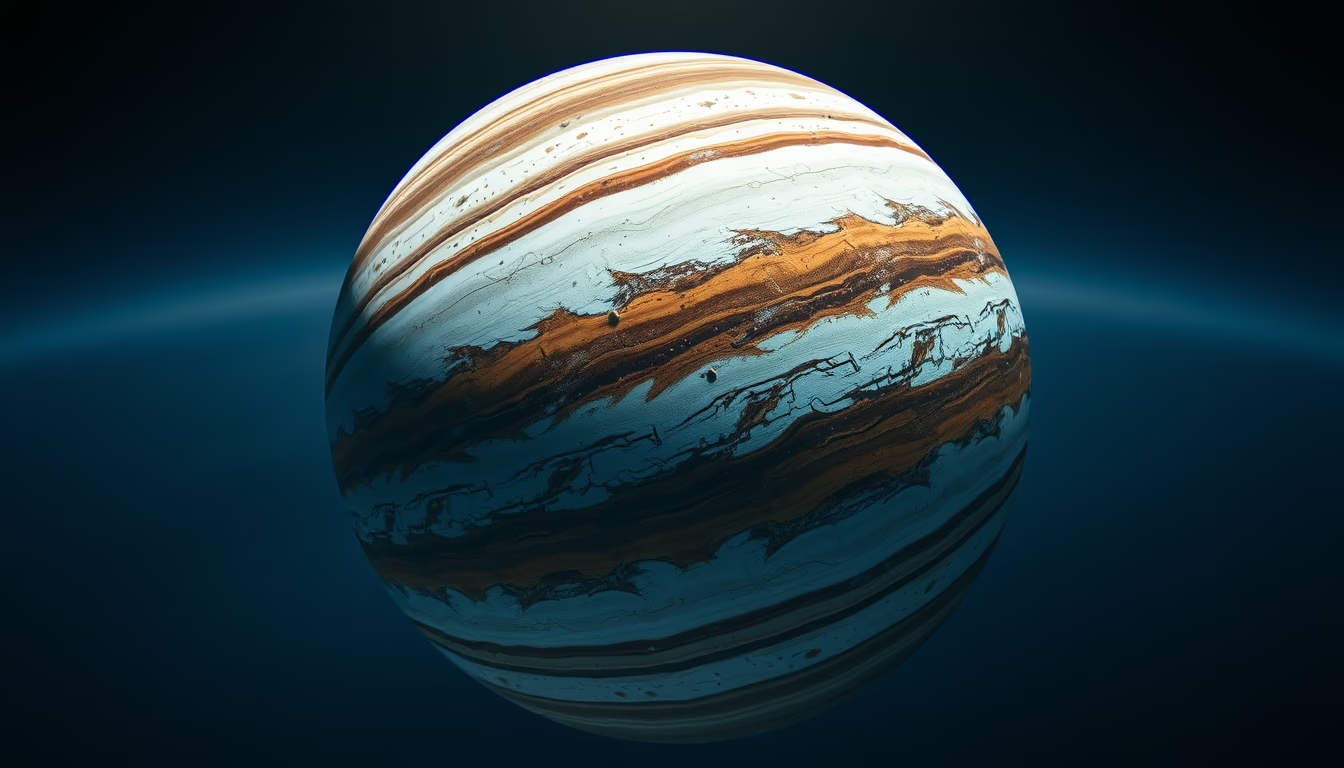
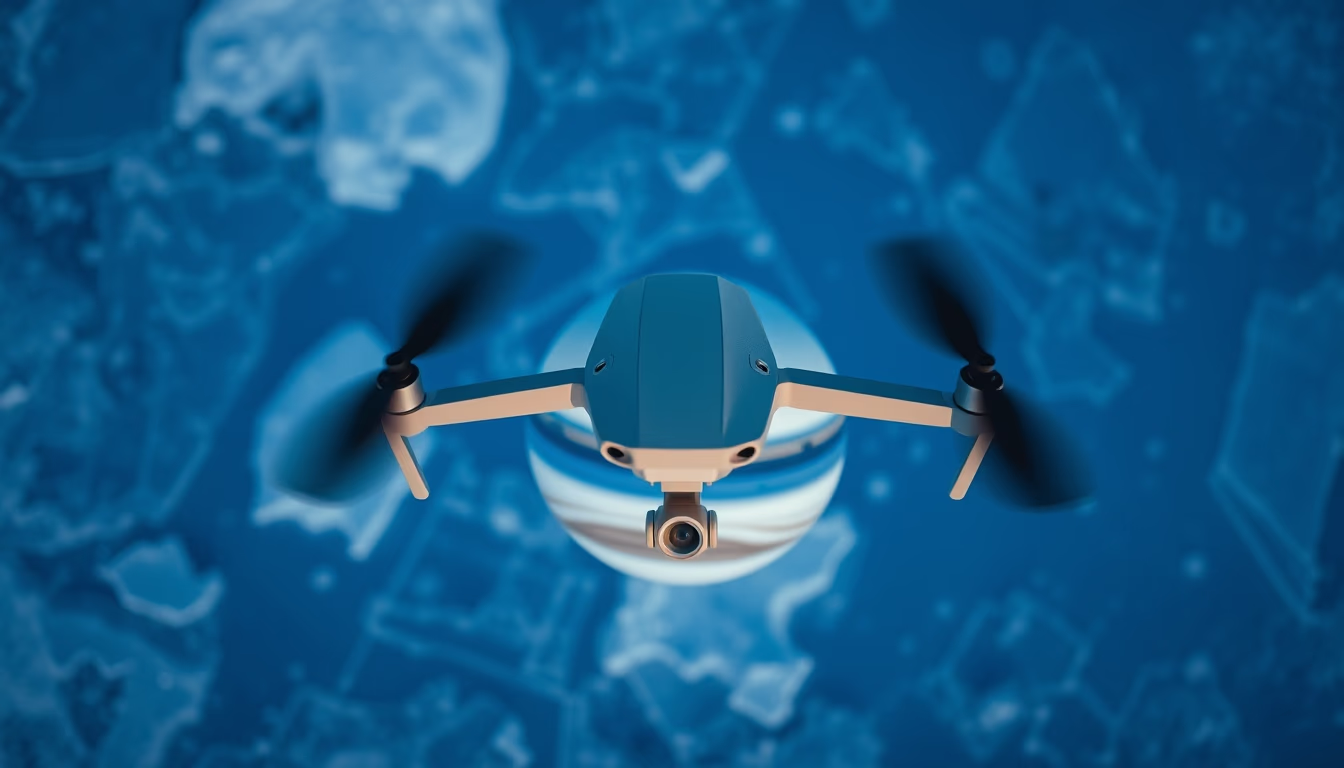
NASA's Juno spacecraft has been orbiting Jupiter since 2016, unveiling unprecedented details of its polar regions with fisheye wide-angle images.
About this subject
NASA's Juno mission, launched in 2011, entered Jupiter's orbit on July 5, 2016. With a highly elliptical orbit that brings it close to the gas giant's poles, the spacecraft was designed to study Jupiter's composition, gravitational field, magnetic field, and polar magnetosphere. One of the most striking discoveries by Juno are the persistent polar cyclones. At the north pole, eight cyclones surround a central cyclone, all rotating in a stable formation; at the south pole, five cyclones encircle a central one. These structures had never been observed before and challenge atmospheric dynamics models.
Images from the JunoCam, a visible-light camera, often use wide-angle or fisheye lenses to capture the vastness of the polar regions. These images are processed by citizen scientists and reveal colors and patterns not visible to the naked eye, due to distortion and filter combinations. Jupiter's atmosphere features ammonia cloud bands, storms, and high-pressure zones. The poles, in particular, show a tangle of turbulent clouds and cyclonic formations that intrigue researchers.
It is important to note that Jupiter has no solid surface; its atmosphere extends to depths where pressure is immense. The Juno mission also investigates the planet's internal structure by precisely measuring its gravitational and magnetic fields. As of September 2023, the spacecraft has completed over 50 scientific flybys of Jupiter. The mission's longevity has allowed observation of seasonal changes and long-lived storms. The choice of a polar orbit was crucial for mapping the poles with high resolution, something previous missions like Galileo could not achieve.
Interestingly, fisheye images distort perspective but provide a wide field of view, essential for capturing the planet's curvature and extensive weather patterns. JunoCam is a public camera, encouraging public participation in target selection and image processing. This citizen science model has generated thousands of stunning images circulating on the internet, often in 'wave fresh' formats and unusual angles, such as fisheye views.
Frequently Asked Questions
Why was the Juno spacecraft sent to orbit Jupiter over the poles?
The polar orbit allows Juno to study regions never before mapped in detail, such as the poles, and to investigate the magnetic field and polar magnetosphere. It also minimizes exposure to intense radiation near the equator.
How many cyclones did Juno discover at Jupiter's poles?
At the north pole, Juno found eight cyclones arranged around a central one. At the south pole, there are five cyclones surrounding a central one. These cyclones have persisted for years and are stable.
What is JunoCam and how are its images processed?
JunoCam is a visible-light camera aboard Juno that captures images of Jupiter. Raw images are made public, and anyone can process them to enhance colors and details. Citizen scientists often apply techniques like color correction and mosaicking.
Direct URL
https://pub-c7d6a6ea828543ac903a74a341ccb2e1.r2.dev/imagens/juno-jupiter-polar-fish-eye-wide-angle-fresh11.avifHow to credit
Include a visible link back to UtilizAí. Copy one of the snippets below:
<a href="https://xn--utiliza-eza.com/en/midia/imagens/juno-jupiter-polar-fish-eye-wide-angle-fresh11">Juno jupiter polar</a> by <a href="https://xn--utiliza-eza.com">UtilizAí</a>, licensed under <a href="https://creativecommons.org/licenses/by/4.0/">CC BY 4.0</a>.
[Juno jupiter polar](https://xn--utiliza-eza.com/en/midia/imagens/juno-jupiter-polar-fish-eye-wide-angle-fresh11) by [UtilizAí](https://xn--utiliza-eza.com), CC BY 4.0
License: CC-BY-4.0