Journal pen morning routine
1344×768 · AVIF · CC BY 4.0
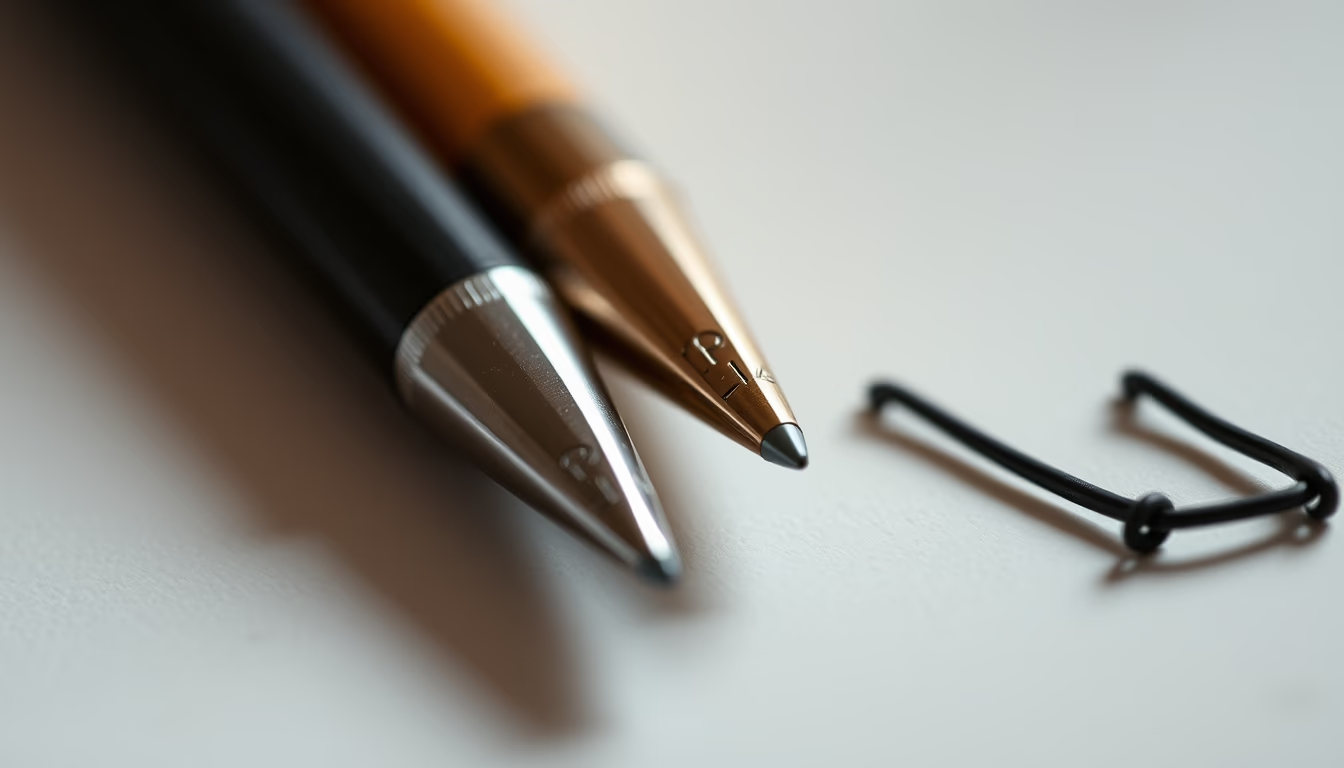
The use of pen and journal in the morning is a journaling ritual that improves mental clarity and reduces anxiety, according to studies.
About this subject
The morning ritual of writing in a journal with a pen, known as journaling, is a mindfulness practice that has gained popularity for its proven effects on mental health. Unlike typing, handwriting activates specific brain areas linked to memory and emotion, promoting deeper reflection. By dedicating the first minutes of the day to record thoughts, feelings, and goals, a person mentally organizes priorities and reduces morning stress.
Studies indicate that daily journaling, especially in the morning, helps reduce symptoms of anxiety and depression. A University of Rochester study showed that writing about emotions for 15 minutes upon waking improves cognitive clarity and emotional resilience. Regular practice also strengthens the immune system and improves sleep quality, according to the American Psychological Association.
To start, no special equipment is needed: a common pen and a simple notebook suffice. The “Morning Pages” technique, created by author Julia Cameron, recommends three pages of free-flow writing without worrying about grammar or coherence. The goal is to free the mind, allowing ideas and worries to flow without judgment. This exercise, when done consistently, can increase creativity and self-confidence.
In the context of wellness culture, morning journaling has become a habit adopted by entrepreneurs, therapists, and artists. Celebrities like Tim Ferriss and Oprah Winfrey report using the practice to set daily intentions. The simplicity of pen and paper contrasts with digital acceleration, offering a moment of pause and self-knowledge.
Frequently Asked Questions
Why is writing in the morning more beneficial than at other times?
Writing in the morning leverages a more rested and less cluttered mental state, allowing you to organize thoughts before external demands. Studies show that morning practice reduces cortisol and improves focus.
Do I need to use pen and paper, or can I type on my phone?
While typing is valid, handwriting activates more brain areas linked to memory and emotion. Pen and paper offer a more tactile, distraction-free experience, enhancing the therapeutic benefits.
How much time should I dedicate to morning journaling?
There is no fixed rule, but experts recommend 10 to 20 minutes. The “Morning Pages” technique suggests three pages, which takes about 20 to 30 minutes. Consistency matters more than duration.
Direct URL
https://pub-c7d6a6ea828543ac903a74a341ccb2e1.r2.dev/imagens/journal-pen-morning-routine-macro-closeup-p4.avifHow to credit
Include a visible link back to UtilizAí. Copy one of the snippets below:
<a href="https://xn--utiliza-eza.com/en/midia/imagens/journal-pen-morning-routine-macro-closeup-p4">Journal pen morning routine</a> by <a href="https://xn--utiliza-eza.com">UtilizAí</a>, licensed under <a href="https://creativecommons.org/licenses/by/4.0/">CC BY 4.0</a>.
[Journal pen morning routine](https://xn--utiliza-eza.com/en/midia/imagens/journal-pen-morning-routine-macro-closeup-p4) by [UtilizAí](https://xn--utiliza-eza.com), CC BY 4.0
License: CC-BY-4.0