Jellyfish translucent dark water
1344×768 · AVIF · CC BY 4.0
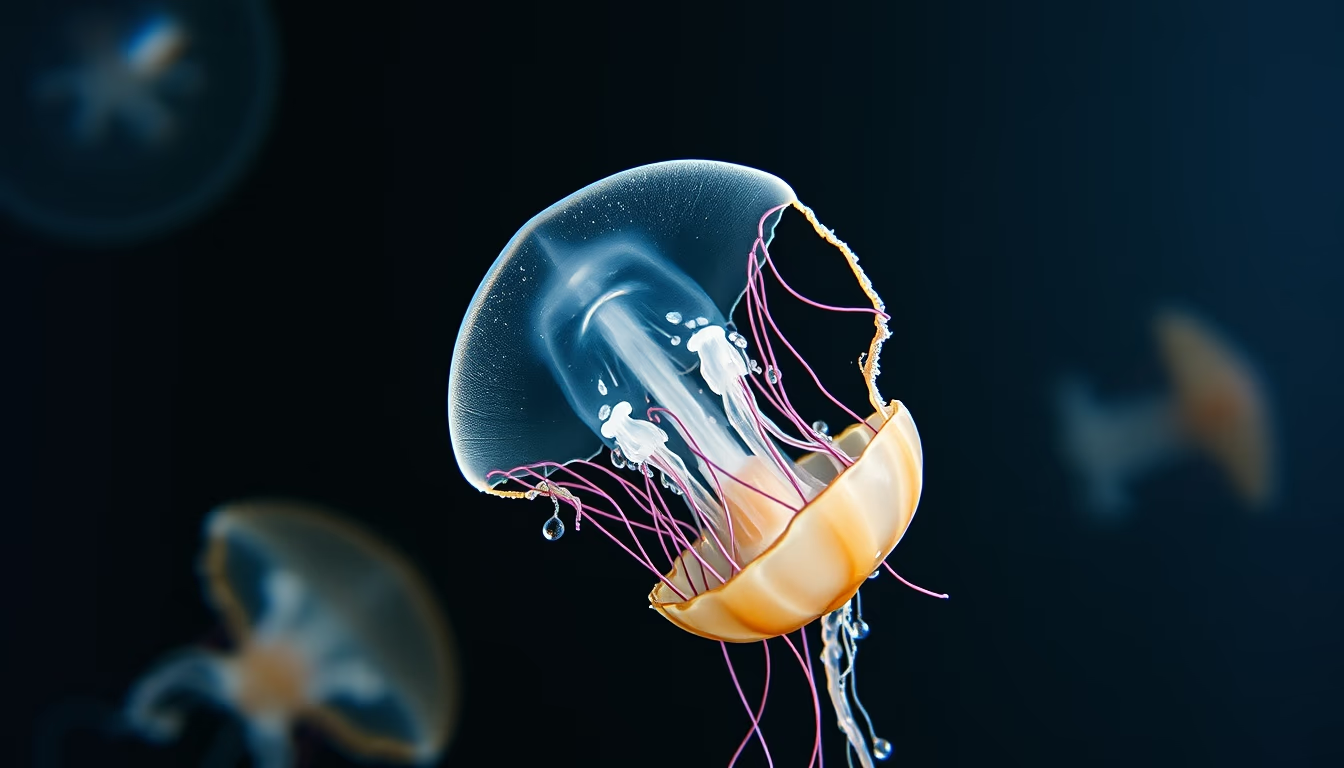
The translucent jellyfish in dark waters is one of the most fascinating organisms in the oceans, adapted to depths where light does not reach.
About this subject
Jellyfish, or medusae, are cnidarians that inhabit all the world's oceans, from the surface to the abyssal zones. Many species have gelatinous and translucent bodies as an adaptation for camouflage in dark environments or to reduce water resistance. Transparency is an effective defense against predators, making the animal nearly invisible.
These organisms are fundamental to the marine food web. They feed on plankton, small crustaceans, and fish eggs, and are prey for sea turtles, ocean sunfish, and some seabirds. In dark water regions, such as the Sargasso Sea or the depths of the Pacific, jellyfish can reach considerable sizes and even exhibit bioluminescence to attract prey or communicate.
The ability to survive in waters with very low oxygen content and extreme pressure makes jellyfish true survivors. The species Turritopsis dohrnii, known as the immortal jellyfish, can reverse its life cycle, returning to the polyp stage after maturity, rendering it biologically immortal. This phenomenon intrigues scientists and may have implications for human aging research.
Interestingly, translucent jellyfish also serve as indicators of ocean health. Increases in their populations in certain areas can signal ecological imbalances, such as overfishing of natural predators or rising water temperatures due to climate change.
Frequently Asked Questions
Are translucent jellyfish dangerous to humans?
Not all translucent jellyfish are dangerous. Some species, like the moon jellyfish (Aurelia aurita), have weak stings that barely affect humans. Others, such as the box jellyfish (Chironex fleckeri), are extremely dangerous but are less translucent. Transparency is not an indicator of danger.
Why do some jellyfish glow in the dark?
Many jellyfish produce bioluminescence through proteins like aequorin or GFP (green fluorescent protein). The glow can serve to attract prey, confuse predators, or communicate with other individuals. It is a common adaptation in deep, dark waters.
What is the maximum depth a jellyfish can inhabit?
Jellyfish are found from the surface to over 10,000 meters deep, at the bottom of ocean trenches. Species like Periphylla periphylla are known to live in abyssal zones, enduring extreme pressure and total absence of light.
Direct URL
https://pub-c7d6a6ea828543ac903a74a341ccb2e1.r2.dev/imagens/jellyfish-translucent-dark-water-film-grain-authentic-p3.avifHow to credit
Include a visible link back to UtilizAí. Copy one of the snippets below:
<a href="https://xn--utiliza-eza.com/en/midia/imagens/jellyfish-translucent-dark-water-film-grain-authentic-p3">Jellyfish translucent dark water</a> by <a href="https://xn--utiliza-eza.com">UtilizAí</a>, licensed under <a href="https://creativecommons.org/licenses/by/4.0/">CC BY 4.0</a>.
[Jellyfish translucent dark water](https://xn--utiliza-eza.com/en/midia/imagens/jellyfish-translucent-dark-water-film-grain-authentic-p3) by [UtilizAí](https://xn--utiliza-eza.com), CC BY 4.0
License: CC-BY-4.0