Jade carved chinese
1344×768 · AVIF · CC BY 4.0
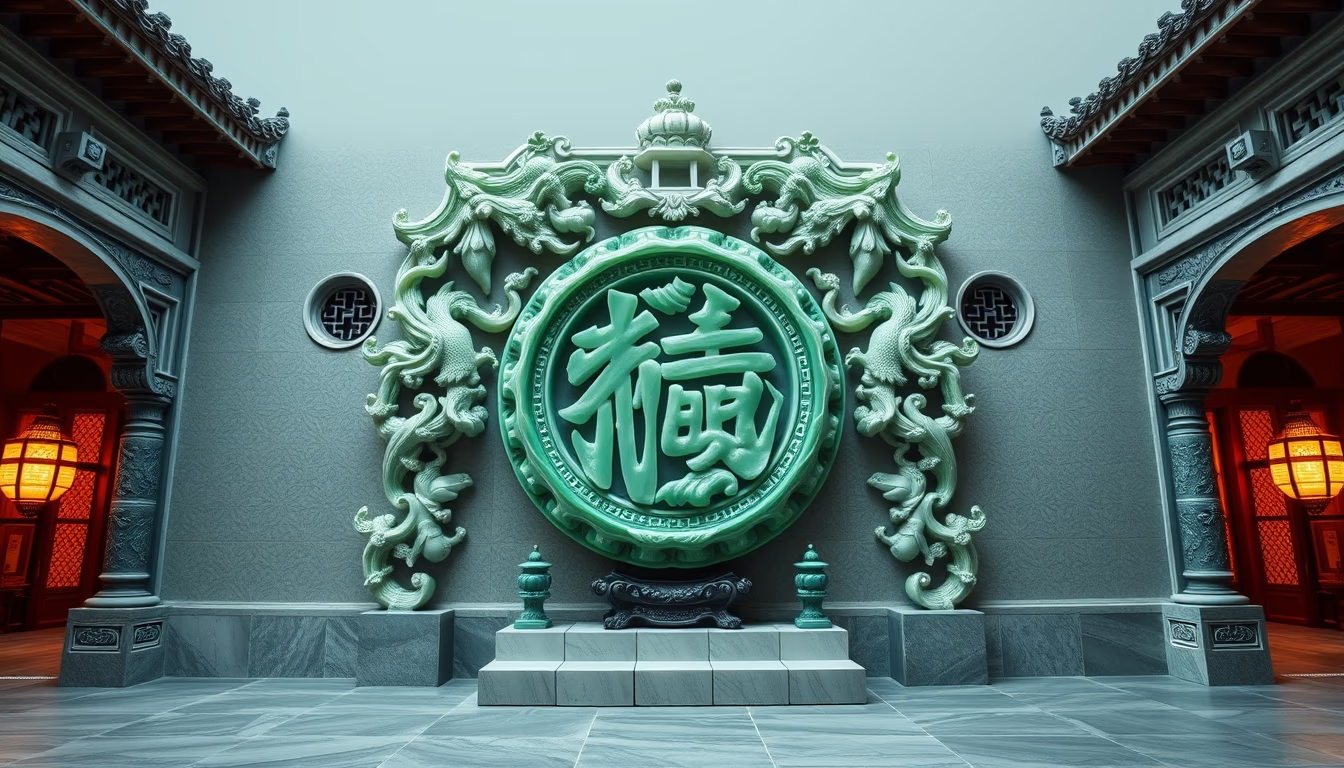
Chinese jade carving: a millennia-old art symbolizing power, purity, and immortality in Chinese culture.
About this subject
Jade is a semi-precious stone that holds a central place in Chinese culture for over 7,000 years. Since the Neolithic period, civilizations like the Hongshan culture (c. 4700, 2900 BCE) produced jade objects in animal shapes and ritual discs called bi. Jade was considered the 'essence of heaven and earth' and associated with virtues like courage, wisdom, and justice. Chinese emperors used jade seals as symbols of authority, and the stone was believed to protect the body after death.
Jade carving is extremely challenging due to the stone's hardness (6.5 to 7 on the Mohs scale). Before diamond tools, artisans used abrasives such as quartz sand and bamboo or cords to slowly wear down the surface. Techniques like incision, relief, and sculpture in the round required patience and mastery. Complex pieces, such as vases with movable handles or chains carved from a single block, demonstrated the artisan's virtuosity.
Jade holds deep symbolism in China: the green-blue color of nephrite jade represents harmony, while pure white jadeite is linked to purity. Jade objects were used in religious rituals, as protective pendants, and as funerary adornments. The most famous piece is the jade burial suit of Liu Sheng, a prince of the Western Han dynasty (2nd century BCE), made of over 2,000 jade plates stitched with gold wire.
Today, China continues to produce carved jade, mainly from the Hotan region (Xinjiang), known for its high-quality nephrite. The craft is valued in both antique and contemporary markets, keeping alive a tradition that spans millennia.
Frequently Asked Questions
Why is jade so important in Chinese culture?
Jade is revered in China for its beauty, durability, and symbolism. Associated with virtues like purity, wisdom, and immortality, it was used in religious rituals, as imperial seals, and in burial suits to protect the deceased. Its importance surpasses that of gold.
What are the main types of jade used in China?
The two main types are nephrite and jadeite. Nephrite, primarily mined in Hotan (Xinjiang), has been traditionally most valued in China. Jadeite, harder and with more vibrant colors, became popular later, especially the imperial green variety.
How did Chinese artisans carve jade before modern tools?
They used abrasives such as quartz sand or crushed garnet, applied with tools made of bamboo, wood, or string. The slow friction wore down the stone, a process that could take months or years for complex pieces. Craftsmanship was passed down through generations.
Direct URL
https://pub-c7d6a6ea828543ac903a74a341ccb2e1.r2.dev/imagens/jade-carved-chinese-architectural-photography-p5.avifHow to credit
Include a visible link back to UtilizAí. Copy one of the snippets below:
<a href="https://xn--utiliza-eza.com/en/midia/imagens/jade-carved-chinese-architectural-photography-p5">Jade carved chinese</a> by <a href="https://xn--utiliza-eza.com">UtilizAí</a>, licensed under <a href="https://creativecommons.org/licenses/by/4.0/">CC BY 4.0</a>.
[Jade carved chinese](https://xn--utiliza-eza.com/en/midia/imagens/jade-carved-chinese-architectural-photography-p5) by [UtilizAí](https://xn--utiliza-eza.com), CC BY 4.0
License: CC-BY-4.0